THE ADVENTURE COLLECTIVE® · Independent discovery and booking for outdoor travel

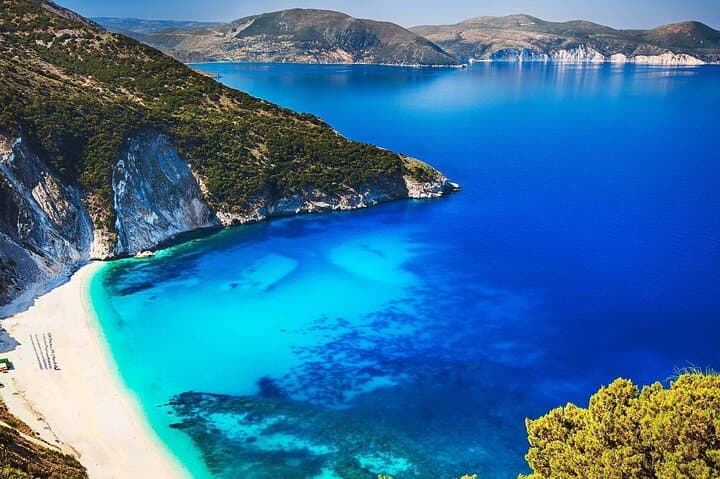
Float under a collapsed roof at Melissani, walk the ancient chambers of Drogarati, then rinse off at the ashore of Myrtos Beach. This compact half-day tour highlights Kefalonia’s dramatic karst landscape and coastal brilliance.
Float under a collapsed roof at Melissani, walk the ancient chambers of Drogarati, then rinse off at the ashore of Myrtos Beach. This compact half-day tour highlights Kefalonia’s dramatic karst landscape and coastal brilliance.
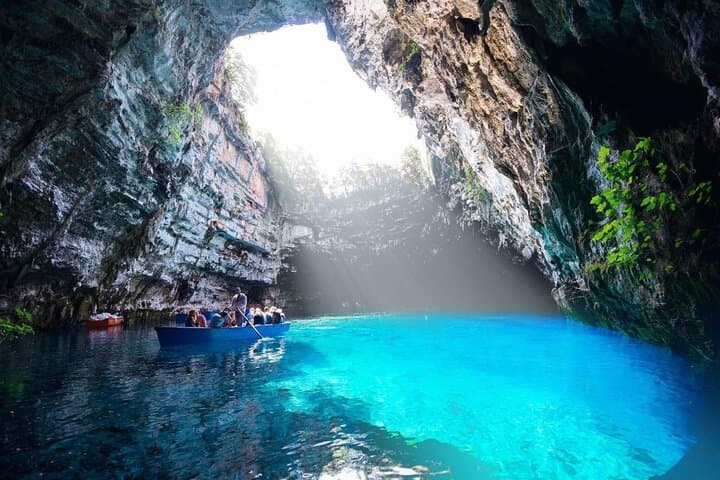
A thin shaft of sunlight splits a cavern and turns the lake inside Melissani into liquid turquoise; the rowing boat slips forward and the water seems to pull you into an older map of the island. That first scene—sun through a collapsed roof, echoing oars, and the hush of limestone—sets the tone for a compact half-day around Kefalonia's geological highlights.
Verified experiences and guided adventures in the surrounding area.
Operated by Thalassa travel group · Sami, Ionian Islands
A thin shaft of sunlight splits a cavern and turns the lake inside Melissani into liquid turquoise; the rowing boat slips forward and the water seems to pull you into an older map of the island. That first scene—sun through a collapsed roof, echoing oars, and the hush of limestone—sets the tone for a compact half-day around Kefalonia's geological highlights.
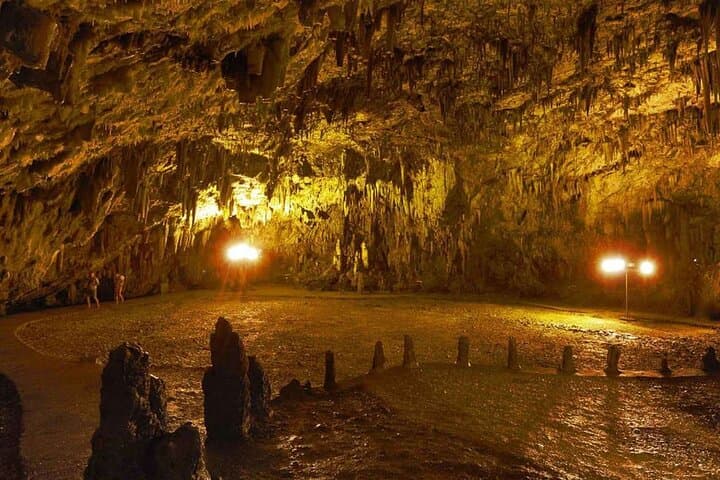
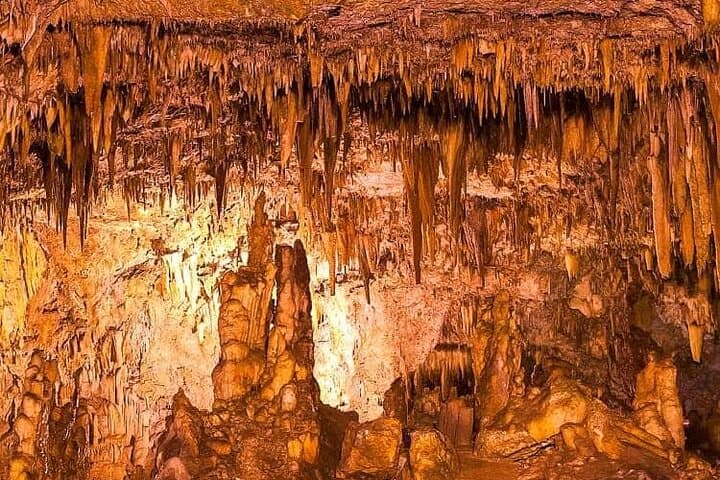
Melissani Cave sits on the eastern shore near Sami: a B-shaped cavern where a collapsed chamber allows daylight to paint the lake and reveal depths of 20–30 meters. Drogarati Cave, discovered by chance after a quake centuries ago, offers a contrasting, enclosed experience—vast chambers, dense stalactites and a cool, slightly damp air that carries fossilized time. Finish the run with a drive to Myrtos Beach: the sea’s bright edge and steep pebble slopes feel like the island daring you to cool off.
The area reflects Kefalonia's tectonic youth—folded limestone, karst sinkholes and caves formed by groundwater. Local culture is small-town Ionian: fishermen, family-run tavernas, and roadside citrus groves. Guides explain how earthquakes shaped access and how caves were used and studied through decades.
Practical: the tour is 3–4 hours, includes boat access at Melissani and a walk with ~150 stairs at Drogarati. Wear sturdy shoes for uneven cave floors, bring swimwear and a towel for Myrtos, and a light layer for cool cave interiors. Expect short walks, some steps, and guided commentary; keep camera settings ready for high-contrast cave light. Morning or late-afternoon slots avoid midsummer crowds and harsh light at Melissani.
moderate.
3–4 hours.
Moderate fitness: able to walk stairs and board small boats; some standing and short uneven paths.
The tour includes access to Melissani Lake where small rowing boats take visitors on a guided circuit of the cave lake; local entrance fees may apply depending on operator arrangements.
Yes—Drogarati has approximately 150 steps down into the show cave; handrails are installed but the floor can be uneven and sometimes slippery.
Yes—non-swimmers can still enjoy Melissani and Drogarati; the Myrtos stop is optional and you can stay onshore if you prefer not to swim.
Infant seats are available for transport, but the caves involve steps and confined spaces; check with the operator about stroller access and supervision needs.
The caves and coast record Kefalonia’s tectonic and seismic history—an earthquake exposed Drogarati centuries ago, and repeated uplift and erosion shaped the island’s karst features.
Stay on marked paths and avoid touching cave formations—stalactites grow over millennia. Use reef-safe sunscreen before swimming and pack out plastic to protect coastal and marine life.
Thalassa travel group operates guided outdoor trips and adventures with an emphasis on safety, stewardship, and memorable experiences.
A thin shaft of sunlight splits a cavern and turns the lake inside Melissani into liquid turquoise; the rowing boat slips forward and the water seems to pull you into an older map of the island. That first scene—sun through a collapsed roof, echoing oars, and the hush of limestone—sets the tone for a compact half-day around Kefalonia's geological highlights.
A thin shaft of sunlight splits a cavern and turns the lake inside Melissani into liquid turquoise; the rowing boat slips forward and the water seems to pull you into an older map of the island. That first scene—sun through a collapsed roof, echoing oars, and the hush of limestone—sets the tone for a compact half-day around Kefalonia's geological highlights.
Melissani Cave sits on the eastern shore near Sami: a B-shaped cavern where a collapsed chamber allows daylight to paint the lake and reveal depths of 20–30 meters. Drogarati Cave, discovered by chance after a quake centuries ago, offers a contrasting, enclosed experience—vast chambers, dense stalactites and a cool, slightly damp air that carries fossilized time. Finish the run with a drive to Myrtos Beach: the sea’s bright edge and steep pebble slopes feel like the island daring you to cool off.
The area reflects Kefalonia's tectonic youth—folded limestone, karst sinkholes and caves formed by groundwater. Local culture is small-town Ionian: fishermen, family-run tavernas, and roadside citrus groves. Guides explain how earthquakes shaped access and how caves were used and studied through decades.
Practical: the tour is 3–4 hours, includes boat access at Melissani and a walk with ~150 stairs at Drogarati. Wear sturdy shoes for uneven cave floors, bring swimwear and a towel for Myrtos, and a light layer for cool cave interiors. Expect short walks, some steps, and guided commentary; keep camera settings ready for high-contrast cave light. Morning or late-afternoon slots avoid midsummer crowds and harsh light at Melissani.