THE ADVENTURE COLLECTIVE® · Independent discovery and booking for outdoor travel

Pedal quiet country lanes, cross braided waterways by boat and sleep on a delta island. This 3‑day Mekong cycling tour from Cai Be to Can Tho blends hands‑on culture with steady, scenic riding—ideal for travelers seeking active immersion without extreme terrain.
Pedal quiet country lanes, cross braided waterways by boat and sleep on a delta island. This 3‑day Mekong cycling tour from Cai Be to Can Tho blends hands‑on culture with steady, scenic riding—ideal for travelers seeking active immersion without extreme terrain.
A thin ribbon of asphalt runs between rice paddies and canals as the motor traffic thins and the air fills with the scent of wet earth. On day one cyclists roll out from the outskirts of Ho Chi Minh City into the low, flat reaches of the Mekong Delta—bamboo groves, longan orchards and quiet village lanes passing like pages in a local book. Boats wait at the riverbank; the Mekong itself pushes against the boats with easy patience, ferrying riders between islands.
Verified experiences and guided adventures in the surrounding area.
Operated by Sinhbalo Adventure Travel · Vinh Long, Vinh Long Province
A thin ribbon of asphalt runs between rice paddies and canals as the motor traffic thins and the air fills with the scent of wet earth. On day one cyclists roll out from the outskirts of Ho Chi Minh City into the low, flat reaches of the Mekong Delta—bamboo groves, longan orchards and quiet village lanes passing like pages in a local book. Boats wait at the riverbank; the Mekong itself pushes against the boats with easy patience, ferrying riders between islands.
This route threads colonial-era trading posts, Khmer-influenced temples and villages whose livelihoods still turn on rice, fish and handcrafted vermicelli. Geologically the delta is recent alluvium—slowly accumulated silt that makes the soils rich and the waterways braided. Culture here is river-first: floating markets, ferry crossings and homes built to cope with seasonal rise.
Expect three days of mixed terrain—quiet country roads, brief stretches of busier highway, and short boat transfers. Distance varies by group ability; plan for roughly 20–40 km of riding per day with occasional stops to visit a rice husking mill or a family-run workshop. Mornings are coolest for cycling; afternoons bring heat and, in the wet season, sudden tropical showers.
Practicalities: travel light—small dry bag, comfortable saddle and pedal-ready shoes. Bring sun protection, a reusable water bottle and modest cash for riverside vendors. Guides handle logistics, meals and guesthouse stays, but basic bike handling and a moderate fitness level make this trip enjoyable. The Mekong’s currents and canals will keep you moving—quiet, insistent, and always directing where the day goes.
moderate.
3 days.
Moderate—comfortable riding 20–40 km per day on flat terrain; ability to handle a loaded bicycle for multi‑hour periods.
Moderate fitness—participants should be comfortable riding between 20–40 km a day on flat roads and able to mount/dismount frequently.
Yes—the tour includes meals as listed (breakfast, lunch, dinner) and accommodations per itinerary, typically simple guesthouses or eco‑homestays.
Most cycling is on low‑traffic country lanes; there are occasional short stretches on busier roads when connecting between villages.
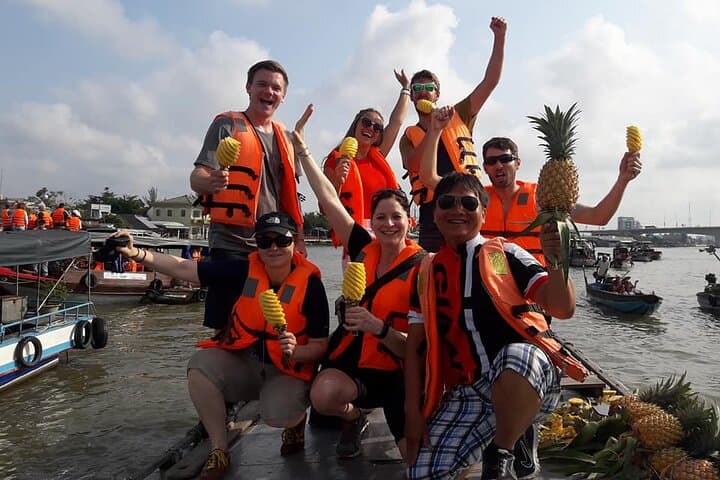
Yes—boat trips to the Cai Rang floating market and other waterways are part of the third day itinerary, offering close-up market activity.
The Mekong Delta was shaped by centuries of sediment deposition and has long been a crossroads of Khmer, Vietnamese and Chinese river cultures, with trade centered on waterways rather than roads.
Rising sea levels and upstream dam projects affect sediment flow and salinity—choose operators who practice waste management and support local communities.
Sinhbalo Adventure Travel operates guided outdoor trips and adventures with an emphasis on safety, stewardship, and memorable experiences.
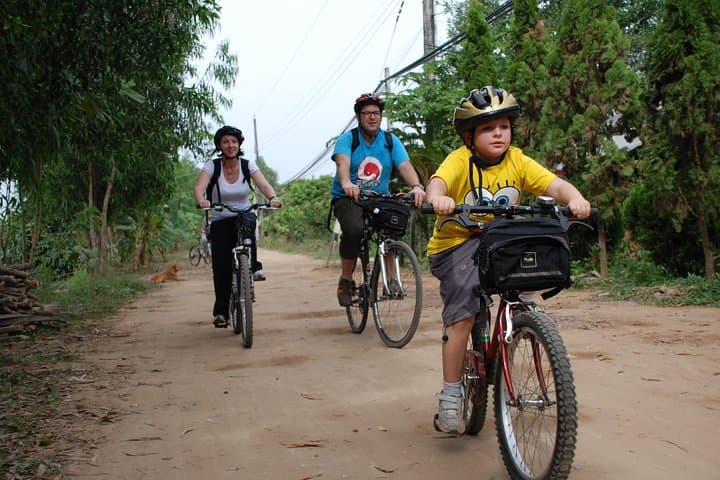
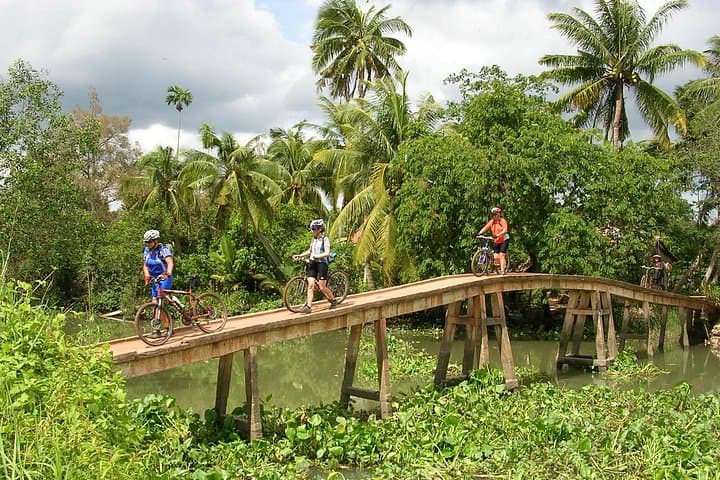
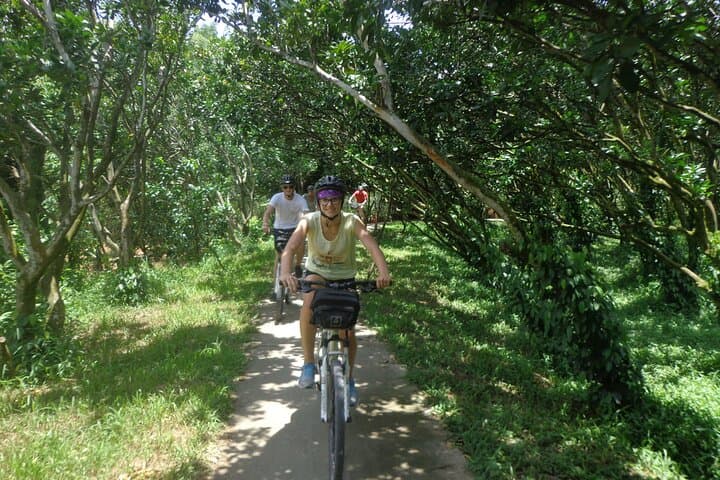
A thin ribbon of asphalt runs between rice paddies and canals as the motor traffic thins and the air fills with the scent of wet earth. On day one cyclists roll out from the outskirts of Ho Chi Minh City into the low, flat reaches of the Mekong Delta—bamboo groves, longan orchards and quiet village lanes passing like pages in a local book. Boats wait at the riverbank; the Mekong itself pushes against the boats with easy patience, ferrying riders between islands.
A thin ribbon of asphalt runs between rice paddies and canals as the motor traffic thins and the air fills with the scent of wet earth. On day one cyclists roll out from the outskirts of Ho Chi Minh City into the low, flat reaches of the Mekong Delta—bamboo groves, longan orchards and quiet village lanes passing like pages in a local book. Boats wait at the riverbank; the Mekong itself pushes against the boats with easy patience, ferrying riders between islands.
This route threads colonial-era trading posts, Khmer-influenced temples and villages whose livelihoods still turn on rice, fish and handcrafted vermicelli. Geologically the delta is recent alluvium—slowly accumulated silt that makes the soils rich and the waterways braided. Culture here is river-first: floating markets, ferry crossings and homes built to cope with seasonal rise.
Expect three days of mixed terrain—quiet country roads, brief stretches of busier highway, and short boat transfers. Distance varies by group ability; plan for roughly 20–40 km of riding per day with occasional stops to visit a rice husking mill or a family-run workshop. Mornings are coolest for cycling; afternoons bring heat and, in the wet season, sudden tropical showers.
Practicalities: travel light—small dry bag, comfortable saddle and pedal-ready shoes. Bring sun protection, a reusable water bottle and modest cash for riverside vendors. Guides handle logistics, meals and guesthouse stays, but basic bike handling and a moderate fitness level make this trip enjoyable. The Mekong’s currents and canals will keep you moving—quiet, insistent, and always directing where the day goes.