THE ADVENTURE COLLECTIVE® · Independent discovery and booking for outdoor travel

Three days on Vietnam’s Mekong Delta combine slow boat rides, floating markets and Khmer temples. This practical trip guide outlines what to expect, how to pack and where the river shows its most vivid rhythms.
Three days on Vietnam’s Mekong Delta combine slow boat rides, floating markets and Khmer temples. This practical trip guide outlines what to expect, how to pack and where the river shows its most vivid rhythms.
Morning mist lifts off the Hau River as longboats cleave slow water and the market wakes into a scatter of voices and conical hats. The first day threads from Ho Chi Minh City through rice paddies to My Tho, where a motorboat eases past stilt houses and floating farms, and Thoi Son Island’s village paths unfold like a living map of delta life.
Verified experiences and guided adventures in the surrounding area.
Operated by The Sun Tourist · Can Tho, Can Tho
Morning mist lifts off the Hau River as longboats cleave slow water and the market wakes into a scatter of voices and conical hats. The first day threads from Ho Chi Minh City through rice paddies to My Tho, where a motorboat eases past stilt houses and floating farms, and Thoi Son Island’s village paths unfold like a living map of delta life.
This three-day itinerary moves between river and road, tracing the Delta’s layered history: Khmer temples and Cham communities, Chinese-Vietnamese trade links, and colonial-era architecture at sites like Vinh Trang Pagoda. Geologically the Mekong fans into a broad alluvial plain, its nutrient-rich silt producing the orchards and rice fields that drive the local economy.
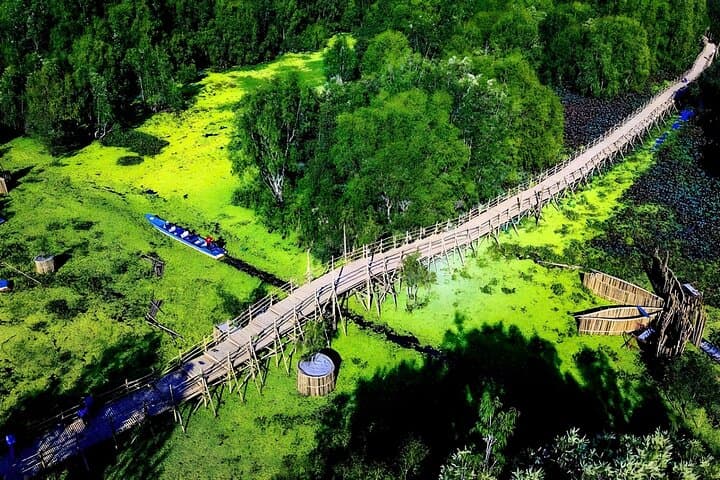
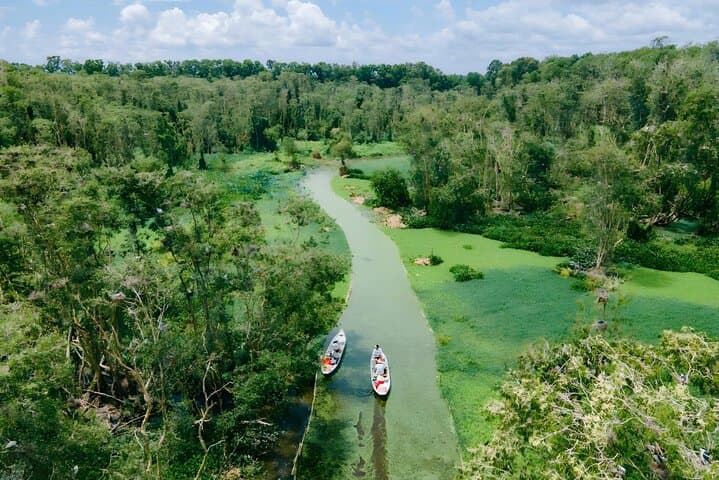
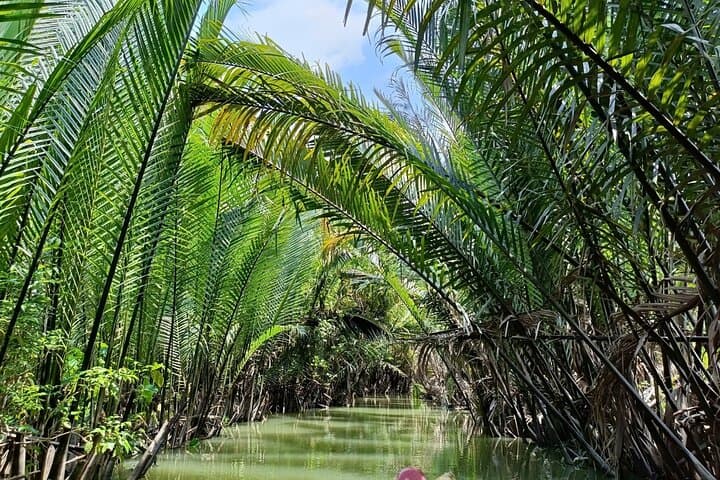
Expect sensory details—fruit-sweet air in orchard groves, the clang of wooden paddles in narrow creeks, and the visual rhythm of boats loaded with produce at Cai Rang’s floating market. Wildlife slips at the water’s edge: kingfishers, herons and the occasional water buffalo cooling in shallows.
Practically, the pace is gentle: short morning boat legs, village walks, and two nights in modest three-star hotels in Can Tho and Chau Doc. Travel includes breakfasts and lunches, entrance fees, and an optional onward boat to Phnom Penh. Comfortable footwear and quick-dry layers make the shortest transitions smoother; expect humid weather and intermittent rain depending on season. Early starts capture markets at their liveliest, and a guide’s English commentary helps decode cultural cues—market bargaining, temple etiquette, and the role of seasonal fruit cycles.
For travelers who want an immersive river experience without rough trekking, this loop balances culture, wildlife viewing and everyday life on Vietnam’s most productive waterways.
easy.
3 days (approx. 72 hours).
Suitable for travelers in average fitness; involves short walks, boat transfers, and stepping on/off small boats.
Most nationalities require a visa to enter Cambodia; confirm visa rules for your passport and whether you need a visa-on-arrival or pre-arranged e-visa before choosing the Phnom Penh option.
The tour is rated easy with short, low-impact walks and seated boat travel; good mobility for stepping in and out of small boats is useful.
Children can participate but infants must sit on an adult’s lap on boats; facilities are basic in some rural stops.
Carry Vietnamese dong for local purchases; US dollars and Cambodian riel may be useful if continuing to Phnom Penh, but small transactions favor local notes.
The Mekong Delta has long been a crossroads of Khmer, Cham, Chinese and Vietnamese cultures; Khmer temples and regional festivals reflect that layered heritage.
Seasonal flooding and plastic pollution threaten waterways; support local workshops and choose operators who limit single-use plastics and respect wildlife habitats.
The Sun Tourist operates guided outdoor trips and adventures with an emphasis on safety, stewardship, and memorable experiences.
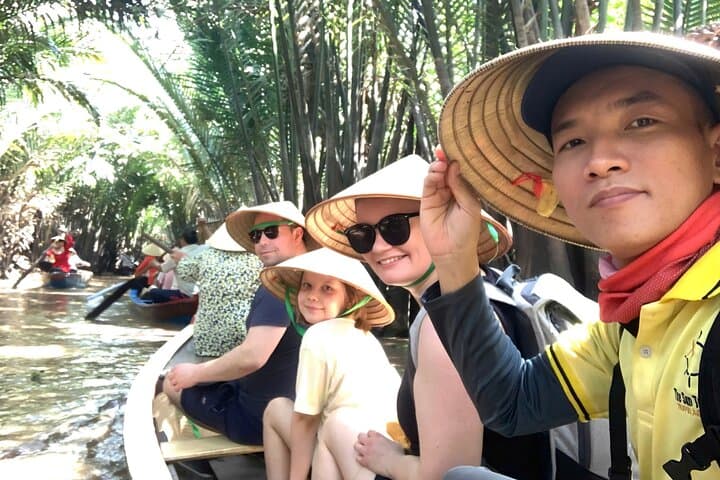
Morning mist lifts off the Hau River as longboats cleave slow water and the market wakes into a scatter of voices and conical hats. The first day threads from Ho Chi Minh City through rice paddies to My Tho, where a motorboat eases past stilt houses and floating farms, and Thoi Son Island’s village paths unfold like a living map of delta life.
Morning mist lifts off the Hau River as longboats cleave slow water and the market wakes into a scatter of voices and conical hats. The first day threads from Ho Chi Minh City through rice paddies to My Tho, where a motorboat eases past stilt houses and floating farms, and Thoi Son Island’s village paths unfold like a living map of delta life.
This three-day itinerary moves between river and road, tracing the Delta’s layered history: Khmer temples and Cham communities, Chinese-Vietnamese trade links, and colonial-era architecture at sites like Vinh Trang Pagoda. Geologically the Mekong fans into a broad alluvial plain, its nutrient-rich silt producing the orchards and rice fields that drive the local economy.
Expect sensory details—fruit-sweet air in orchard groves, the clang of wooden paddles in narrow creeks, and the visual rhythm of boats loaded with produce at Cai Rang’s floating market. Wildlife slips at the water’s edge: kingfishers, herons and the occasional water buffalo cooling in shallows.
Practically, the pace is gentle: short morning boat legs, village walks, and two nights in modest three-star hotels in Can Tho and Chau Doc. Travel includes breakfasts and lunches, entrance fees, and an optional onward boat to Phnom Penh. Comfortable footwear and quick-dry layers make the shortest transitions smoother; expect humid weather and intermittent rain depending on season. Early starts capture markets at their liveliest, and a guide’s English commentary helps decode cultural cues—market bargaining, temple etiquette, and the role of seasonal fruit cycles.
For travelers who want an immersive river experience without rough trekking, this loop balances culture, wildlife viewing and everyday life on Vietnam’s most productive waterways.