THE ADVENTURE COLLECTIVE® · Independent discovery and booking for outdoor travel

Ride camels from M'Hamid through shifting dunes to the remote Erg Ezzahar on a four-day Méhari trek. Expect long, measured days, desert bivouacs run by local nomads, and hands-on cultural moments like sand-baked bread and mint tea around the fire.
Ride camels from M'Hamid through shifting dunes to the remote Erg Ezzahar on a four-day Méhari trek. Expect long, measured days, desert bivouacs run by local nomads, and hands-on cultural moments like sand-baked bread and mint tea around the fire.
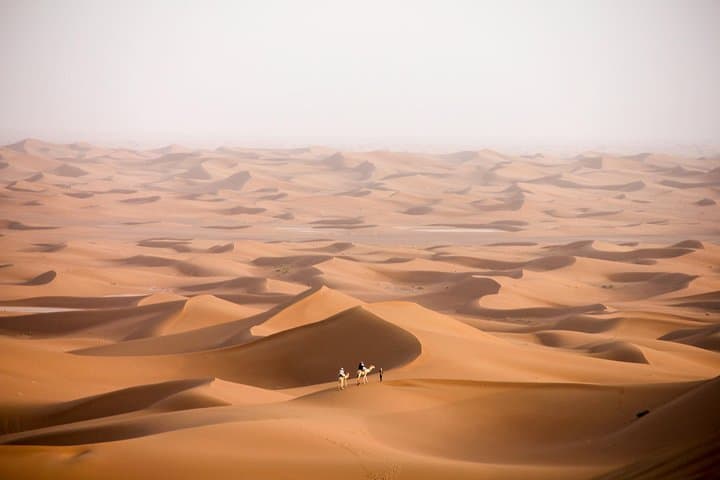
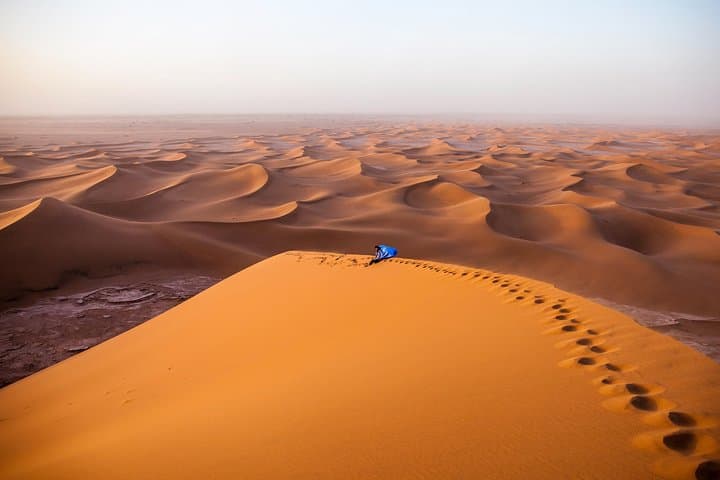
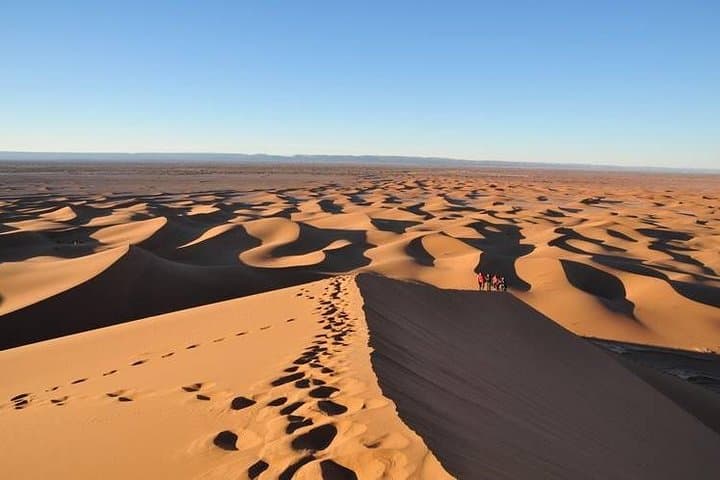
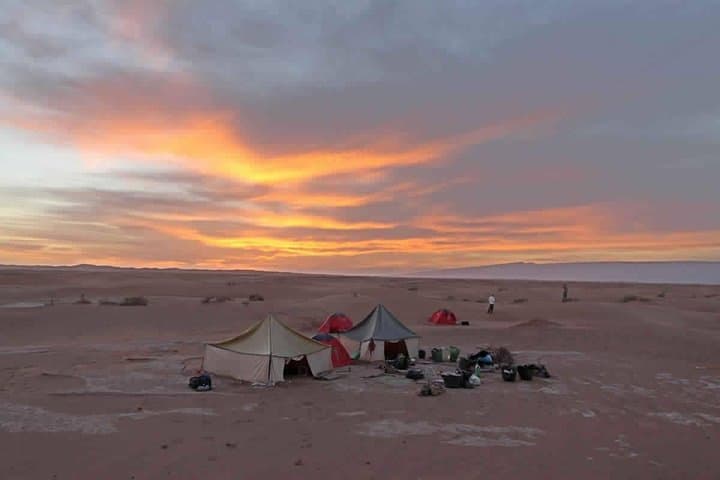
The caravan pulls away from the dusty edge of M'Hamid at first light, camels stepping in patient rhythm as the village shrinks behind you and sand takes over the horizon. Wind lifts a fine veil of gold; tamaris trees punctuate the route and a single cup of mint tea marks the midday pause. Over four days, this Méhari (camel) trek moves through shifting dunes, dry riverbeds and compacted desert plains toward Erg Ezzahar, each night spent under a mobile bivouac run by local nomadic guides.
Verified experiences and guided adventures in the surrounding area.
Operated by Erg Chigaga · M'Hamid, Drâa-Tafilalet
The caravan pulls away from the dusty edge of M'Hamid at first light, camels stepping in patient rhythm as the village shrinks behind you and sand takes over the horizon. Wind lifts a fine veil of gold; tamaris trees punctuate the route and a single cup of mint tea marks the midday pause. Over four days, this Méhari (camel) trek moves through shifting dunes, dry riverbeds and compacted desert plains toward Erg Ezzahar, each night spent under a mobile bivouac run by local nomadic guides.
Geologically the route traces Holocene sand sheets and Pleistocene interdune flats—large, wind-sculpted dunes alternate with hard-packed plains that preserve old caravan trails. Culturally, the trip is led by families descended from Saharan nomads and Berber groups who still practice desert bread baking and tea rituals at camp. You’ll pass small ruined settlements and tamarisk-lined wadis that hint at older trade routes heading south toward Timbuktu.
Expect long but measured days: camel rides and short hikes totaling roughly 4 days on the trail, with regular stops for lunch under shade and opportunities to learn traditional crafts. Practical realities matter—days are hot, nights can be chilly, water is limited and terrain alternates between soft sand and firm pistes. Bring sun protection, closed-toe shoes for walking between camels, layered clothing for temperature swings, and a reusable water bottle.
This Méhari experience is equal parts physical journey and cultural exchange: plan for moderate exertion, respect camp routines, and leave no trace of your passage through this fragile landscape.
moderate.
4 days (approx.).
Suitable for travelers with moderate fitness who can sit for periods on a camel and handle 3–5 hours of mixed riding and walking per day.
The trek is moderate: long sitting periods on camels interspersed with short walks. Travelers should be comfortable sitting for several hours and be able to walk 2–5 km on soft sand if needed.
Camps are mobile bivouacs run by local nomads—expect simple sleeping mats or mattresses, shared facilities, warm meals and a fire; they are comfortable by desert standards, not luxury hotels.
No. Guides give instructions and camels are accustomed to travelers; however, those with serious back problems or pregnancy are advised not to participate.
Pickup and drop-off options are commonly arranged from M'Hamid; confirm transfer details with the operator when booking to match arrival times.
The route follows traditional caravan corridors used by nomadic Saharan groups and trans-Saharan traders; many guide families trace their routes through oral history and desert crafts.
The Sahara is ecologically fragile—stick to trails, avoid harvesting fuelwood, and follow guides’ advice on waste disposal to protect scarce water and fragile dunes.
Erg Chigaga operates guided outdoor trips and adventures with an emphasis on safety, stewardship, and memorable experiences.
The caravan pulls away from the dusty edge of M'Hamid at first light, camels stepping in patient rhythm as the village shrinks behind you and sand takes over the horizon. Wind lifts a fine veil of gold; tamaris trees punctuate the route and a single cup of mint tea marks the midday pause. Over four days, this Méhari (camel) trek moves through shifting dunes, dry riverbeds and compacted desert plains toward Erg Ezzahar, each night spent under a mobile bivouac run by local nomadic guides.
The caravan pulls away from the dusty edge of M'Hamid at first light, camels stepping in patient rhythm as the village shrinks behind you and sand takes over the horizon. Wind lifts a fine veil of gold; tamaris trees punctuate the route and a single cup of mint tea marks the midday pause. Over four days, this Méhari (camel) trek moves through shifting dunes, dry riverbeds and compacted desert plains toward Erg Ezzahar, each night spent under a mobile bivouac run by local nomadic guides.
Geologically the route traces Holocene sand sheets and Pleistocene interdune flats—large, wind-sculpted dunes alternate with hard-packed plains that preserve old caravan trails. Culturally, the trip is led by families descended from Saharan nomads and Berber groups who still practice desert bread baking and tea rituals at camp. You’ll pass small ruined settlements and tamarisk-lined wadis that hint at older trade routes heading south toward Timbuktu.
Expect long but measured days: camel rides and short hikes totaling roughly 4 days on the trail, with regular stops for lunch under shade and opportunities to learn traditional crafts. Practical realities matter—days are hot, nights can be chilly, water is limited and terrain alternates between soft sand and firm pistes. Bring sun protection, closed-toe shoes for walking between camels, layered clothing for temperature swings, and a reusable water bottle.
This Méhari experience is equal parts physical journey and cultural exchange: plan for moderate exertion, respect camp routines, and leave no trace of your passage through this fragile landscape.