THE ADVENTURE COLLECTIVE® · Independent discovery and booking for outdoor travel

Get up close with one of the world's rarest horse breeds on an immersive ranch tour in the Kettle Moraine. Learn breed history, help groom foals, and take home practical horsemanship skills in a hands-on 2–3 hour experience.
Get up close with one of the world's rarest horse breeds on an immersive ranch tour in the Kettle Moraine. Learn breed history, help groom foals, and take home practical horsemanship skills in a hands-on 2–3 hour experience.
A late-morning sun colors the pasture gold as mares and foals move through a patchwork of fencing and knobby moraine hummocks. You step from gravel into field, hands already dusted with hay, guided to meet a herd that feels both ancient and immediate: heavy-boned Friesians with flowing manes, including the exceptionally rare red coat variants.
Verified experiences and guided adventures in the surrounding area.
Operated by Friesian Herd Experiences · East Troy, Wisconsin
A late-morning sun colors the pasture gold as mares and foals move through a patchwork of fencing and knobby moraine hummocks. You step from gravel into field, hands already dusted with hay, guided to meet a herd that feels both ancient and immediate: heavy-boned Friesians with flowing manes, including the exceptionally rare red coat variants.
The Friesian breed originates in the Netherlands and became prized for carriage and farm work; the red Friesian is a genetic rarity, and dedicated breeders in southeastern Wisconsin now steward a tiny global population. The ranch sits on Kettle Moraine terrain left by glacial retreat—rolling ridges and shallow kettles that shape trails, paddocks and viewing points. Local equestrian culture is strong here: weekend riders, farriers and horsemanship workshops form a practical community around preservation.
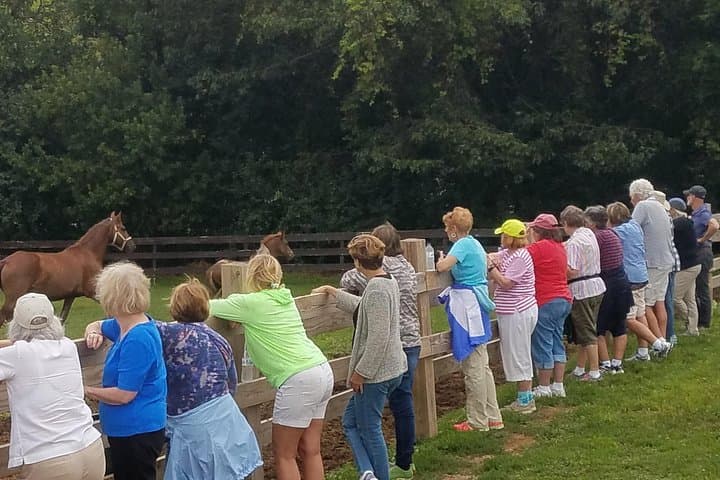
Expect a mix of storytelling and hands-on horsemanship. Hosts explain breeding choices, foal socialization and humane handling, then invite guests to pet, groom and photograph mares and babies. Terrain can be uneven—gravel lanes and hoofed turf—so most of the program stays outdoors. Classes add practical skills: leading, basic tacking and safe approach techniques.
Practical guidance: dress for the weather and for dirt—jeans or long pants, sturdy boots, and gloves if you plan to be hands-on. Bring a camera with a fast shutter for lively foal movement and a small bag for carrot or apple treats if permitted. Tours run about 2–3 hours and are family-friendly; check booking details for age policies and cancellation windows. Respect handlers’ directions and biosecurity rules: the health of a herd this rare depends on careful, informed visitors.
easy.
2–3 hours.
Suitable for most fitness levels; requires standing and light walking on uneven ground
Yes; tours are family-friendly but children should be supervised and follow handler instructions—infants may need to sit on laps and small children should remain close to adults.
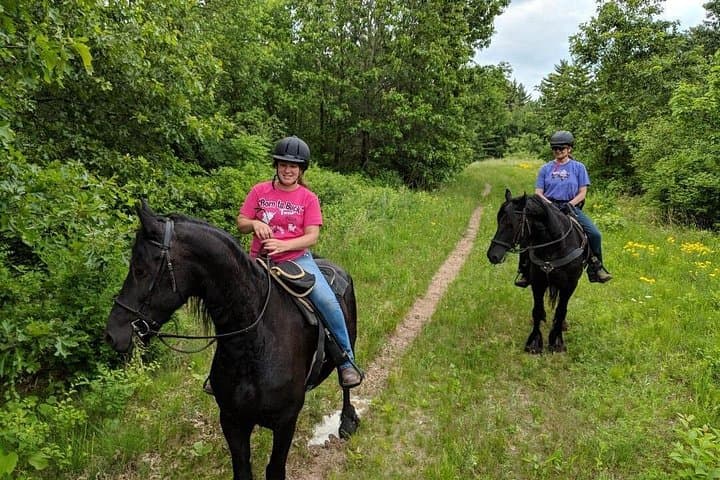
Most tours focus on handling, grooming and observation; riding is not typically included unless booked as part of a specific lesson or retreat—ask the host when booking.
Service animals are allowed; other pets may not be appropriate around livestock and should be left at home unless the host gives prior approval.
Tours can be canceled for severe weather; check the cancellation policy and confirm with the host—dress layers and rain protection for variable conditions.
Friesians trace to the coastal provinces of the Netherlands where they served as carriage and draft horses; the red coat is an uncommon color maintained by focused breeding programs.
The ranch participates in a rare-breed conservation effort—visitors should respect biosecurity measures and support ethical breeding by following host guidelines.
Friesian Herd Experiences operates guided outdoor trips and adventures with an emphasis on safety, stewardship, and memorable experiences.
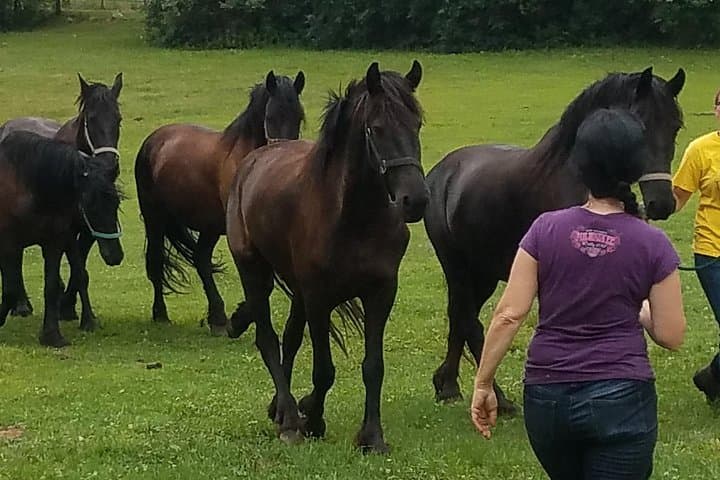
A late-morning sun colors the pasture gold as mares and foals move through a patchwork of fencing and knobby moraine hummocks. You step from gravel into field, hands already dusted with hay, guided to meet a herd that feels both ancient and immediate: heavy-boned Friesians with flowing manes, including the exceptionally rare red coat variants.
A late-morning sun colors the pasture gold as mares and foals move through a patchwork of fencing and knobby moraine hummocks. You step from gravel into field, hands already dusted with hay, guided to meet a herd that feels both ancient and immediate: heavy-boned Friesians with flowing manes, including the exceptionally rare red coat variants.
The Friesian breed originates in the Netherlands and became prized for carriage and farm work; the red Friesian is a genetic rarity, and dedicated breeders in southeastern Wisconsin now steward a tiny global population. The ranch sits on Kettle Moraine terrain left by glacial retreat—rolling ridges and shallow kettles that shape trails, paddocks and viewing points. Local equestrian culture is strong here: weekend riders, farriers and horsemanship workshops form a practical community around preservation.
Expect a mix of storytelling and hands-on horsemanship. Hosts explain breeding choices, foal socialization and humane handling, then invite guests to pet, groom and photograph mares and babies. Terrain can be uneven—gravel lanes and hoofed turf—so most of the program stays outdoors. Classes add practical skills: leading, basic tacking and safe approach techniques.
Practical guidance: dress for the weather and for dirt—jeans or long pants, sturdy boots, and gloves if you plan to be hands-on. Bring a camera with a fast shutter for lively foal movement and a small bag for carrot or apple treats if permitted. Tours run about 2–3 hours and are family-friendly; check booking details for age policies and cancellation windows. Respect handlers’ directions and biosecurity rules: the health of a herd this rare depends on careful, informed visitors.