THE ADVENTURE COLLECTIVE® · Independent discovery and booking for outdoor travel

Spend an hour with rescued llamas, alpacas and guanacos on a short walking tour that combines animal rescue stories, reclaimed-architecture sights, and a supervised carrot-feeding. Ideal for families and animal lovers looking for a gentle, hands-on encounter near Atlanta.
Spend an hour with rescued llamas, alpacas and guanacos on a short walking tour that combines animal rescue stories, reclaimed-architecture sights, and a supervised carrot-feeding. Ideal for families and animal lovers looking for a gentle, hands-on encounter near Atlanta.
You step through a reclaimed gate and the air shifts—bamboo leaves whisper, a barn made of stained glass and vintage timbers throws colored light across the path, and a herd of long-necked, curious animals lifts their heads to study you. The guide moves easily between enclosures, trading rescue stories as the animals nudge for carrots; the place reads like a creative refuge where architecture and animal care share the same intentional rhythm.
Verified experiences and guided adventures in the surrounding area.
Operated by The Atlanta Alpaca Treehouse · Atlanta, Georgia
You step through a reclaimed gate and the air shifts—bamboo leaves whisper, a barn made of stained glass and vintage timbers throws colored light across the path, and a herd of long-necked, curious animals lifts their heads to study you. The guide moves easily between enclosures, trading rescue stories as the animals nudge for carrots; the place reads like a creative refuge where architecture and animal care share the same intentional rhythm.
Camelids are South American by origin—wild guanacos and domesticated llamas and alpacas carry a lineage tied to Andean life and utility. Here, that history is reframed: animals rescued from neglect live among reclaimed structures and a 1940s bamboo stand that feels older than the surrounding Piedmont red clay. The site also taps into Atlanta’s DIY reuse culture—treehouses and reclaimed windows repurposed into visitor spaces.
Practicalities are straightforward. Tours run about an hour and combine a short walk, a talk about the herd’s rescue and biology, and a supervised carrot-feeding. It’s family-friendly and stroller-accessible, but not recommended for guests with serious spinal or cardiac issues. Expect uneven ground around pasture edges—closed-toe shoes are smart. Photography is welcome; keep movements slow and avoid sudden loud noises around the animals. Bring cash or card for the small gift shoppe and arrive 10 minutes early to check in. Ticket sales are final, so confirm plans before booking.
Respect, steady hands, and a sense of curiosity will make this gentle, hands-on hour a memorable stop on an Atlanta-area outing.
easy.
1 hour.
Light walking on mostly flat ground; suitable for a broad range of fitness levels
Yes—tours are family-friendly and stroller-accessible; children should be supervised closely around animals and follow guide directions.
No—feeding is supervised and limited to the provided baby organic carrots to protect animal diets and health.
All sales are final; there are no refunds, so confirm plans before booking and review time-zone and arrival guidance.
Some areas and the main barn approach are accessible, but pasture edges and paths can be uneven—contact the operator in advance to discuss specific accessibility needs.
The herd’s species trace back to Andean domestication; at this site, rescued camelids live among reclaimed architectural elements that reflect local reuse culture.
The operation focuses on rescue and responsible care; visitors are asked to follow feeding rules and pack out any trash to minimize impact.
The Atlanta Alpaca Treehouse operates guided outdoor trips and adventures with an emphasis on safety, stewardship, and memorable experiences.
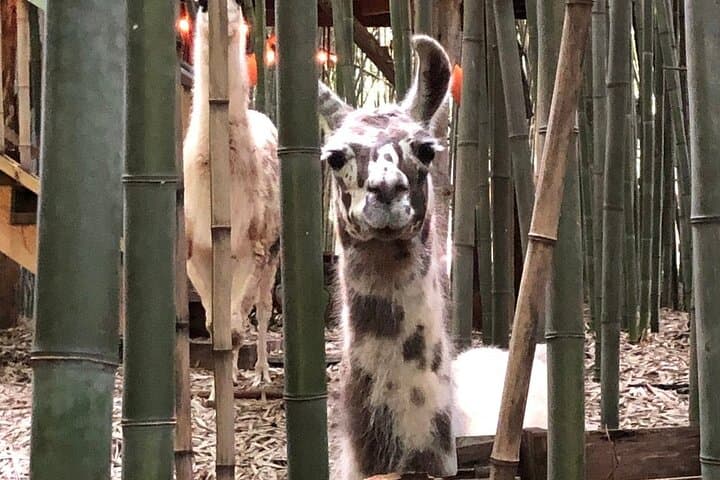
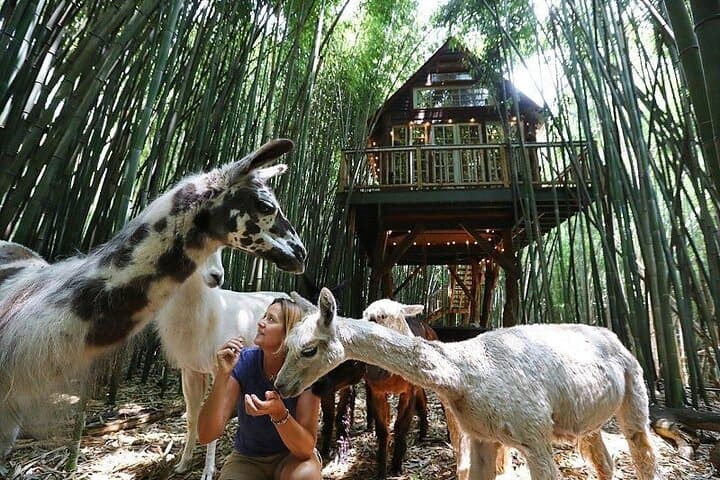
You step through a reclaimed gate and the air shifts—bamboo leaves whisper, a barn made of stained glass and vintage timbers throws colored light across the path, and a herd of long-necked, curious animals lifts their heads to study you. The guide moves easily between enclosures, trading rescue stories as the animals nudge for carrots; the place reads like a creative refuge where architecture and animal care share the same intentional rhythm.
You step through a reclaimed gate and the air shifts—bamboo leaves whisper, a barn made of stained glass and vintage timbers throws colored light across the path, and a herd of long-necked, curious animals lifts their heads to study you. The guide moves easily between enclosures, trading rescue stories as the animals nudge for carrots; the place reads like a creative refuge where architecture and animal care share the same intentional rhythm.
Camelids are South American by origin—wild guanacos and domesticated llamas and alpacas carry a lineage tied to Andean life and utility. Here, that history is reframed: animals rescued from neglect live among reclaimed structures and a 1940s bamboo stand that feels older than the surrounding Piedmont red clay. The site also taps into Atlanta’s DIY reuse culture—treehouses and reclaimed windows repurposed into visitor spaces.
Practicalities are straightforward. Tours run about an hour and combine a short walk, a talk about the herd’s rescue and biology, and a supervised carrot-feeding. It’s family-friendly and stroller-accessible, but not recommended for guests with serious spinal or cardiac issues. Expect uneven ground around pasture edges—closed-toe shoes are smart. Photography is welcome; keep movements slow and avoid sudden loud noises around the animals. Bring cash or card for the small gift shoppe and arrive 10 minutes early to check in. Ticket sales are final, so confirm plans before booking.
Respect, steady hands, and a sense of curiosity will make this gentle, hands-on hour a memorable stop on an Atlanta-area outing.