THE ADVENTURE COLLECTIVE® · Independent discovery and booking for outdoor travel

Spend six hours in Japan’s first permanent capital by private car: feed bowing deer in Nara Park, stand beneath the giant bronze Buddha at Todai-ji, and wander nostalgic Naramachi lanes. This guided route balances cultural depth and easy walking with customizable stops.
Spend six hours in Japan’s first permanent capital by private car: feed bowing deer in Nara Park, stand beneath the giant bronze Buddha at Todai-ji, and wander nostalgic Naramachi lanes. This guided route balances cultural depth and easy walking with customizable stops.
Morning light pours across Nara Park and the deer step into it like they own the map — curious, patient, and oddly formal as they bow for a treat. You arrive by private car, windows framing temple roofs and cedar trunks, and the city feels measured, ancient and immediate at once.
Verified experiences and guided adventures in the surrounding area.
Operated by The Washoku Club Culture and Food Tours · Nara, Nara Prefecture
Morning light pours across Nara Park and the deer step into it like they own the map — curious, patient, and oddly formal as they bow for a treat. You arrive by private car, windows framing temple roofs and cedar trunks, and the city feels measured, ancient and immediate at once.
Nara was Japan’s first permanent capital (established 710 CE), built as a compact civic and religious center. Its geology is gentle — low rolling hills of volcanic ash and sediment that cradle temple complexes like Todai-ji, home to the 15-meter bronze Daibutsu, and the red-lanterned pathways of Kasuga Taisha. Walk the lanes of Naramachi to read merchant-era architecture and sip matcha in a quiet machiya house; climb Wakakusayama for a clean overlook of a city shaped by incense smoke and deer trails.
This six-hour private car tour stitches cultural highlights with easy nature walking: temple courtyards, deer encounters, a stroll through preserved streets, and a short ascent for panoramas. Expect mostly paved paths, pockets of gravel, and modest stair sections; shoes with good grip and a moderate tolerance for walking will see you through. Bring cash for small shrine offerings, and plan to move at a relaxed pace to allow for photos and feeding tokens for the sika deer.
Timing matters: arrive early to avoid tour buses, and carry a lightweight layer for wind on the hill. The guide handles logistics and local stories — you bring curiosity and respect for wildlife and sacred space.
easy.
6 hours.
Light walking required with short climbs; suitable for most fitness levels
This tour highlights key sites but most standard itineraries do not include entrance fees—confirm with the operator; small shrine donations are usually separate.
Yes—vendors sell deer crackers (shika senbei) that are appropriate; avoid feeding other foods and follow your guide’s safety tips.
Much of Nara Park and main temple grounds are accessible, but there are gravel sections and steps; ask the operator for specific accessibility accommodations.
Yes—this listing includes a licensed English-speaking guide and private car pickup as part of the service.
Nara served as Japan’s first permanent capital from 710 CE, concentrating imperial, Buddhist, and political power; Todai-ji’s Daibutsu was completed in the 8th century as a national symbol.
The deer are protected and managed; avoid litter, stick to designated paths, and use only approved deer crackers to prevent harm to wildlife.
The Washoku Club Culture and Food Tours operates guided outdoor trips and adventures with an emphasis on safety, stewardship, and memorable experiences.
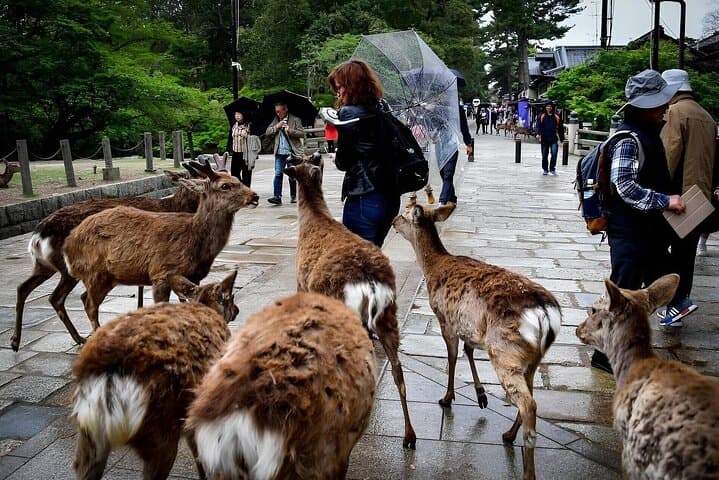
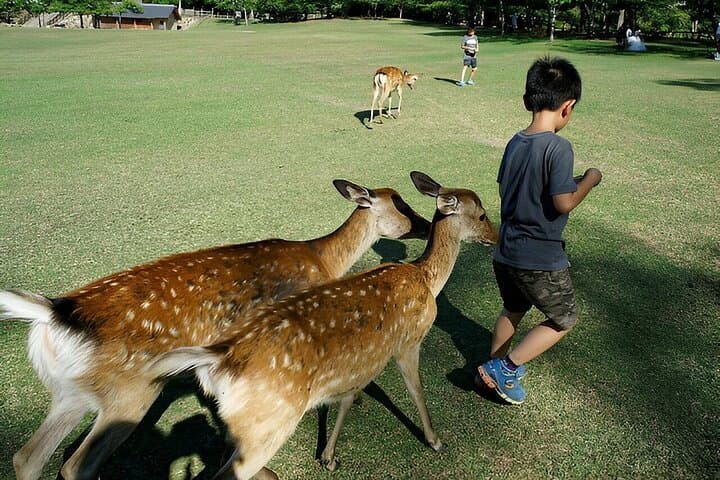
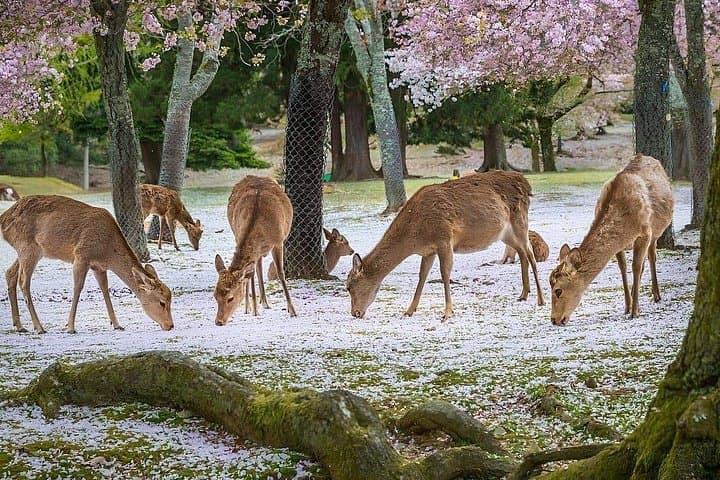
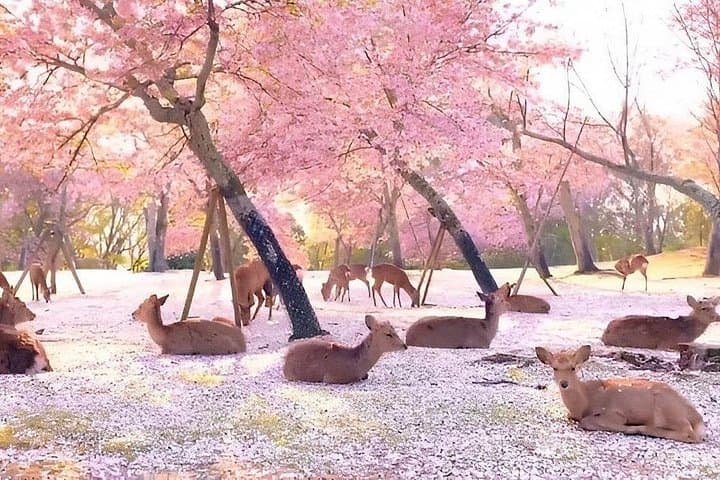
Morning light pours across Nara Park and the deer step into it like they own the map — curious, patient, and oddly formal as they bow for a treat. You arrive by private car, windows framing temple roofs and cedar trunks, and the city feels measured, ancient and immediate at once.
Morning light pours across Nara Park and the deer step into it like they own the map — curious, patient, and oddly formal as they bow for a treat. You arrive by private car, windows framing temple roofs and cedar trunks, and the city feels measured, ancient and immediate at once.
Nara was Japan’s first permanent capital (established 710 CE), built as a compact civic and religious center. Its geology is gentle — low rolling hills of volcanic ash and sediment that cradle temple complexes like Todai-ji, home to the 15-meter bronze Daibutsu, and the red-lanterned pathways of Kasuga Taisha. Walk the lanes of Naramachi to read merchant-era architecture and sip matcha in a quiet machiya house; climb Wakakusayama for a clean overlook of a city shaped by incense smoke and deer trails.
This six-hour private car tour stitches cultural highlights with easy nature walking: temple courtyards, deer encounters, a stroll through preserved streets, and a short ascent for panoramas. Expect mostly paved paths, pockets of gravel, and modest stair sections; shoes with good grip and a moderate tolerance for walking will see you through. Bring cash for small shrine offerings, and plan to move at a relaxed pace to allow for photos and feeding tokens for the sika deer.
Timing matters: arrive early to avoid tour buses, and carry a lightweight layer for wind on the hill. The guide handles logistics and local stories — you bring curiosity and respect for wildlife and sacred space.