THE ADVENTURE COLLECTIVE® · Independent discovery and booking for outdoor travel

Walk Nuremberg’s medieval core with a licensed guide and move from Handwerkerhof to the Imperial Castle, with an optional visit inside St. Lorenz. This 2–3 hour private tour blends civic history, guild culture and gothic art into a concise, accessible route.
Walk Nuremberg’s medieval core with a licensed guide and move from Handwerkerhof to the Imperial Castle, with an optional visit inside St. Lorenz. This 2–3 hour private tour blends civic history, guild culture and gothic art into a concise, accessible route.
The tour begins on the cobbles at Bahnhofstraße, where the city's pulse slows and the stone of the Old Town takes over. You move beneath high gables and through narrow market alleys, the Pegnitz river whispering nearby as your guide threads together stories of power, craft and daily life.
Verified experiences and guided adventures in the surrounding area.
Operated by Rosotravel - Munich · Nuremberg, Bavaria
The tour begins on the cobbles at Bahnhofstraße, where the city's pulse slows and the stone of the Old Town takes over. You move beneath high gables and through narrow market alleys, the Pegnitz river whispering nearby as your guide threads together stories of power, craft and daily life.
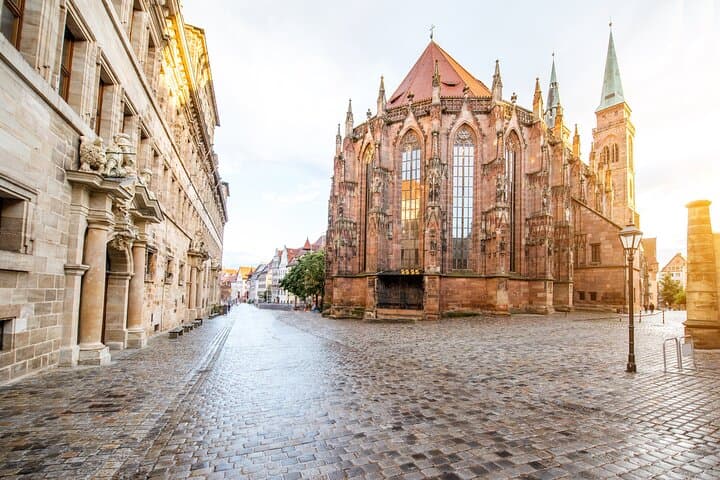
Nuremberg rose to prominence in the High Middle Ages as an imperial city of the Holy Roman Empire. Its walls, castle courtyards and Gothic churches—St. Sebald and the soaring St. Lorenz—speak to civic wealth built on trade, skilled guilds and artists like Albrecht Dürer. Handwerkerhof preserves that working-class craft tradition in a compact courtyard of workshops and demonstrations.
Geologically modest, the city sits on river terraces and accessible stone foundations that made fortifications practical; the castle’s ramparts still offer close-range views over tile roofs and market squares. Locally, you’ll hear both documented history and lively legends—imperial intrigues, craftsmen’s guild politics and more modern oddities that color Nuremberg’s lore.
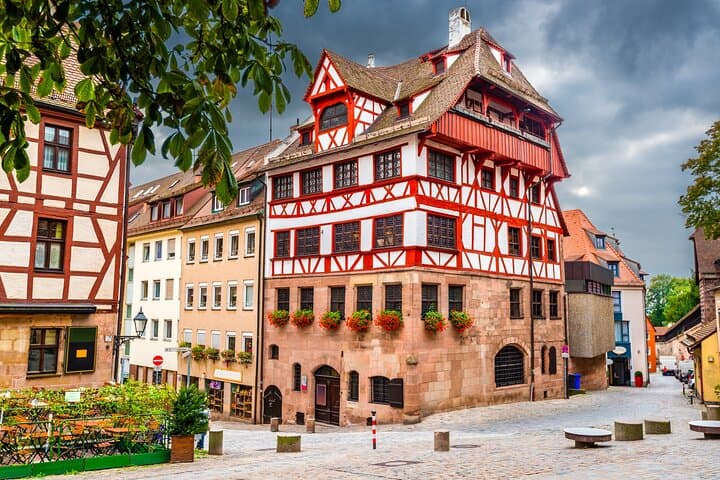
Practically, expect 2–3 hours of steady walking on uneven cobbles with short stair sections and occasional steep ramps near the castle. Optional entry to St. Lorenz adds time but rewards with late-Gothic sculpture and altarpieces. Guides are licensed and will adapt the route for mobility needs; note that church interiors may be closed during services or concerts. Bring sturdy shoes, a water bottle, a light rain layer and enough time to pause at the Main Market or the Dürer house. This is a compact urban adventure where history is tactile: a city that invites you to listen, look and keep pace.
easy.
2–3 hours.
Suitable for most visitors who can walk 2–3 miles on uneven surfaces; light mobility issues should be disclosed in advance
The meeting point is in front of Le Méridien Grand Hotel (Bahnhofstraße 1-3); the tour finishes in the courtyards of the Imperial Castle.
The operator lists wheelchair accessibility, but some historic areas have cobbles and ramps—contact the guide in advance to plan a suitable route.
The 3-hour option includes entry to St. Lorenz when available; services and events may restrict interior access, in which case the guide covers the art and history outside.
This is a private walking tour tailored to your booking; group size depends on your reservation but is arranged privately with the guide.
Nuremberg flourished as a free imperial city where trade, imperial law and powerful guilds shaped civic identity; the castle and market were central to its medieval authority.
High foot traffic in the Old Town is managed to protect historic fabric—stick to marked paths, avoid touching artworks and support local conservation through respectful behavior.
Rosotravel - Munich operates guided outdoor trips and adventures with an emphasis on safety, stewardship, and memorable experiences.
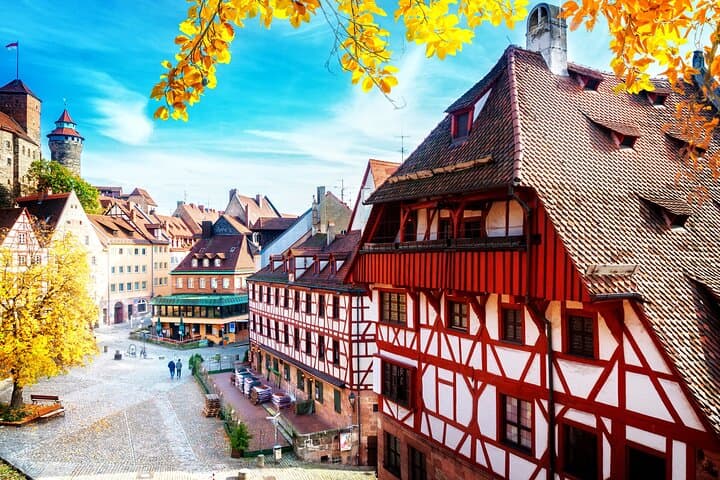
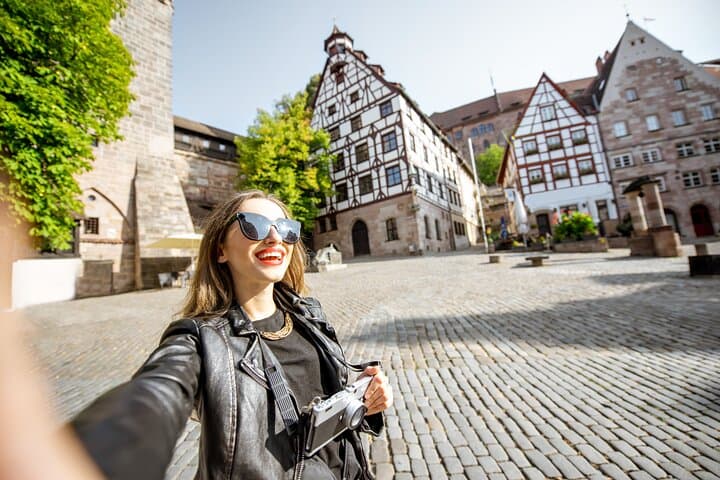
The tour begins on the cobbles at Bahnhofstraße, where the city's pulse slows and the stone of the Old Town takes over. You move beneath high gables and through narrow market alleys, the Pegnitz river whispering nearby as your guide threads together stories of power, craft and daily life.
The tour begins on the cobbles at Bahnhofstraße, where the city's pulse slows and the stone of the Old Town takes over. You move beneath high gables and through narrow market alleys, the Pegnitz river whispering nearby as your guide threads together stories of power, craft and daily life.
Nuremberg rose to prominence in the High Middle Ages as an imperial city of the Holy Roman Empire. Its walls, castle courtyards and Gothic churches—St. Sebald and the soaring St. Lorenz—speak to civic wealth built on trade, skilled guilds and artists like Albrecht Dürer. Handwerkerhof preserves that working-class craft tradition in a compact courtyard of workshops and demonstrations.
Geologically modest, the city sits on river terraces and accessible stone foundations that made fortifications practical; the castle’s ramparts still offer close-range views over tile roofs and market squares. Locally, you’ll hear both documented history and lively legends—imperial intrigues, craftsmen’s guild politics and more modern oddities that color Nuremberg’s lore.
Practically, expect 2–3 hours of steady walking on uneven cobbles with short stair sections and occasional steep ramps near the castle. Optional entry to St. Lorenz adds time but rewards with late-Gothic sculpture and altarpieces. Guides are licensed and will adapt the route for mobility needs; note that church interiors may be closed during services or concerts. Bring sturdy shoes, a water bottle, a light rain layer and enough time to pause at the Main Market or the Dürer house. This is a compact urban adventure where history is tactile: a city that invites you to listen, look and keep pace.