THE ADVENTURE COLLECTIVE® · Independent discovery and booking for outdoor travel

Play the Great Riot of 1327 on foot through Bury St Edmunds. This self-guided mobile quest leads you from cathedral steps to Abbey Gardens with riddles that use real history and local landmarks.
Play the Great Riot of 1327 on foot through Bury St Edmunds. This self-guided mobile quest leads you from cathedral steps to Abbey Gardens with riddles that use real history and local landmarks.
You begin at the cathedral steps, phone in hand, as the stonework of St Edmund’s Abbey presses close and the streets open into a patchwork of coaching-era facades and narrow lanes. The game drops you into January 1327 — you are a townsman outraged at the abbey’s wealth — and the route funnels through market squares, past cloister ruins and into the Abbey Gardens where history becomes a playable map.
Verified experiences and guided adventures in the surrounding area.
Operated by Questo · Bury St Edmunds, Suffolk
You begin at the cathedral steps, phone in hand, as the stonework of St Edmund’s Abbey presses close and the streets open into a patchwork of coaching-era facades and narrow lanes. The game drops you into January 1327 — you are a townsman outraged at the abbey’s wealth — and the route funnels through market squares, past cloister ruins and into the Abbey Gardens where history becomes a playable map.
Bury St Edmunds’ story is visible in its fabric: a once-dominant Benedictine abbey that housed the relics of King Edmund, medieval timber-framed houses, and later Georgian overlays. The town’s river, the Lark, quietly shaped trade routes and the market economy that fed many of these streets. Local culture still centers on the Abbey Gardens, the cathedral, and community markets; the game uses those places as narrative beats, mixing fact with dramatized civic unrest of the 14th century.
Practical guidance: this is a self-guided, phone-based walking experience of about 90 minutes over mostly paved and cobbled urban ground with short inclines and occasional steps. Expect 1–2 miles covered at a casual pace; the app provides directions and puzzles, so a charged phone and a portable battery are essential. The route is family-friendly and can be paused and resumed, but some clues require reading plaques or noticing architectural details, so take your time.
Tips on timing: start in daylight to read signs and enjoy the Abbey Gardens fully. Respect private property and conserve battery life; the game is as much about observation as it is about speed.
easy.
1–2 hours.
Suitable for most fitness levels; involves walking on paved/cobbled urban terrain for up to 90 minutes.
The experience typically starts by St Edmundsbury Cathedral and ends nearby in the Abbey Gardens; exact start instructions are provided after booking.
Yes — the game is family-friendly and flexible; it’s self-guided so groups can play together, but only one ticket is required per booking as specified.
The app uses GPS and local media; if signal drops you can pause and resume, but restoring mobile data or moving to an open street usually resolves issues.
You can start at any time of day; cancelations for a full refund must be made at least 24 hours before the scheduled time per the booking policy.
The abbey at Bury St Edmunds was once one of England’s richest Benedictine houses, housing relics of King Edmund and shaping the town’s medieval prominence; tensions over abbey power inspired local uprisings such as the 1327 unrest used in the game.
Visitors are asked to stay on paths in the Abbey Gardens and avoid touching fragile masonry; keeping the town litter-free and following signposted routes helps protect heritage assets.
Questo operates guided outdoor trips and adventures with an emphasis on safety, stewardship, and memorable experiences.



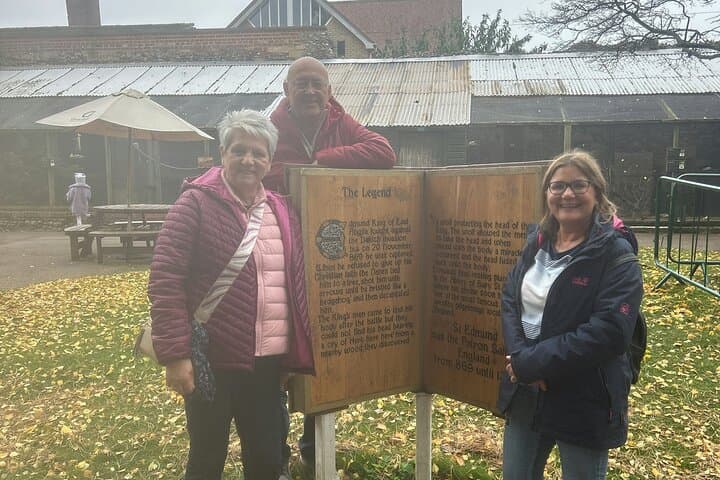
You begin at the cathedral steps, phone in hand, as the stonework of St Edmund’s Abbey presses close and the streets open into a patchwork of coaching-era facades and narrow lanes. The game drops you into January 1327 — you are a townsman outraged at the abbey’s wealth — and the route funnels through market squares, past cloister ruins and into the Abbey Gardens where history becomes a playable map.
You begin at the cathedral steps, phone in hand, as the stonework of St Edmund’s Abbey presses close and the streets open into a patchwork of coaching-era facades and narrow lanes. The game drops you into January 1327 — you are a townsman outraged at the abbey’s wealth — and the route funnels through market squares, past cloister ruins and into the Abbey Gardens where history becomes a playable map.
Bury St Edmunds’ story is visible in its fabric: a once-dominant Benedictine abbey that housed the relics of King Edmund, medieval timber-framed houses, and later Georgian overlays. The town’s river, the Lark, quietly shaped trade routes and the market economy that fed many of these streets. Local culture still centers on the Abbey Gardens, the cathedral, and community markets; the game uses those places as narrative beats, mixing fact with dramatized civic unrest of the 14th century.
Practical guidance: this is a self-guided, phone-based walking experience of about 90 minutes over mostly paved and cobbled urban ground with short inclines and occasional steps. Expect 1–2 miles covered at a casual pace; the app provides directions and puzzles, so a charged phone and a portable battery are essential. The route is family-friendly and can be paused and resumed, but some clues require reading plaques or noticing architectural details, so take your time.
Tips on timing: start in daylight to read signs and enjoy the Abbey Gardens fully. Respect private property and conserve battery life; the game is as much about observation as it is about speed.