THE ADVENTURE COLLECTIVE® · Independent discovery and booking for outdoor travel

Experience five days of mountain sunrises and medieval city streets in Kathmandu Valley. Visit UNESCO Durbar Squares, hilltop stupas and Nagarkot’s panoramic dawns with a private guide and hotel transfers included.
Experience five days of mountain sunrises and medieval city streets in Kathmandu Valley. Visit UNESCO Durbar Squares, hilltop stupas and Nagarkot’s panoramic dawns with a private guide and hotel transfers included.
You wake before dawn on a ridge above Nagarkot, where the Himalaya take the first light like a slow exhale. Cool air pushes down the valley and the mountain silhouettes sharpen — Everest and its neighbors holding the horizon while the town below lights like scattered lanterns.
Verified experiences and guided adventures in the surrounding area.
Operated by Moonline Tours · Kathmandu, Bagmati Province
You wake before dawn on a ridge above Nagarkot, where the Himalaya take the first light like a slow exhale. Cool air pushes down the valley and the mountain silhouettes sharpen — Everest and its neighbors holding the horizon while the town below lights like scattered lanterns.
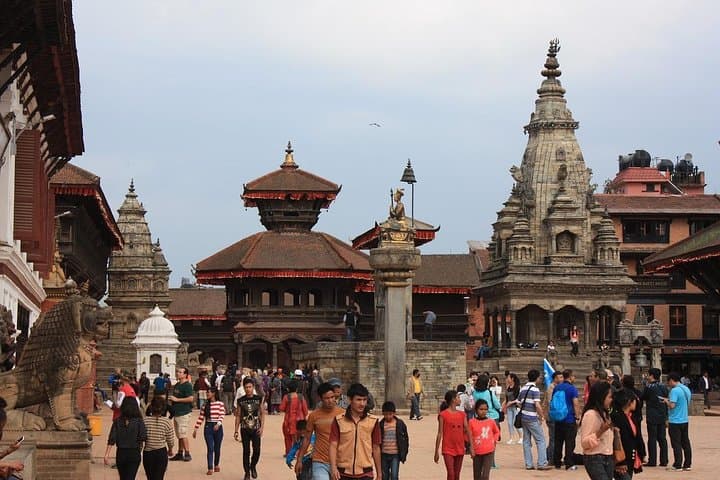
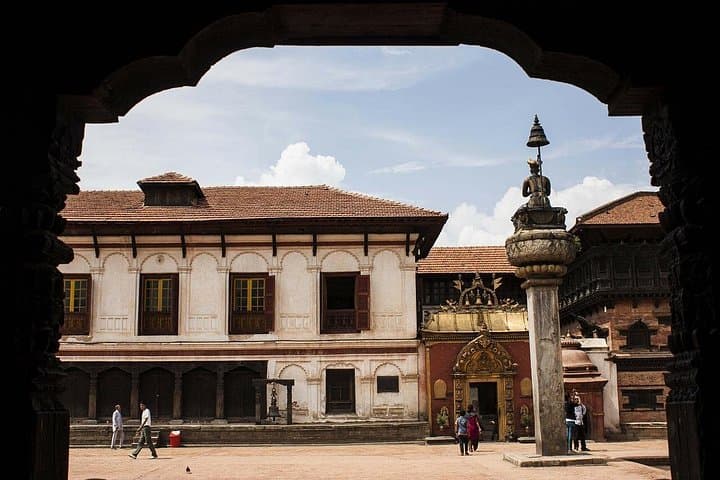
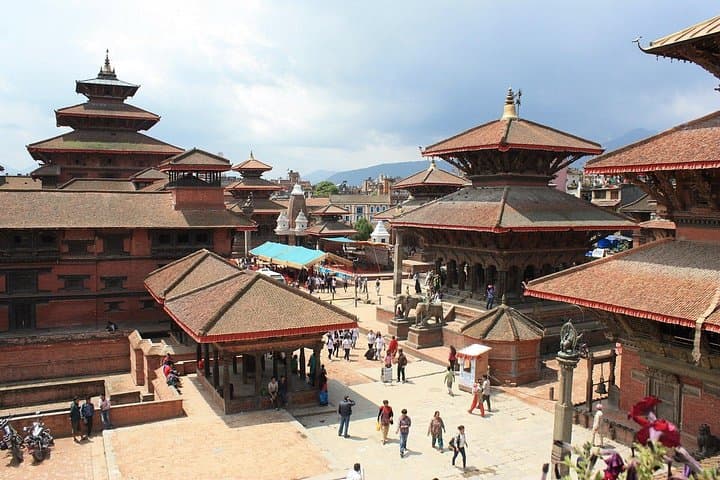
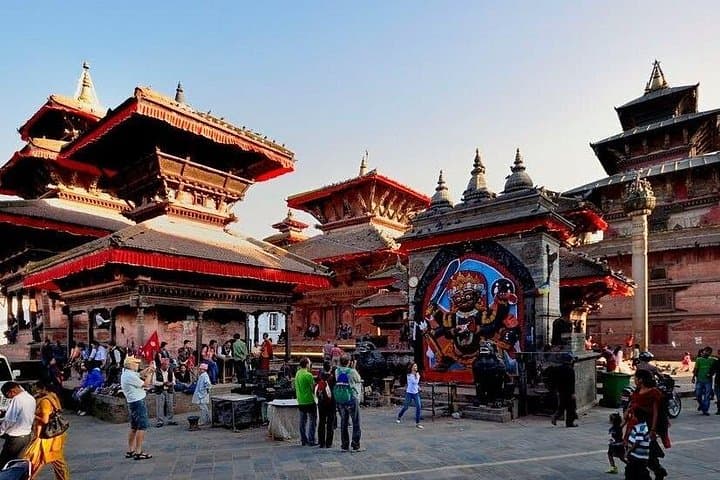
Across five days the route moves from that raw mountain edge into the dense, lived-in history of Kathmandu Valley. The city’s medieval heart grew where an ancient lake once lay, its clay basin now packed with plazas, pagoda roofs and carved wood that mark Newar craftsmanship. Durbar Squares in Kathmandu, Patan and Bhaktapur are UNESCO-stamped exhibits of stone and timber: palace courtyards, the 55-window façade, Kumari’s residence and the sculpted temples that survived centuries of trade, devotion and the occasional quake.
Religious life is audible here — bells, chants and prayer flags at Swayambhunath and the great white dome of Boudhanath — while Pashupatinath’s riverside cremation ghats reveal Nepal’s more intimate rituals. Between temples the landscape shifts: terraced fields, roadside shrines and the short drive up to Nagarkot where forest and viewpoint meet.
Practical side: mornings in Nagarkot can be freezing; plan layered clothing, an early alarm and a sturdy pair of walking shoes for uneven squares in Bhaktapur. Expect modest walking each day, private vehicle transfers, and licensed guides who manage permits and local logistics. Carry small local currency for temple donations and snacks, and leave time to simply stand and watch the mountains change color.
moderate.
5 days.
Suitable for travelers who can manage several hours of walking over uneven surfaces and early starts; not strenuous but requires mobility.
Clear autumn (Oct–Nov) and spring (Mar–Apr) mornings usually offer the best visibility; wake up well before sunrise to secure a viewpoint.
Standard entry fees apply at some UNESCO sites (e.g., Durbar Squares, Boudhanath). Your tour includes entry permits and fees as listed in the itinerary.
Yes—this private tour is paced for most ages, though participants should be comfortable with walking on uneven surfaces and early morning starts.
Dress modestly (shoulders/knees covered), remove shoes where required, ask before photographing individuals and follow guide instructions at temples and ghats.
Kathmandu Valley was once a lake; its medieval cities developed as trade and art centers of the Newar people, leaving dense urban cores of carved wood and stone temples now protected as UNESCO sites.
Heritage sites are fragile—avoid touching ancient carvings, pack out waste, and favor local guides and businesses that support site maintenance and community-based tourism.
Moonline Tours operates guided outdoor trips and adventures with an emphasis on safety, stewardship, and memorable experiences.
You wake before dawn on a ridge above Nagarkot, where the Himalaya take the first light like a slow exhale. Cool air pushes down the valley and the mountain silhouettes sharpen — Everest and its neighbors holding the horizon while the town below lights like scattered lanterns.
You wake before dawn on a ridge above Nagarkot, where the Himalaya take the first light like a slow exhale. Cool air pushes down the valley and the mountain silhouettes sharpen — Everest and its neighbors holding the horizon while the town below lights like scattered lanterns.
Across five days the route moves from that raw mountain edge into the dense, lived-in history of Kathmandu Valley. The city’s medieval heart grew where an ancient lake once lay, its clay basin now packed with plazas, pagoda roofs and carved wood that mark Newar craftsmanship. Durbar Squares in Kathmandu, Patan and Bhaktapur are UNESCO-stamped exhibits of stone and timber: palace courtyards, the 55-window façade, Kumari’s residence and the sculpted temples that survived centuries of trade, devotion and the occasional quake.
Religious life is audible here — bells, chants and prayer flags at Swayambhunath and the great white dome of Boudhanath — while Pashupatinath’s riverside cremation ghats reveal Nepal’s more intimate rituals. Between temples the landscape shifts: terraced fields, roadside shrines and the short drive up to Nagarkot where forest and viewpoint meet.
Practical side: mornings in Nagarkot can be freezing; plan layered clothing, an early alarm and a sturdy pair of walking shoes for uneven squares in Bhaktapur. Expect modest walking each day, private vehicle transfers, and licensed guides who manage permits and local logistics. Carry small local currency for temple donations and snacks, and leave time to simply stand and watch the mountains change color.