THE ADVENTURE COLLECTIVE® · Independent discovery and booking for outdoor travel

Walk three hours through Dublin’s medieval core from Dubh Linn Gardens to Isolde’s Tower, guided by local storytelling and stops at Dublin Castle, Chester Beatty Library, and two major cathedrals. Practical route details and accessibility make this a straightforward, informative way to see the city’s oldest stones.
Walk three hours through Dublin’s medieval core from Dubh Linn Gardens to Isolde’s Tower, guided by local storytelling and stops at Dublin Castle, Chester Beatty Library, and two major cathedrals. Practical route details and accessibility make this a straightforward, informative way to see the city’s oldest stones.
The guide meets the group at Dubh Linn Gardens, where the quiet pond and low stone walls feel like a hinge between past and present.
Verified experiences and guided adventures in the surrounding area.
Operated by Guydeez · Dublin, County Dublin
The guide meets the group at Dubh Linn Gardens, where the quiet pond and low stone walls feel like a hinge between past and present.
From that shaded start the route threads past the Chester Beatty Library’s illuminated manuscripts and into the stone heart of Dublin Castle. The city’s medieval bones are visible in the worn flagstones, the cathedral buttresses, and the narrow lanes of the Liberties; each stop pulls a new story into view: Viking river crossings, Norman fortifications, and the slow evolution into a modern capital.
Geology here is subtle—the area sits on glacial gravels and limestone bedrock shaped by the Liffey, which once dictated Viking landing sites where the river dared traffic ashore. Culture and religion are tightly woven into the walk: Saint Patrick’s and Christ Church cathedrals record shifts in worship, politics, and art across centuries, while small sites like St. Audoen’s preserve daily parish life through the ages.
Practical guidance: this is a 3-hour, mostly level city walk on paved surfaces—good footwear, layered rain protection, and a light daypack are sensible. The tour is wheelchair accessible and suitable for most fitness levels; expect several short stops and some crowding near major landmarks. Arrive by Luas or DART to avoid central parking, bring a charged phone for photos and ticket confirmations, and respect quiet zones inside religious sites. Morning or late-afternoon departures give softer light and fewer tour-group collisions. The guide will answer questions and can tailor the visit to interests in architecture, medieval history, or Dublin folklore.
easy.
3 hours.
Suitable for most fitness levels; requires standing and walking on paved city surfaces for up to three hours.
Yes—the route is on paved surfaces and listed as wheelchair accessible; the guide can adapt pacing but some historic interiors have steps or uneven thresholds.
This tour lists visits but does not include monument admissions unless explicitly stated—check the booking page or ask the operator about ticket arrangements.
Private and small group options are available; the minimum for the group option is two participants—confirm when booking.
Guides are available in English, Spanish, French, and Italian; specify language needs at booking.
Dublin grew from a Viking settlement at a dark pool—Dubh Linn—and expanded under Norman influence; many surviving buildings date to medieval and early modern renovations.
Historic sites are sensitive to visitor pressure—stay on paths, avoid touching fragile stonework, and support local conservation by using official entrances and guides.
Guydeez operates guided outdoor trips and adventures with an emphasis on safety, stewardship, and memorable experiences.


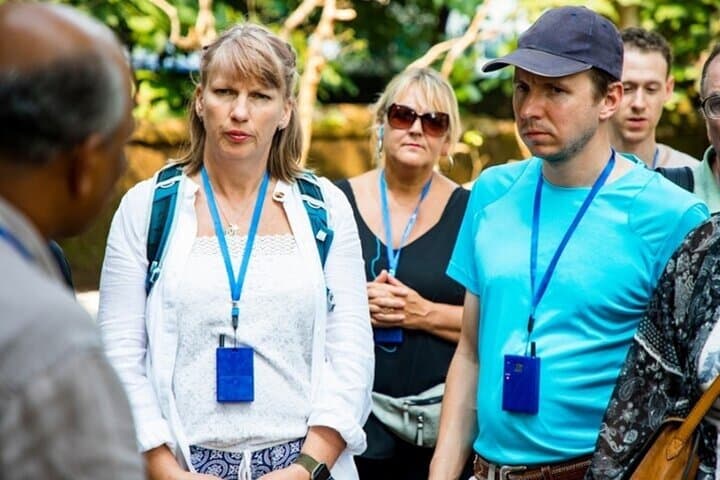

The guide meets the group at Dubh Linn Gardens, where the quiet pond and low stone walls feel like a hinge between past and present.
The guide meets the group at Dubh Linn Gardens, where the quiet pond and low stone walls feel like a hinge between past and present.
From that shaded start the route threads past the Chester Beatty Library’s illuminated manuscripts and into the stone heart of Dublin Castle. The city’s medieval bones are visible in the worn flagstones, the cathedral buttresses, and the narrow lanes of the Liberties; each stop pulls a new story into view: Viking river crossings, Norman fortifications, and the slow evolution into a modern capital.
Geology here is subtle—the area sits on glacial gravels and limestone bedrock shaped by the Liffey, which once dictated Viking landing sites where the river dared traffic ashore. Culture and religion are tightly woven into the walk: Saint Patrick’s and Christ Church cathedrals record shifts in worship, politics, and art across centuries, while small sites like St. Audoen’s preserve daily parish life through the ages.
Practical guidance: this is a 3-hour, mostly level city walk on paved surfaces—good footwear, layered rain protection, and a light daypack are sensible. The tour is wheelchair accessible and suitable for most fitness levels; expect several short stops and some crowding near major landmarks. Arrive by Luas or DART to avoid central parking, bring a charged phone for photos and ticket confirmations, and respect quiet zones inside religious sites. Morning or late-afternoon departures give softer light and fewer tour-group collisions. The guide will answer questions and can tailor the visit to interests in architecture, medieval history, or Dublin folklore.