THE ADVENTURE COLLECTIVE® · Independent discovery and booking for outdoor travel

Ride the Arví cable to high-altitude coffee plots, trace the muleteer route to Don Leandro Farm, and finish with a mineral water soak and coffee steam therapy—an immersive half-day that pairs agronomy with relaxation.
Ride the Arví cable to high-altitude coffee plots, trace the muleteer route to Don Leandro Farm, and finish with a mineral water soak and coffee steam therapy—an immersive half-day that pairs agronomy with relaxation.
You step off the Arví cable car with the city’s hum slipping behind you and a cool, forested air that seems to rearrange your breath. The trail ahead follows a muleteer route carved into the eastern slopes of the Aburrá Valley: stone steps, ferned gutters, and the occasional chiva—painted wooden bus—rumbling past as if remembering the old trade routes. This is Parque Arví, a living reserve where coffee trees climb above 2,000 meters and the skyline of Medellín keeps its distance like a patient observer.
Verified experiences and guided adventures in the surrounding area.
Operated by Don Leandro Coffee Farm · Medellín, Antioquia
You step off the Arví cable car with the city’s hum slipping behind you and a cool, forested air that seems to rearrange your breath. The trail ahead follows a muleteer route carved into the eastern slopes of the Aburrá Valley: stone steps, ferned gutters, and the occasional chiva—painted wooden bus—rumbling past as if remembering the old trade routes. This is Parque Arví, a living reserve where coffee trees climb above 2,000 meters and the skyline of Medellín keeps its distance like a patient observer.
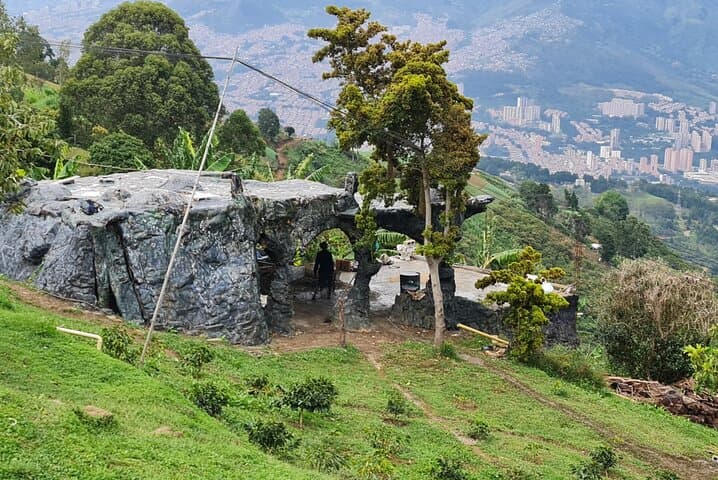
The tour threads history and agriculture. The Camino Arriero recalls the muleteers who moved goods across these mountains; their footprints define terraces and paths still used by local farmers. Geologically, the ridge is a fold of the central Andes—steep, volcanic-derived soils that give the beans high acidity and floral aromatics. At Don Leandro Coffee Farm, guides explain post-harvest processes in an ancestral cave laboratory: pulping, washing, and drying that remain part craft, part choreography.
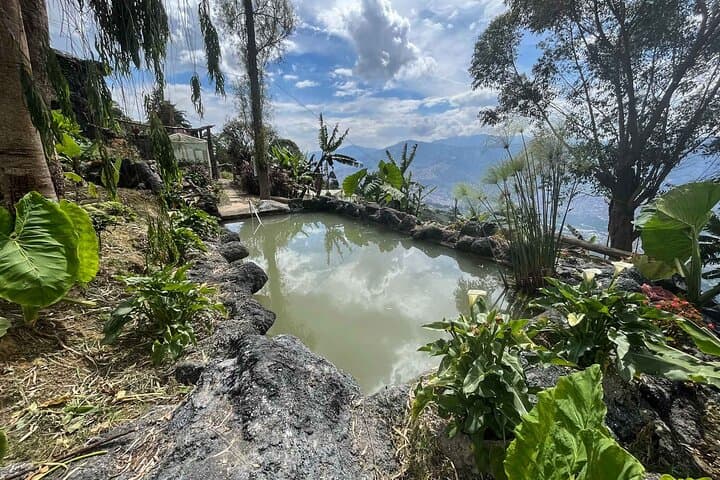
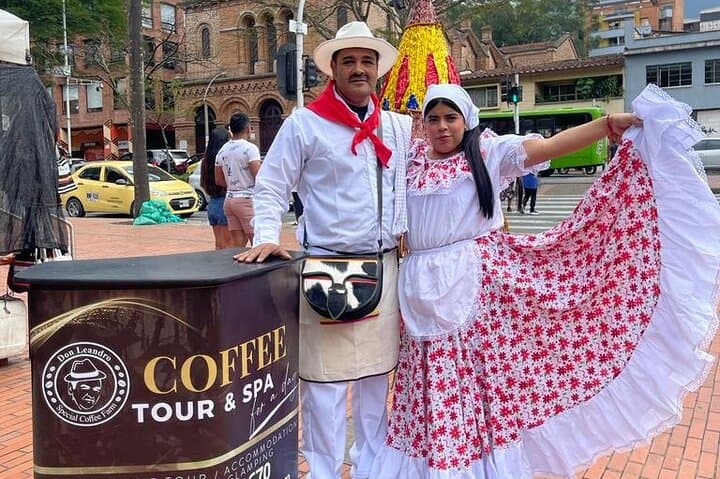
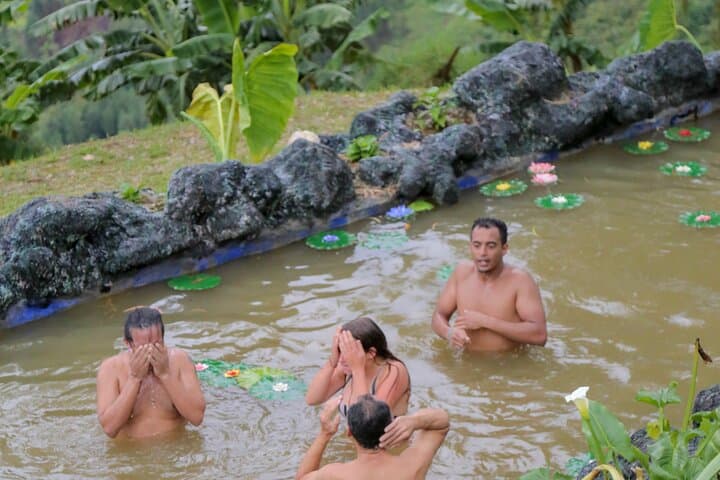
Culture is integral. Coffee here is not just a crop but a social practice—planting a tree, learning the ancient beneficiation methods, and sharing a cup pressed from beans that matured in mountain microclimates. The spa element is a modern extension: a coffee steam therapy and mineral water Naox bath that use coffee pulp and floral infusions, connecting relaxation with local byproducts rather than imported treatments.
Practical guidance is straightforward. The experience runs about 3–4 hours from the Arví cable station and is suitable for most fitness levels; paths can be uneven and wet, so good footwear matters. The farm sits near 2,200 meters elevation—expect cooler temperatures and sharper sun. The itinerary includes a motorized chiva ride along the muleteer route, a guided farm tour and demonstration, a tasting in the cave laboratory, and the coffee spa treatments and mineral water soak.
Timing counts: mornings often hold mist that softens the views and concentrates coffee aromas; midafternoons can be clearer for city panoramas. Bring a waterproof layer for sudden mountain showers, insect repellent, and a small pack for valuables. Respect the park: stay on trails, avoid single-use plastics, and follow your guide when entering the ancestral labs and spa areas.
For travelers who want an accessible yet textured mountain day, this pairing of hands-on coffee education and coffee-based wellness draws a clear line from soil to sip—and then to a warm, fragrant bath.
easy.
3–4 hours.
Suitable for most people in reasonable health; involves short walks on uneven terrain and a chiva transfer.
The experience runs about 3–4 hours from the Arví cable station and includes farm visits, a chiva ride, coffee demonstrations, and the spa treatments.
Guests meet at the Parque Arví cable car station; transfers between sites on the tour are provided, but transport to and from Medellín is not included.
Yes—treatments use local coffee byproducts and mineral water; disclose allergies and any medical conditions before participating.
Comfortable layers, closed-toe shoes with good grip, and a light waterproof jacket are recommended.
Yes—stroller access is possible and the tour notes it is family-friendly, but check with the operator for spa participation restrictions for young children.
Coffee tastings and coffee/tea are included as part of the experience; meals are not typically included.
The Camino Arriero follows historic muleteer routes that moved goods and coffee between mountain communities and urban markets.
Parque Arví is a designated ecological reserve that balances community agriculture with habitat protection; visitors are asked to stay on trails and minimize waste to protect watershed and cloud forest species.
Don Leandro Coffee Farm operates guided outdoor trips and adventures with an emphasis on safety, stewardship, and memorable experiences.
You step off the Arví cable car with the city’s hum slipping behind you and a cool, forested air that seems to rearrange your breath. The trail ahead follows a muleteer route carved into the eastern slopes of the Aburrá Valley: stone steps, ferned gutters, and the occasional chiva—painted wooden bus—rumbling past as if remembering the old trade routes. This is Parque Arví, a living reserve where coffee trees climb above 2,000 meters and the skyline of Medellín keeps its distance like a patient observer.
You step off the Arví cable car with the city’s hum slipping behind you and a cool, forested air that seems to rearrange your breath. The trail ahead follows a muleteer route carved into the eastern slopes of the Aburrá Valley: stone steps, ferned gutters, and the occasional chiva—painted wooden bus—rumbling past as if remembering the old trade routes. This is Parque Arví, a living reserve where coffee trees climb above 2,000 meters and the skyline of Medellín keeps its distance like a patient observer.
The tour threads history and agriculture. The Camino Arriero recalls the muleteers who moved goods across these mountains; their footprints define terraces and paths still used by local farmers. Geologically, the ridge is a fold of the central Andes—steep, volcanic-derived soils that give the beans high acidity and floral aromatics. At Don Leandro Coffee Farm, guides explain post-harvest processes in an ancestral cave laboratory: pulping, washing, and drying that remain part craft, part choreography.
Culture is integral. Coffee here is not just a crop but a social practice—planting a tree, learning the ancient beneficiation methods, and sharing a cup pressed from beans that matured in mountain microclimates. The spa element is a modern extension: a coffee steam therapy and mineral water Naox bath that use coffee pulp and floral infusions, connecting relaxation with local byproducts rather than imported treatments.
Practical guidance is straightforward. The experience runs about 3–4 hours from the Arví cable station and is suitable for most fitness levels; paths can be uneven and wet, so good footwear matters. The farm sits near 2,200 meters elevation—expect cooler temperatures and sharper sun. The itinerary includes a motorized chiva ride along the muleteer route, a guided farm tour and demonstration, a tasting in the cave laboratory, and the coffee spa treatments and mineral water soak.
Timing counts: mornings often hold mist that softens the views and concentrates coffee aromas; midafternoons can be clearer for city panoramas. Bring a waterproof layer for sudden mountain showers, insect repellent, and a small pack for valuables. Respect the park: stay on trails, avoid single-use plastics, and follow your guide when entering the ancestral labs and spa areas.
For travelers who want an accessible yet textured mountain day, this pairing of hands-on coffee education and coffee-based wellness draws a clear line from soil to sip—and then to a warm, fragrant bath.