THE ADVENTURE COLLECTIVE® · Independent discovery and booking for outdoor travel

Glide into Mechrey’s floating lanes on a private half-day cruise and watch an ancient water culture at work. This easy tour combines birding, local farms and intimate views of daily life on Tonlé Sap.
Glide into Mechrey’s floating lanes on a private half-day cruise and watch an ancient water culture at work. This easy tour combines birding, local farms and intimate views of daily life on Tonlé Sap.
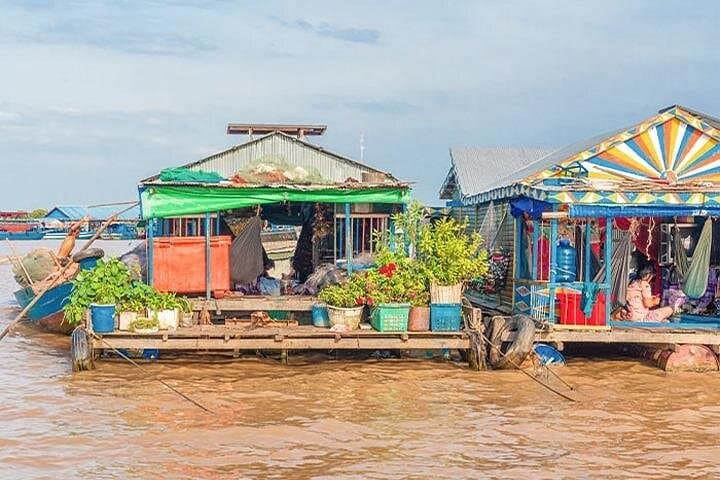
You push off from a low, smelly canal and in a few minutes the waterway opens to a broad, reflective surface where wooden houses rise and fall with the lake. Boats thread between stilts and floating gardens; children wave from platforms; birds quarter the air, hunting fish in the shallows.
Verified experiences and guided adventures in the surrounding area.
Operated by Pitt Angkor Tour · Mechrey (Meychrey), Siem Reap Province
You push off from a low, smelly canal and in a few minutes the waterway opens to a broad, reflective surface where wooden houses rise and fall with the lake. Boats thread between stilts and floating gardens; children wave from platforms; birds quarter the air, hunting fish in the shallows.
Tonlé Sap is Asia’s largest freshwater lake and a UNESCO Biosphere Reserve. Its dramatic seasonal pulse — the Mekong’s reversal of flow — fills and empties the floodplain, shaping life for generations. Mechrey (Meychrey) is a less-touristed cluster of floating homes on the lake’s northern arm where families farm lotus, raise ducks and fish in cages, and run small aquaculture and crocodile operations that supplement traditional fishing.
The tour circles mangrove channels and shallow lagoons, offering close views of local livelihoods and concentrated birdlife: openbills, egrets and kingfishers are common. Guides explain the rice and fish cycles and point out how elevated houses and floating platforms adapt to high-water months (note: high water generally runs July–March here).
Practicalities: expect a 5–6 hour, private half-day with air-conditioned transfer from Siem Reap, a short canal approach and several low-stepped boat landings. The itinerary is physically easy but uneven and wet underfoot; accessibility is relatively good for adapted boats. Bring sun protection, insect repellent and small change for local purchases. Morning light and the early wet season produce the best birding; late dry season exposes reedbeds and makes some channels shallower. Be prepared to taste local snacks (including deep-fried crickets) and to keep interactions respectful—these are working homes, not staged attractions.
easy.
5–6 hours.
Suitable for most fitness levels; requires short, low-step boat boarding and standing during parts of the cruise.
Expect a 5–6 hour private half-day including round-trip pickup from Siem Reap, a canal approach, cruising the floating village and nearby mangrove channels; boat fee and English-speaking guide are included.
The tour is rated easy and many areas are accessible, but boarding boats requires low steps; inform the operator of mobility needs so they can arrange appropriate assistance or adjusted boats.
Early morning or late afternoon are best; the high-water months (roughly July–March) expand feeding habitat and attract migratory and resident waterbirds.
Facilities are basic—some floating sites have simple toilets; bring snacks and cash since food options are limited and local vendors sell small items like fried insects.
Tonlé Sap’s annual reversal of flow links it to the Mekong and created a unique flood-pulse ecosystem that has supported lake-based communities for centuries.
Overfishing, habitat loss and hydropower impacts upstream threaten local fisheries; low-impact tourism provides alternative income but requires respectful behavior and support for local initiatives.
Pitt Angkor Tour operates guided outdoor trips and adventures with an emphasis on safety, stewardship, and memorable experiences.
You push off from a low, smelly canal and in a few minutes the waterway opens to a broad, reflective surface where wooden houses rise and fall with the lake. Boats thread between stilts and floating gardens; children wave from platforms; birds quarter the air, hunting fish in the shallows.
You push off from a low, smelly canal and in a few minutes the waterway opens to a broad, reflective surface where wooden houses rise and fall with the lake. Boats thread between stilts and floating gardens; children wave from platforms; birds quarter the air, hunting fish in the shallows.
Tonlé Sap is Asia’s largest freshwater lake and a UNESCO Biosphere Reserve. Its dramatic seasonal pulse — the Mekong’s reversal of flow — fills and empties the floodplain, shaping life for generations. Mechrey (Meychrey) is a less-touristed cluster of floating homes on the lake’s northern arm where families farm lotus, raise ducks and fish in cages, and run small aquaculture and crocodile operations that supplement traditional fishing.
The tour circles mangrove channels and shallow lagoons, offering close views of local livelihoods and concentrated birdlife: openbills, egrets and kingfishers are common. Guides explain the rice and fish cycles and point out how elevated houses and floating platforms adapt to high-water months (note: high water generally runs July–March here).
Practicalities: expect a 5–6 hour, private half-day with air-conditioned transfer from Siem Reap, a short canal approach and several low-stepped boat landings. The itinerary is physically easy but uneven and wet underfoot; accessibility is relatively good for adapted boats. Bring sun protection, insect repellent and small change for local purchases. Morning light and the early wet season produce the best birding; late dry season exposes reedbeds and makes some channels shallower. Be prepared to taste local snacks (including deep-fried crickets) and to keep interactions respectful—these are working homes, not staged attractions.