THE ADVENTURE COLLECTIVE® · Independent discovery and booking for outdoor travel

Walk Mdina’s silent lanes and descend into Rabat’s Roman catacombs on a focused 4–5 hour tour that blends medieval streets, Baroque architecture and subterranean archaeology. Best for travelers who want concentrated history with practical pacing and local insight.
Walk Mdina’s silent lanes and descend into Rabat’s Roman catacombs on a focused 4–5 hour tour that blends medieval streets, Baroque architecture and subterranean archaeology. Best for travelers who want concentrated history with practical pacing and local insight.
Stone narrows breathe history in Mdina: sunlight angles across honey-colored limestone, and the city’s silence seems to answer with its own slow cadence. The walk begins on paved lanes where footprints have worn the edges of centuries, then slips down to Rabat’s cooler alleys and underground chambers where the past still speaks in carved tombs.
Verified experiences and guided adventures in the surrounding area.
Operated by UBM Travel · Mdina, Malta
Stone narrows breathe history in Mdina: sunlight angles across honey-colored limestone, and the city’s silence seems to answer with its own slow cadence. The walk begins on paved lanes where footprints have worn the edges of centuries, then slips down to Rabat’s cooler alleys and underground chambers where the past still speaks in carved tombs.
Mdina and Rabat occupy a thin shelf of Maltese geology—soft globigerina limestone carved into alleys, catacombs and façades that hold Roman, medieval and Baroque layers. Rabat’s Catacombs of St. Paul and St. Agatha map an early-Christian presence and Roman-era life; Mdina, long Malta’s capital, shows later medieval fortification and an imposing Cathedral built on older foundations. Local culture is quiet and domestic: convent bells, small bakeries selling ftira and shops run by families who have cared for these buildings for generations.
Practically, this is a paced, mostly flat walking excursion of roughly 4–5 hours, with a mix of outdoor streets and interior museum or catacomb access (admission included for some sites). Expect uneven cobbles, low doorways and narrow staircases in underground spaces; comfortable shoes and steady footing matter more than speed. Start early or late afternoon to avoid the strongest sun, bring water, and allow time for photography and short cafe breaks in Mosquita Square. Guides often share local anecdotes and practical tips—ask about the Wignacourt Museum and the Roman Domus for deeper context.
This tour suits travelers who want a compact sweep of Maltese history without long walks between highlights, and rewards observers who slow down and listen to what these walls still say.
easy.
4–5 hours.
Suitable for most fitness levels; requires steady balance and ability to walk on uneven surfaces for several hours
The tour includes admission to some key sites (the itinerary notes catacombs admission is included); confirm specific entry details at booking.
Yes—it's rated easy and paced for general audiences, but participants should be comfortable on uneven ground and navigating stairs in underground areas.
Most tours meet near central Mdina gates or a designated pickup in Rabat; Valletta is the nearest common base and is a short drive or bus ride away.
Standard policy allows a full refund if canceled at least 24 hours before the scheduled departure; check operator terms for exceptions.
Mdina served as Malta’s capital through the medieval period, while Rabat overlays Roman and early-Christian occupations visible in its catacombs and ancient houses.
These sites are carved from fragile limestone; stay on paths, avoid touching delicate carvings and use refillable water bottles to reduce plastic waste.
UBM Travel operates guided outdoor trips and adventures with an emphasis on safety, stewardship, and memorable experiences.
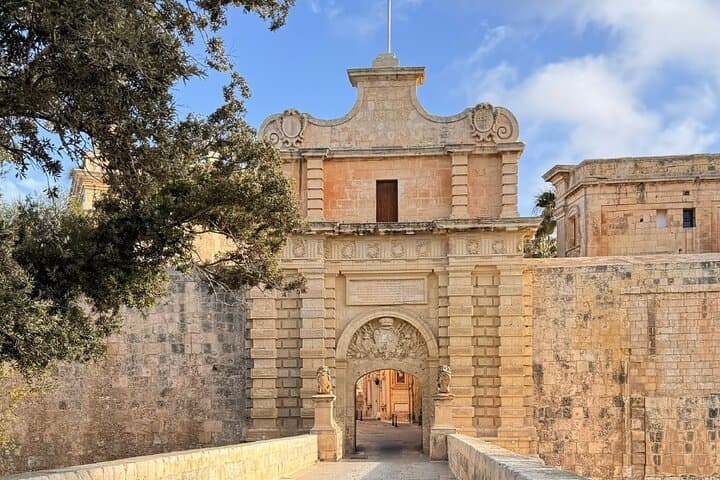
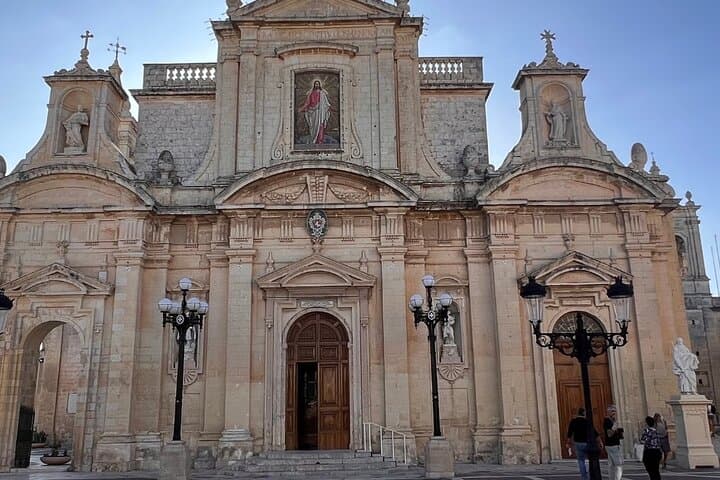
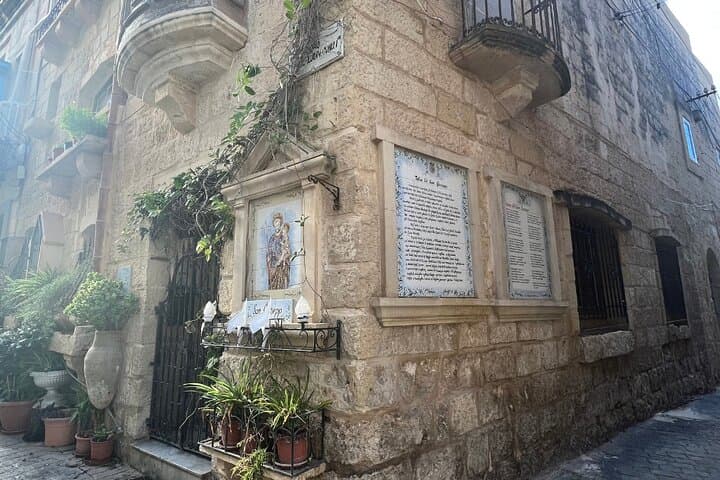
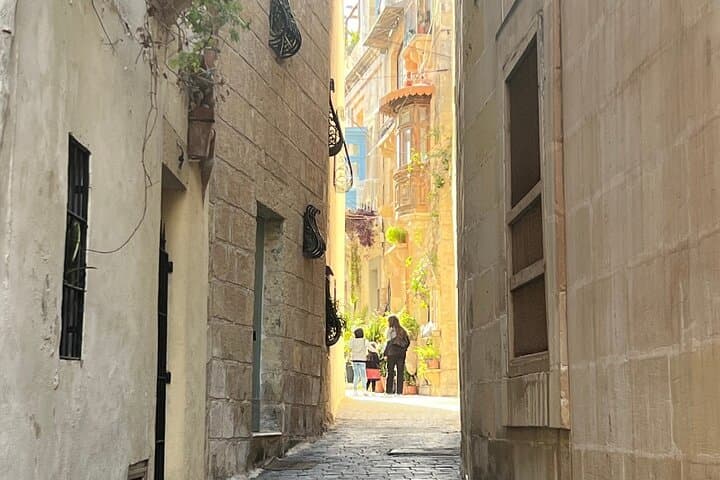
Stone narrows breathe history in Mdina: sunlight angles across honey-colored limestone, and the city’s silence seems to answer with its own slow cadence. The walk begins on paved lanes where footprints have worn the edges of centuries, then slips down to Rabat’s cooler alleys and underground chambers where the past still speaks in carved tombs.
Stone narrows breathe history in Mdina: sunlight angles across honey-colored limestone, and the city’s silence seems to answer with its own slow cadence. The walk begins on paved lanes where footprints have worn the edges of centuries, then slips down to Rabat’s cooler alleys and underground chambers where the past still speaks in carved tombs.
Mdina and Rabat occupy a thin shelf of Maltese geology—soft globigerina limestone carved into alleys, catacombs and façades that hold Roman, medieval and Baroque layers. Rabat’s Catacombs of St. Paul and St. Agatha map an early-Christian presence and Roman-era life; Mdina, long Malta’s capital, shows later medieval fortification and an imposing Cathedral built on older foundations. Local culture is quiet and domestic: convent bells, small bakeries selling ftira and shops run by families who have cared for these buildings for generations.
Practically, this is a paced, mostly flat walking excursion of roughly 4–5 hours, with a mix of outdoor streets and interior museum or catacomb access (admission included for some sites). Expect uneven cobbles, low doorways and narrow staircases in underground spaces; comfortable shoes and steady footing matter more than speed. Start early or late afternoon to avoid the strongest sun, bring water, and allow time for photography and short cafe breaks in Mosquita Square. Guides often share local anecdotes and practical tips—ask about the Wignacourt Museum and the Roman Domus for deeper context.
This tour suits travelers who want a compact sweep of Maltese history without long walks between highlights, and rewards observers who slow down and listen to what these walls still say.