THE ADVENTURE COLLECTIVE® · Independent discovery and booking for outdoor travel

Spend four hours cruising Mazatlán Bay — from the Malecón to the lighthouse and Three Islands — with chances to spot whales, dolphins and seabirds. Expect a relaxed, social trip with drinks, lunch and seasonal wildlife highlights.
Spend four hours cruising Mazatlán Bay — from the Malecón to the lighthouse and Three Islands — with chances to spot whales, dolphins and seabirds. Expect a relaxed, social trip with drinks, lunch and seasonal wildlife highlights.
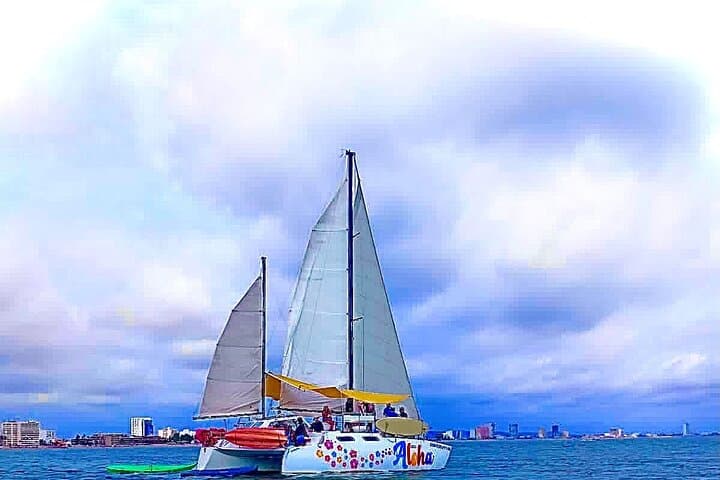
You step onto the deck as the city falls away: the Malecón’s bronze sculptures recede, the lighthouse keeps its slow vigil, and three low islands rise like markers on the horizon.
Verified experiences and guided adventures in the surrounding area.
Operated by Aloha Trimaran · Mazatlán, Sinaloa
You step onto the deck as the city falls away: the Malecón’s bronze sculptures recede, the lighthouse keeps its slow vigil, and three low islands rise like markers on the horizon.
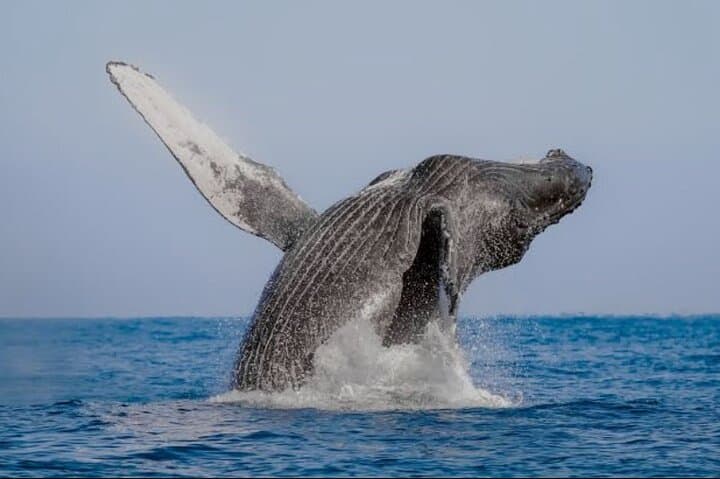
Mazatlán Bay opens wide, salt and wind rearranging your hair and attention. Boats slip through glossy swells while seabirds wheel overhead; the crew eases into a steady rhythm of music, drinks and commentary. Depending on the winter migration, dorsal fins or steaming blows will punctuate the horizon — humpback and gray whales pass close enough some seasons to make the whole vessel lean forward.
The coastline here reflects a layered history: a 19th-century port that grew from fisheries and trade, now threaded with a modern malecón and old-town architecture. Geologically the bay is shallow and protected, shaped by Pacific tides and silt from nearby rivers; the Three Islands are volcanic outcrops and popular snorkeling stops on calmer days.
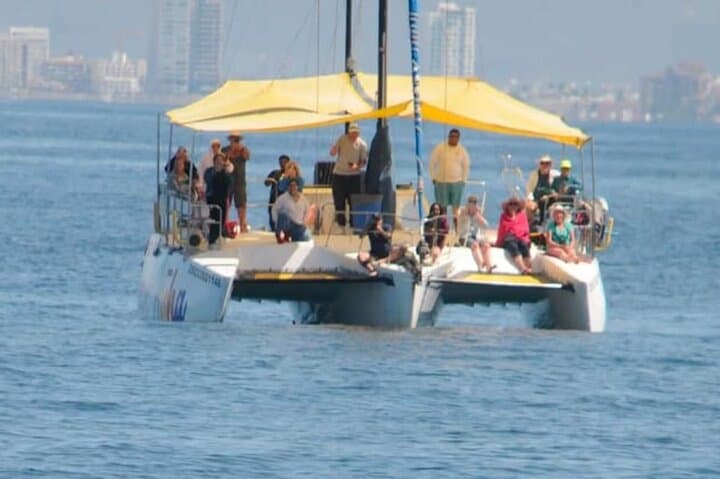
Practically, this is a relaxed marine outing with a social vibe: expect shaded seating, bottled water, a light lunch and fresh fruit. Motion on board is steady but can feel lively in open water; bring seasickness prevention if you’re sensitive. Best sightings are seasonal — peak whale months are late winter to early spring — but dolphins and frigatebirds are year-round companions.
Plan for sun and wind: a hat, layered outerwear and a camera with a zoom. Respect wildlife viewing guidelines — keep distance, avoid loud noises, and follow crew instructions. Four hours on the water delivers scenery, local flavor, and a strong chance of a wildlife spectacle that justifies the trip.
easy.
4 hours.
Suitable for travelers with a moderate level of fitness who can walk on uneven decks and climb steps; not strenuous.
Peak whale-watching months are typically late December through April when migrating humpbacks and gray whales pass the region.
The four-hour trip usually includes a light lunch, bottled water, soft drinks and fresh fruit, plus commentary and shaded seating.
The boat requires boarding steps and moving across deck areas; travelers with serious mobility issues should contact the operator before booking.
Full refunds are generally available if canceled at least 24 hours before departure; bad weather cancellations may also apply.
Mazatlán grew from a 19th-century Pacific port and fishing economy; the long Malecón reflects its maritime heritage and urban development.
Operators follow wildlife-distance guidelines; avoid feeding or approaching animals and minimize single-use plastic to protect marine life.
Aloha Trimaran operates guided outdoor trips and adventures with an emphasis on safety, stewardship, and memorable experiences.
You step onto the deck as the city falls away: the Malecón’s bronze sculptures recede, the lighthouse keeps its slow vigil, and three low islands rise like markers on the horizon.
You step onto the deck as the city falls away: the Malecón’s bronze sculptures recede, the lighthouse keeps its slow vigil, and three low islands rise like markers on the horizon.
Mazatlán Bay opens wide, salt and wind rearranging your hair and attention. Boats slip through glossy swells while seabirds wheel overhead; the crew eases into a steady rhythm of music, drinks and commentary. Depending on the winter migration, dorsal fins or steaming blows will punctuate the horizon — humpback and gray whales pass close enough some seasons to make the whole vessel lean forward.
The coastline here reflects a layered history: a 19th-century port that grew from fisheries and trade, now threaded with a modern malecón and old-town architecture. Geologically the bay is shallow and protected, shaped by Pacific tides and silt from nearby rivers; the Three Islands are volcanic outcrops and popular snorkeling stops on calmer days.
Practically, this is a relaxed marine outing with a social vibe: expect shaded seating, bottled water, a light lunch and fresh fruit. Motion on board is steady but can feel lively in open water; bring seasickness prevention if you’re sensitive. Best sightings are seasonal — peak whale months are late winter to early spring — but dolphins and frigatebirds are year-round companions.
Plan for sun and wind: a hat, layered outerwear and a camera with a zoom. Respect wildlife viewing guidelines — keep distance, avoid loud noises, and follow crew instructions. Four hours on the water delivers scenery, local flavor, and a strong chance of a wildlife spectacle that justifies the trip.