THE ADVENTURE COLLECTIVE® · Independent discovery and booking for outdoor travel

Board the Mayan Train from Mérida for a full day of Maya history, a swim in a freshwater cenote, and a stroll through Izamal’s painted streets. This guided trip pairs a focused tour of Chichen Itza with local food and a refreshing cenote visit.
Board the Mayan Train from Mérida for a full day of Maya history, a swim in a freshwater cenote, and a stroll through Izamal’s painted streets. This guided trip pairs a focused tour of Chichen Itza with local food and a refreshing cenote visit.
You step onto the Mayan Train in Mérida as dawn softens the Yucatán horizon; the carriage hums and the lowland forest slides by like pages in a field guide. By late morning the stone geometry of Chichen Itza rises from the flat limestone plain—angles and shadow that once measured time now frame your guided walk past the Temple of Kukulcán and ball courts.
Verified experiences and guided adventures in the surrounding area.
Operated by Guías de Yucatán · Mérida, Yucatán
You step onto the Mayan Train in Mérida as dawn softens the Yucatán horizon; the carriage hums and the lowland forest slides by like pages in a field guide. By late morning the stone geometry of Chichen Itza rises from the flat limestone plain—angles and shadow that once measured time now frame your guided walk past the Temple of Kukulcán and ball courts.
This route threads Maya civilization into colonial history: Chichen Itza, a major Postclassic city built on karst bedrock where cenotes supplied life and ritual; a cooling cenote offers a literal doorway into that groundwater network, its limestone walls glinting wetly in shafts of sun. The final stop, Izamal, wears colonial yellow over a pre-Hispanic pyramid base—San Antonio de Padua’s convent sits over older Maya platforms, a visible conversation between eras.
Plan for a long, active day. You’ll board at Teya, ride to Chichen Itza, take a 1 hour 20 minute guided tour plus 40 minutes free time, then swim in a cenote (entrance fee payable locally) before a buffet meal and 1 hour 20 minutes to explore Izamal. Bring a passport image for Mayan Train ticketing; carry cash for entrance fees and tips. Wear sturdy walking shoes for uneven archaeological paths and reef or water shoes for the cenote steps.
Timing matters: early arrival at the ruins avoids the heat and crowds; biodegradable sunscreen preserves the cenote; keep hydration and sun protection at hand—this is cultural immersion with a physical beat, equal parts history, geology, and clear Yucatán water.
easy.
10–13 hours.
Suitable for most travelers who can walk on uneven ground and spend a full day touring; minimal fitness required.
No, Chichen Itza entrance is paid at the site (approx. 671 MXN for foreign visitors, lower for Mexican nationals with ID).
Yes, the Mayan Train ticket requires an image of your passport; ID is checked when boarding so bring the original.
Cenote depth and access vary—most tours provide shallow areas and steps, but non-swimmers should use caution and consider a life vest if available.
Full refund is available if you cancel at least 24 hours before departure; last-minute cancellations may not be refundable.
Chichen Itza was a major Maya center built on Yucatán’s porous limestone; Izamal later became a Spanish colonial town built atop pre-Hispanic pyramids.
Cenotes are fragile groundwater ecosystems—avoid non-biodegradable sunscreens, follow local rules, and support certified guides to minimize impact.
Guías de Yucatán operates guided outdoor trips and adventures with an emphasis on safety, stewardship, and memorable experiences.

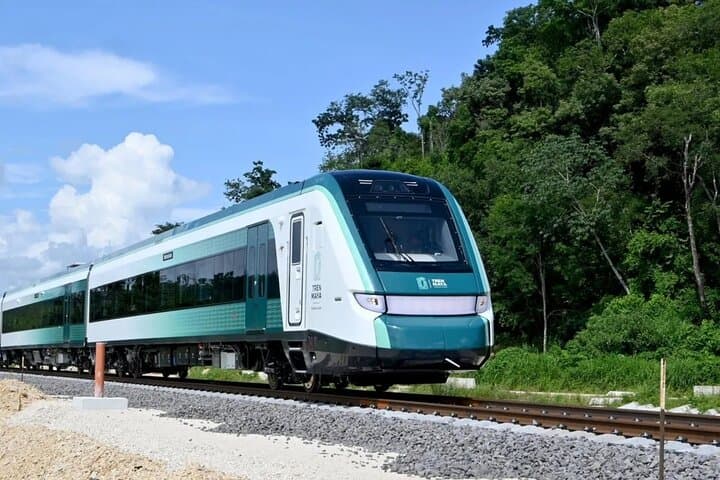
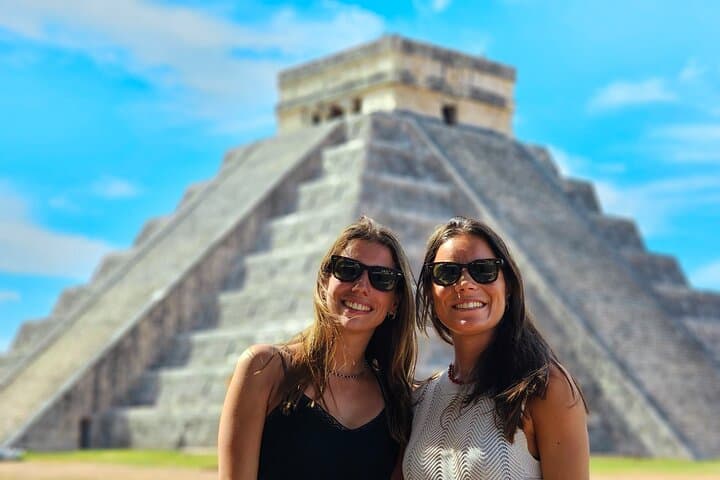
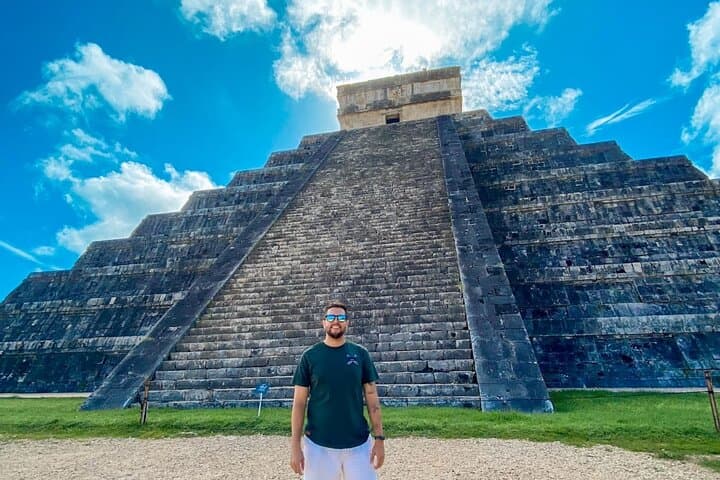
You step onto the Mayan Train in Mérida as dawn softens the Yucatán horizon; the carriage hums and the lowland forest slides by like pages in a field guide. By late morning the stone geometry of Chichen Itza rises from the flat limestone plain—angles and shadow that once measured time now frame your guided walk past the Temple of Kukulcán and ball courts.
You step onto the Mayan Train in Mérida as dawn softens the Yucatán horizon; the carriage hums and the lowland forest slides by like pages in a field guide. By late morning the stone geometry of Chichen Itza rises from the flat limestone plain—angles and shadow that once measured time now frame your guided walk past the Temple of Kukulcán and ball courts.
This route threads Maya civilization into colonial history: Chichen Itza, a major Postclassic city built on karst bedrock where cenotes supplied life and ritual; a cooling cenote offers a literal doorway into that groundwater network, its limestone walls glinting wetly in shafts of sun. The final stop, Izamal, wears colonial yellow over a pre-Hispanic pyramid base—San Antonio de Padua’s convent sits over older Maya platforms, a visible conversation between eras.
Plan for a long, active day. You’ll board at Teya, ride to Chichen Itza, take a 1 hour 20 minute guided tour plus 40 minutes free time, then swim in a cenote (entrance fee payable locally) before a buffet meal and 1 hour 20 minutes to explore Izamal. Bring a passport image for Mayan Train ticketing; carry cash for entrance fees and tips. Wear sturdy walking shoes for uneven archaeological paths and reef or water shoes for the cenote steps.
Timing matters: early arrival at the ruins avoids the heat and crowds; biodegradable sunscreen preserves the cenote; keep hydration and sun protection at hand—this is cultural immersion with a physical beat, equal parts history, geology, and clear Yucatán water.