THE ADVENTURE COLLECTIVE® · Independent discovery and booking for outdoor travel

Trace the daily lives of ancient Maya at Joya de Cerén, stand beneath the pyramids of Tazumal, and stroll colonial Santa Ana on a full-day guided tour from San Salvador. Expect archaeological context, short walks, and practical insights into the volcanic landscape that shaped these sites.
Trace the daily lives of ancient Maya at Joya de Cerén, stand beneath the pyramids of Tazumal, and stroll colonial Santa Ana on a full-day guided tour from San Salvador. Expect archaeological context, short walks, and practical insights into the volcanic landscape that shaped these sites.
You step off the van and the heat presses in like a living thing—dry breeze, volcanic soil, and the low hum of a country that remembers its past in stone. The first stop, Joya de Cerén, opens like a page from daily life: thatched homes, hearths, and storage pits preserved under ash. Walking the compact paths, you can feel how sudden volcanic events froze ordinary moments.
Verified experiences and guided adventures in the surrounding area.
Operated by Salvadorean Tours · San Salvador, San Salvador
You step off the van and the heat presses in like a living thing—dry breeze, volcanic soil, and the low hum of a country that remembers its past in stone. The first stop, Joya de Cerén, opens like a page from daily life: thatched homes, hearths, and storage pits preserved under ash. Walking the compact paths, you can feel how sudden volcanic events froze ordinary moments.
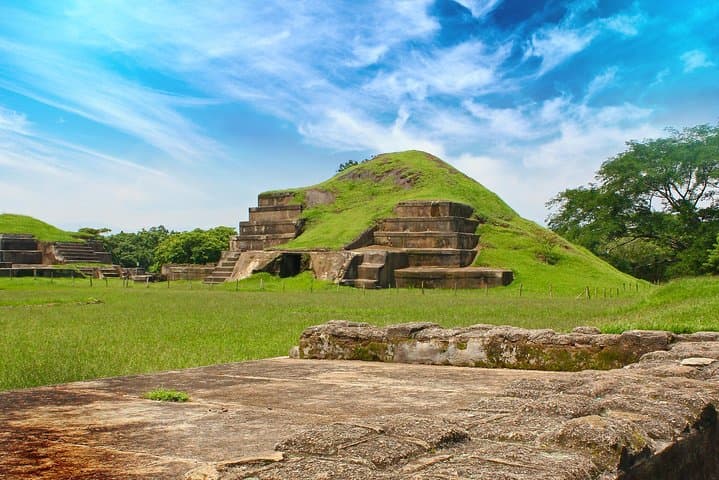
The route threads through sites that map the rise and fall of a regional Maya network. Tazumal’s stepped pyramids and carved stelae show civic scale and long-distance trade; San Andrés reads as a ceremonial and administrative hub with layers from early Classic occupation. Santa Ana supplies a Spanish-colonial counterpoint—neogothic facades and lively plazas that speak to the city’s layered culture.
Geologically this is a volcanic corridor—loam soils, basalt outcrops and ash deposits that both preserved and shaped settlements. Local guides link pottery sherds, agricultural terraces, and irrigation traces to a landscape managed for maize and cacao.
Practically: the tour runs about nine hours with walking on compacted dirt and stone steps; wear sturdy shoes, sun protection, and bring 1–2 liters of water. Expect interpretive stops, brief museum or visitor-center time, and short drives between sites—use the bathroom at major stops. Mornings are cooler and crowds smaller; the rainy season brings sudden showers and muddy sections. This day trip is ideal for anyone curious about pre-Columbian lifeways and the visible ties between environment, ritual, and everyday survival in El Salvador.
easy.
9 hours.
Suitable for all fitness levels; involves multiple short walks and some climbing of low steps.
This tour listing indicates admissions to major sites like Joya de Cerén and Tazumal are included—confirm at booking.
Expect several short walks of 10–30 minutes at each archaeological site with some climbing of low pyramidal steps.
The tour is rated easy, but uneven surfaces and steps can be challenging for limited mobility; inquire about accessibility before booking.
Bring light snacks; the itinerary usually includes a stop in Santa Ana where you can buy food or use facilities, but options vary by operator.
These sites document a regional Maya presence active from the Early Classic through the Postclassic periods; Joya de Cerén is uniquely preserved by volcanic ash from a single catastrophic event.
Visitor pressure and looting have been historical issues—stick to paths and follow guide instructions; support local conservation by using licensed guides and paying site fees.
Salvadorean Tours operates guided outdoor trips and adventures with an emphasis on safety, stewardship, and memorable experiences.


You step off the van and the heat presses in like a living thing—dry breeze, volcanic soil, and the low hum of a country that remembers its past in stone. The first stop, Joya de Cerén, opens like a page from daily life: thatched homes, hearths, and storage pits preserved under ash. Walking the compact paths, you can feel how sudden volcanic events froze ordinary moments.
You step off the van and the heat presses in like a living thing—dry breeze, volcanic soil, and the low hum of a country that remembers its past in stone. The first stop, Joya de Cerén, opens like a page from daily life: thatched homes, hearths, and storage pits preserved under ash. Walking the compact paths, you can feel how sudden volcanic events froze ordinary moments.
The route threads through sites that map the rise and fall of a regional Maya network. Tazumal’s stepped pyramids and carved stelae show civic scale and long-distance trade; San Andrés reads as a ceremonial and administrative hub with layers from early Classic occupation. Santa Ana supplies a Spanish-colonial counterpoint—neogothic facades and lively plazas that speak to the city’s layered culture.
Geologically this is a volcanic corridor—loam soils, basalt outcrops and ash deposits that both preserved and shaped settlements. Local guides link pottery sherds, agricultural terraces, and irrigation traces to a landscape managed for maize and cacao.
Practically: the tour runs about nine hours with walking on compacted dirt and stone steps; wear sturdy shoes, sun protection, and bring 1–2 liters of water. Expect interpretive stops, brief museum or visitor-center time, and short drives between sites—use the bathroom at major stops. Mornings are cooler and crowds smaller; the rainy season brings sudden showers and muddy sections. This day trip is ideal for anyone curious about pre-Columbian lifeways and the visible ties between environment, ritual, and everyday survival in El Salvador.