THE ADVENTURE COLLECTIVE® · Independent discovery and booking for outdoor travel

Step from Shinagawa’s urban hum into a theater of light and sea life at Maxell Aqua Park. Expect LED-lit jellyfish, a manta ray tunnel, and a polished dolphin performance—great for families and short on time.
Step from Shinagawa’s urban hum into a theater of light and sea life at Maxell Aqua Park. Expect LED-lit jellyfish, a manta ray tunnel, and a polished dolphin performance—great for families and short on time.
Walk into a dimmed hall where LED rings outline a river of jellyfish and music shapes the light — Maxell Aqua Park Shinagawa stages marine life like a performance. The entrance funnels you from the bright bustle of Shinagawa Prince Hotel into curated scenes: a circular jellyfish gallery that floats like slow orbs, a tunnel where rays and schooling fish pass overhead, and a splash-zone amphitheater tuned to dolphin choreography.
Verified experiences and guided adventures in the surrounding area.
Operated by TREVOPEDIA · Shinagawa, Tokyo
Walk into a dimmed hall where LED rings outline a river of jellyfish and music shapes the light — Maxell Aqua Park Shinagawa stages marine life like a performance. The entrance funnels you from the bright bustle of Shinagawa Prince Hotel into curated scenes: a circular jellyfish gallery that floats like slow orbs, a tunnel where rays and schooling fish pass overhead, and a splash-zone amphitheater tuned to dolphin choreography.
Opened in 2015 inside the hotel complex, the park is a modern take on public aquaria, blending exhibit design and entertainment technology rather than focusing solely on traditional taxonomy. Tokyo’s coastal plain geology is far offshore here, but the exhibition borrows local affinity for dramatic staging and urban leisure, reflecting Japanese attention to seasonal programming and family-friendly variety.
Visitors should know the experience is sensory-forward — lights, sound, and timed shows set the pace. The dolphin shows are highly produced; seating fills quickly, and the best sightlines are early. Exhibits emphasize education and animal care alongside spectacle: signs explain species ranges and human impacts on coastal systems.
Practical guidance: plan 3–4 hours to absorb shows and walkthrough exhibits; check the show schedule on arrival. Public transit to Shinagawa Station is frequent, and the aquarium is wheelchair accessible. No outside food is allowed; pack a charged phone for low-light photography and arrive early for quieter galleries. This is an accessible, family-oriented urban marine experience that pairs well with a half-day of sightseeing in southern Tokyo.
easy.
3–6 hours.
Suitable for all fitness levels; minimal walking with benches and elevators available
Most visitors spend 3–4 hours to see exhibits and attend one or two shows; you can do a shorter 90–120 minute visit if you skip performances.
Tickets provide entry during operating hours; check the park’s schedule for showtimes and arrive early for popular performances.
Yes — the venue and most exhibit paths are wheelchair accessible, with elevators and accessible restrooms available.
No — outside food and drink are not permitted; the Coral Café Bar and on-site vendors provide refreshments.
The facility opened in 2015 as a contemporary urban aquarium inside the Shinagawa Prince Hotel complex, merging technology-driven exhibit design with public entertainment.
The park runs educational programs and care initiatives; visitors are asked to follow rules that minimize stress on animals and support welfare-focused displays.
TREVOPEDIA operates guided outdoor trips and adventures with an emphasis on safety, stewardship, and memorable experiences.

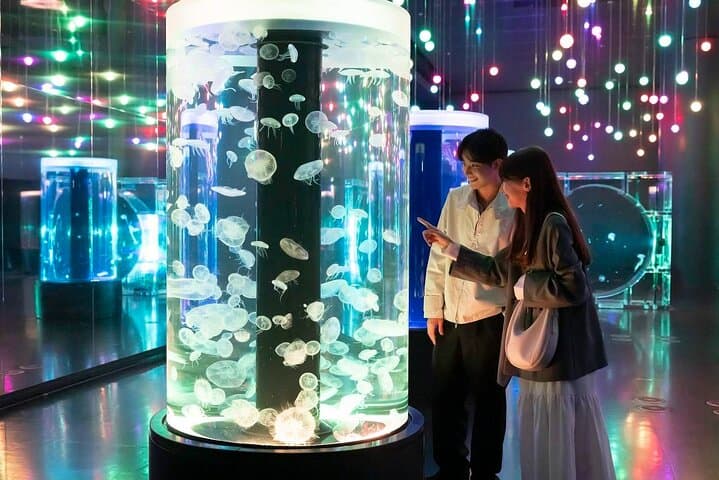


Walk into a dimmed hall where LED rings outline a river of jellyfish and music shapes the light — Maxell Aqua Park Shinagawa stages marine life like a performance. The entrance funnels you from the bright bustle of Shinagawa Prince Hotel into curated scenes: a circular jellyfish gallery that floats like slow orbs, a tunnel where rays and schooling fish pass overhead, and a splash-zone amphitheater tuned to dolphin choreography.
Walk into a dimmed hall where LED rings outline a river of jellyfish and music shapes the light — Maxell Aqua Park Shinagawa stages marine life like a performance. The entrance funnels you from the bright bustle of Shinagawa Prince Hotel into curated scenes: a circular jellyfish gallery that floats like slow orbs, a tunnel where rays and schooling fish pass overhead, and a splash-zone amphitheater tuned to dolphin choreography.
Opened in 2015 inside the hotel complex, the park is a modern take on public aquaria, blending exhibit design and entertainment technology rather than focusing solely on traditional taxonomy. Tokyo’s coastal plain geology is far offshore here, but the exhibition borrows local affinity for dramatic staging and urban leisure, reflecting Japanese attention to seasonal programming and family-friendly variety.
Visitors should know the experience is sensory-forward — lights, sound, and timed shows set the pace. The dolphin shows are highly produced; seating fills quickly, and the best sightlines are early. Exhibits emphasize education and animal care alongside spectacle: signs explain species ranges and human impacts on coastal systems.
Practical guidance: plan 3–4 hours to absorb shows and walkthrough exhibits; check the show schedule on arrival. Public transit to Shinagawa Station is frequent, and the aquarium is wheelchair accessible. No outside food is allowed; pack a charged phone for low-light photography and arrive early for quieter galleries. This is an accessible, family-oriented urban marine experience that pairs well with a half-day of sightseeing in southern Tokyo.