THE ADVENTURE COLLECTIVE® · Independent discovery and booking for outdoor travel

Cruise from Trou d’Eau Douce to waterfall-sculpted shores, lighthouse islets, and Ile aux Cerfs for snorkeling and lunch. This half-day discovery blends colonial history, reef snorkeling, and protected-island nature stops.
Cruise from Trou d’Eau Douce to waterfall-sculpted shores, lighthouse islets, and Ile aux Cerfs for snorkeling and lunch. This half-day discovery blends colonial history, reef snorkeling, and protected-island nature stops.
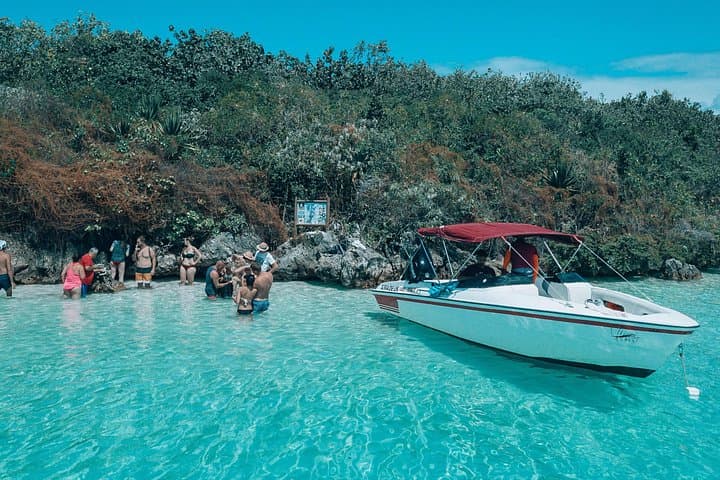
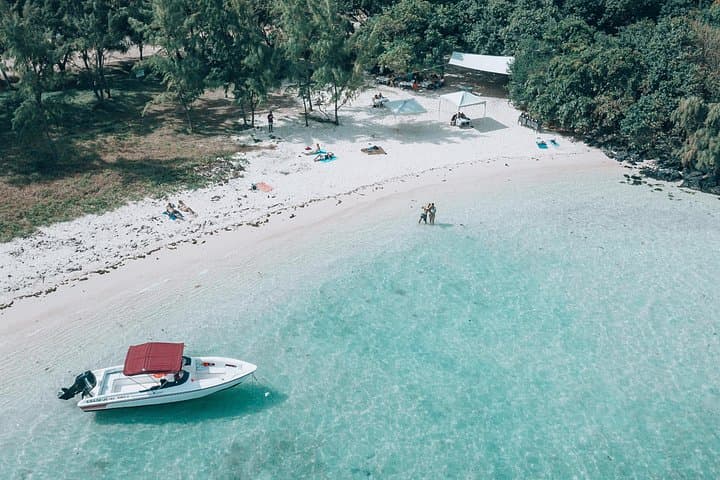
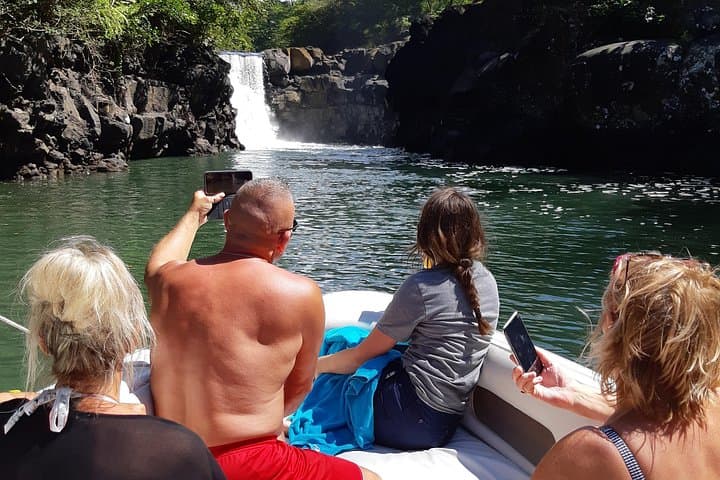
Aboard a low-slung motorboat cutting through turquoise lagoon, the east coast of Mauritius opens like a pair of contrasting faces: on the lee side, a glassy pool of shallow water; on the ocean side, surf that throws itself against volcanic reef. The tour departs from Trou d’Eau Douce, threading past rocky islets to the Grande River South East waterfall, where a curtain of fresh water meets the sea.
Verified experiences and guided adventures in the surrounding area.
Operated by Tino Boats · Trou d'Eau Douce, Flacq
Aboard a low-slung motorboat cutting through turquoise lagoon, the east coast of Mauritius opens like a pair of contrasting faces: on the lee side, a glassy pool of shallow water; on the ocean side, surf that throws itself against volcanic reef. The tour departs from Trou d’Eau Douce, threading past rocky islets to the Grande River South East waterfall, where a curtain of fresh water meets the sea.
This short coastline holds colonial echoes—Isle de la Passe and nearby forts played roles in the 1810 Battle of Grand Port—while the lighthouse island preserves 19th-century seafaring navigation. Geologically, the shoreline is young volcanic rock fringed by coral growth; currents carve channels and make the lagoon distinctly calmer than the exposed ocean.
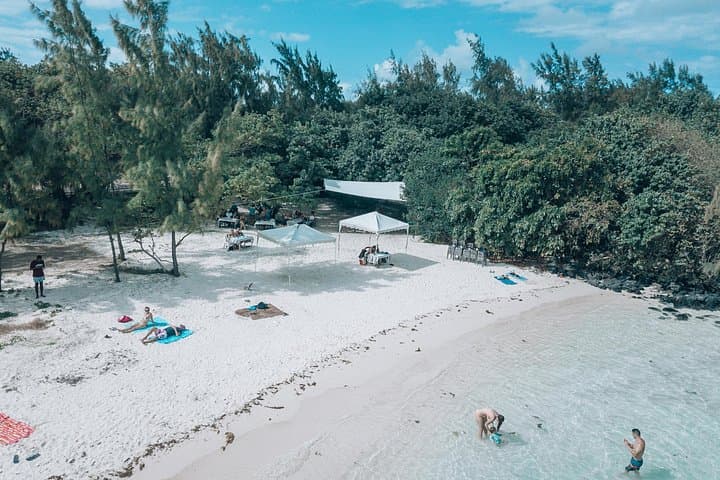
Visitors split time between history, shallow-water snorkeling over living coral, and a nature stop at Ile aux Aigrettes where conservation programs protect endemic plants and Aldabra tortoises. Lunch on Ile aux Cerfs follows a swim and sun time on creamy sand. Expect vivid reef fish, the chance of green turtles, and strong coastal breezes that reshape the light.
Practical side: the excursion is easy-paced but requires stepping on and off a boat, basic swimming ability for snorkeling, and respect for protected areas. Bring reef-safe sunscreen, a swim top for sun and currents, and a small dry bag for valuables. Morning departures are cooler and give calmer water for snorkeling; guard the coastline by not touching corals and carrying out all waste. The route is ideal for travelers who want a compact mix of natural history, snorkeling, and seaside relaxation.
easy.
6 hours.
Suitable for all fitness levels; must be able to climb in/out of a small boat and swim short distances for snorkeling.
Boarding is at Chez Tino restaurant in Trou d’Eau Douce, a short walk from the village center; check your booking for the exact meeting time.
Yes—use of snorkeling equipment is included, but you may bring your own mask or fins for comfort.
The trip is described as easy and suitable for all fitness levels; non-swimmers can remain on the boat during snorkeling stops and children must be supervised—infants must sit on an adult’s lap.
Transfers are not listed as included; many hotels can arrange transport to Trou d’Eau Douce or you can use local taxis or shuttle services.
This stretch of coast saw naval action during the 1810 Battle of Grand Port; Isle de la Passe and nearby islets were strategic control points during colonial maritime conflicts.
Ile aux Aigrettes is a protected reserve for native flora and fauna; visitors should follow guide rules, avoid touching wildlife, and use reef-safe products to limit reef damage.
Tino Boats operates guided outdoor trips and adventures with an emphasis on safety, stewardship, and memorable experiences.
Aboard a low-slung motorboat cutting through turquoise lagoon, the east coast of Mauritius opens like a pair of contrasting faces: on the lee side, a glassy pool of shallow water; on the ocean side, surf that throws itself against volcanic reef. The tour departs from Trou d’Eau Douce, threading past rocky islets to the Grande River South East waterfall, where a curtain of fresh water meets the sea.
Aboard a low-slung motorboat cutting through turquoise lagoon, the east coast of Mauritius opens like a pair of contrasting faces: on the lee side, a glassy pool of shallow water; on the ocean side, surf that throws itself against volcanic reef. The tour departs from Trou d’Eau Douce, threading past rocky islets to the Grande River South East waterfall, where a curtain of fresh water meets the sea.
This short coastline holds colonial echoes—Isle de la Passe and nearby forts played roles in the 1810 Battle of Grand Port—while the lighthouse island preserves 19th-century seafaring navigation. Geologically, the shoreline is young volcanic rock fringed by coral growth; currents carve channels and make the lagoon distinctly calmer than the exposed ocean.
Visitors split time between history, shallow-water snorkeling over living coral, and a nature stop at Ile aux Aigrettes where conservation programs protect endemic plants and Aldabra tortoises. Lunch on Ile aux Cerfs follows a swim and sun time on creamy sand. Expect vivid reef fish, the chance of green turtles, and strong coastal breezes that reshape the light.
Practical side: the excursion is easy-paced but requires stepping on and off a boat, basic swimming ability for snorkeling, and respect for protected areas. Bring reef-safe sunscreen, a swim top for sun and currents, and a small dry bag for valuables. Morning departures are cooler and give calmer water for snorkeling; guard the coastline by not touching corals and carrying out all waste. The route is ideal for travelers who want a compact mix of natural history, snorkeling, and seaside relaxation.