THE ADVENTURE COLLECTIVE® · Independent discovery and booking for outdoor travel

Ride to Mauna Kea’s summit for a high-altitude sunset, then watch guides open the night with telescopes and a complimentary DSLR star portrait. This guided tour pairs cultural context with practical acclimatization at Onizuka Visitor Station.
Ride to Mauna Kea’s summit for a high-altitude sunset, then watch guides open the night with telescopes and a complimentary DSLR star portrait. This guided tour pairs cultural context with practical acclimatization at Onizuka Visitor Station.
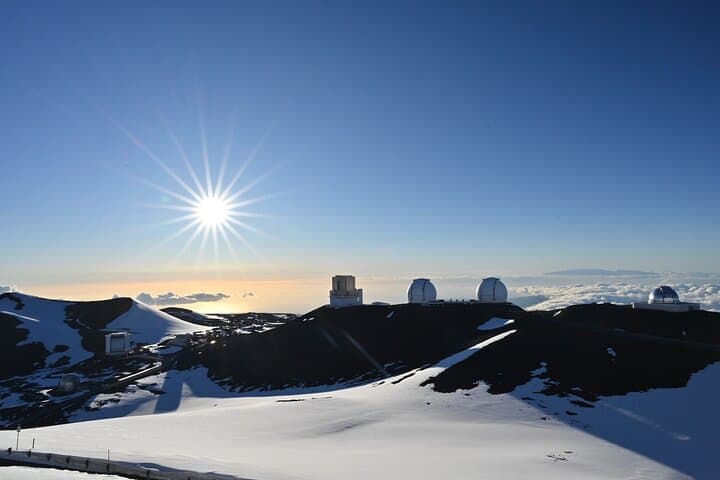
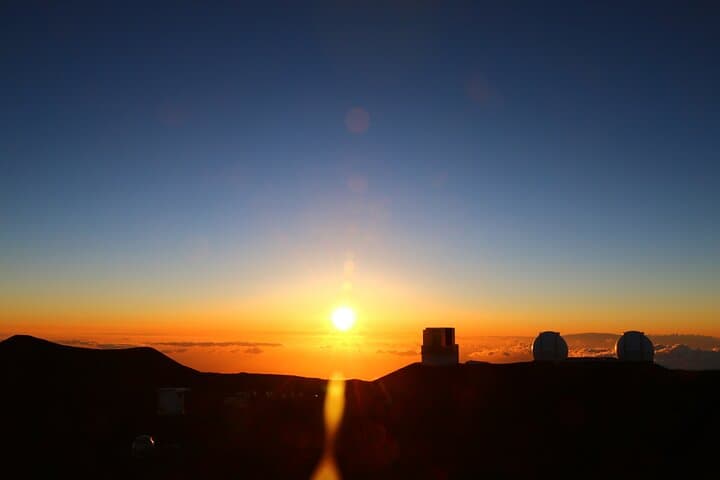
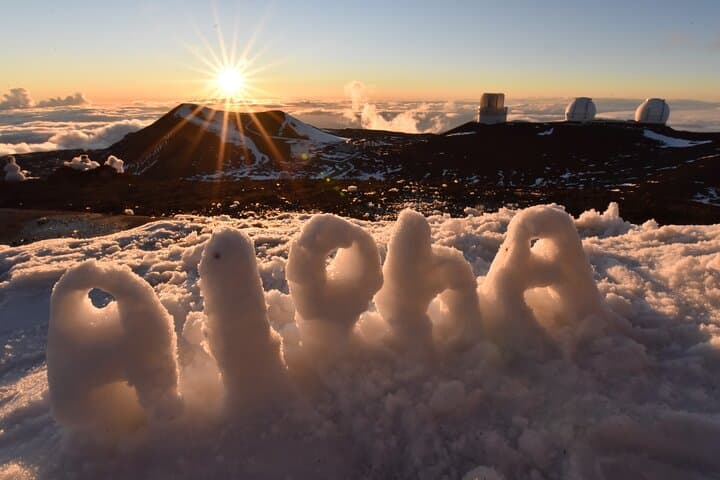
The van drops you at Onizuka Visitor Center as the light thins and the summit looms above like an island in the sky. Cold air moves in with authority; guides unfurl jackets and binoculars. At 13,796 ft the world narrows to horizon and crater, and the sunset spills across the Pacific while the first stars prick the dark.
Verified experiences and guided adventures in the surrounding area.
Operated by Hawaiian Eyes Tour · Kailua-Kona, Hawaii
The van drops you at Onizuka Visitor Center as the light thins and the summit looms above like an island in the sky. Cold air moves in with authority; guides unfurl jackets and binoculars. At 13,796 ft the world narrows to horizon and crater, and the sunset spills across the Pacific while the first stars prick the dark.
Mauna Kea is both a geological giant — a dormant shield volcano built by centuries of lava flows — and a cultural mountain sacred to Native Hawaiians. Modern observatories crowd its rim because the altitude, stable air, and low humidity make for world-class seeing. The tour threads local history and astronomy: you stop at Onizuka Visitor Station (9,000 ft) to acclimatize, change into warm clothes, and learn about the site’s cultural significance before a convoy carries you to the summit for sunset.
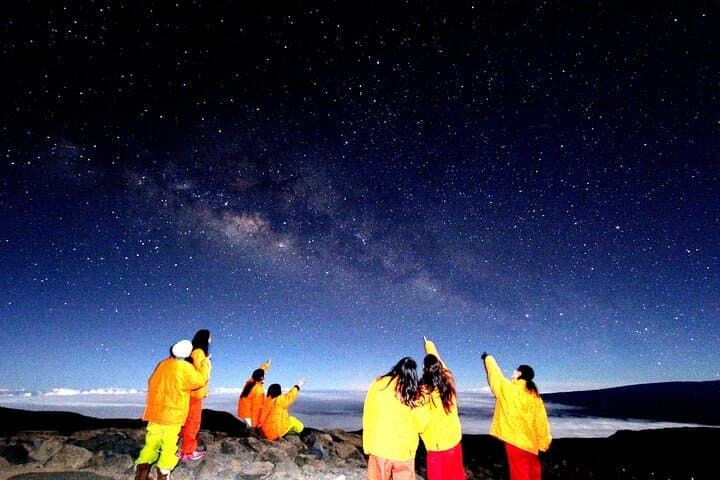
Expect textbook high-elevation conditions: thin air, cold nights, and rapid weather swings. After sunset, guides set up a refractor telescope, use laser pointers to map constellations, and hand you a DSLR image of the stars with you in frame (weather and moon phase permitting). Practicalities matter — the route includes long driving segments, short walks at altitude, and strict health/age/weight limits designed to reduce risk of altitude sickness.
Pack layers, hydrate, and schedule this late-afternoon to late-evening outing when the moon phase favors dark skies. If you crave a near-certain view of the Milky Way without technical hassle, this guided summit and stargazing run is a compact, high-altitude way to stand above the clouds and meet the cosmos.
moderate.
6–8 hours.
Moderate fitness for short high-altitude walks and long periods sitting in a van; ability to climb short gravel slopes helps.
The tour reaches Mauna Kea’s summit at 13,796 ft (4,205 m); you’ll stop at Onizuka Visitor Station at about 9,000 ft for acclimatization.
Yes—participants must be between 16 and 75 years old and weigh less than 300 lb; these restrictions are for safety at high altitude.
Stargazing and free DSLR photos are offered when conditions permit; visibility depends on weather, moon phase, and volcanic haze—no guarantee in poor conditions.
Public access to the summit is restricted and requires a four-wheel-drive vehicle and experience; this tour uses a licensed 4x4 van and guide expertise, which is the safest option for most visitors.
Mauna Kea is a culturally significant summit in Native Hawaiian tradition and, since the mid-20th century, a locus for astronomical observatories due to its altitude and stable atmosphere.
Visitors are asked to respect cultural sites, stay on established access routes, limit lights at night, and pack out waste—minimizing impact preserves both ecology and dark-sky quality.
Hawaiian Eyes Tour operates guided outdoor trips and adventures with an emphasis on safety, stewardship, and memorable experiences.
The van drops you at Onizuka Visitor Center as the light thins and the summit looms above like an island in the sky. Cold air moves in with authority; guides unfurl jackets and binoculars. At 13,796 ft the world narrows to horizon and crater, and the sunset spills across the Pacific while the first stars prick the dark.
The van drops you at Onizuka Visitor Center as the light thins and the summit looms above like an island in the sky. Cold air moves in with authority; guides unfurl jackets and binoculars. At 13,796 ft the world narrows to horizon and crater, and the sunset spills across the Pacific while the first stars prick the dark.
Mauna Kea is both a geological giant — a dormant shield volcano built by centuries of lava flows — and a cultural mountain sacred to Native Hawaiians. Modern observatories crowd its rim because the altitude, stable air, and low humidity make for world-class seeing. The tour threads local history and astronomy: you stop at Onizuka Visitor Station (9,000 ft) to acclimatize, change into warm clothes, and learn about the site’s cultural significance before a convoy carries you to the summit for sunset.
Expect textbook high-elevation conditions: thin air, cold nights, and rapid weather swings. After sunset, guides set up a refractor telescope, use laser pointers to map constellations, and hand you a DSLR image of the stars with you in frame (weather and moon phase permitting). Practicalities matter — the route includes long driving segments, short walks at altitude, and strict health/age/weight limits designed to reduce risk of altitude sickness.
Pack layers, hydrate, and schedule this late-afternoon to late-evening outing when the moon phase favors dark skies. If you crave a near-certain view of the Milky Way without technical hassle, this guided summit and stargazing run is a compact, high-altitude way to stand above the clouds and meet the cosmos.