THE ADVENTURE COLLECTIVE® · Independent discovery and booking for outdoor travel

See West Maui’s rainforests, the towering sea cliffs of Molokai, and an exclusive Ulupalakua landing on a 90-minute helicopter tour. Expect narrated geology, cultural context, and a short on-ground stop with panoramic views.
See West Maui’s rainforests, the towering sea cliffs of Molokai, and an exclusive Ulupalakua landing on a 90-minute helicopter tour. Expect narrated geology, cultural context, and a short on-ground stop with panoramic views.
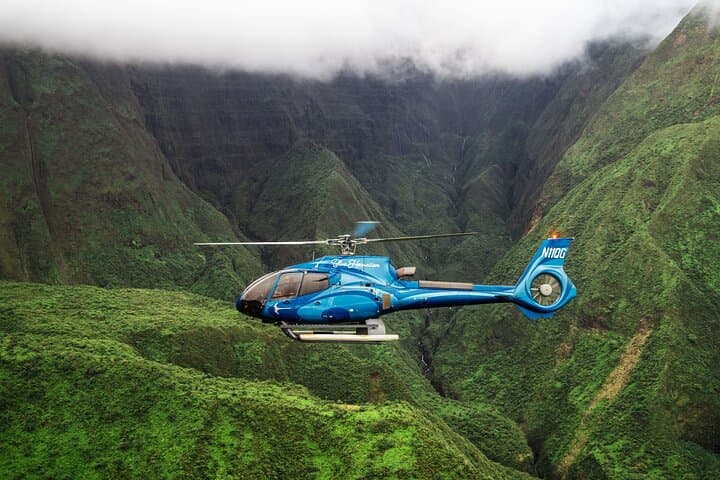
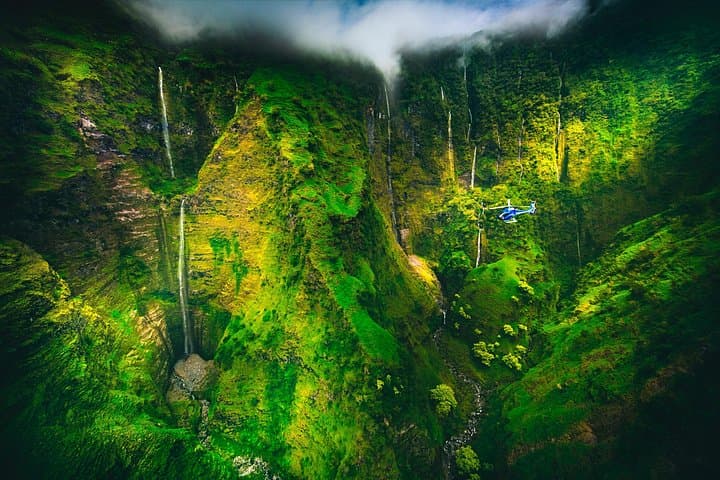
You lift off from West Maui and the island exhales below you: valleys unfurl like folded maps, waterfalls thread silver down rainforest walls, and the channel to Molokai appears as a strip of moving blue. From the headset the pilot’s calm voice frames what you’re seeing—ancient ridge lines, the cut of Iao Valley, and the raw drop of Molokai’s sea cliffs that only aircraft regularly reveal.
Verified experiences and guided adventures in the surrounding area.
Operated by Blue Hawaiian Helicopters - Maui · Lahaina, Hawaii
You lift off from West Maui and the island exhales below you: valleys unfurl like folded maps, waterfalls thread silver down rainforest walls, and the channel to Molokai appears as a strip of moving blue. From the headset the pilot’s calm voice frames what you’re seeing—ancient ridge lines, the cut of Iao Valley, and the raw drop of Molokai’s sea cliffs that only aircraft regularly reveal.
Geology and history arrive together here. West Maui is an eroded shield volcano—Mauna Kahālāwai—whose steep ridges and stream-cut valleys tell a story of relentless rain and time. Molokai’s cliffs are lava flows fossilized into sheer faces, while Ulupalakua on Maui’s leeward slopes shows pastoral ranchland shaped by 19th-century cattle culture and paniolo history.
Culturally the islands read as working landscapes as much as scenic ones: taro terraces, Hawaiian place names, and land divisions called ahupuaʻa reflect centuries of stewardship. From the air you’ll see how microclimates collide—rainforest greens give way to sunbaked pasture in minutes.
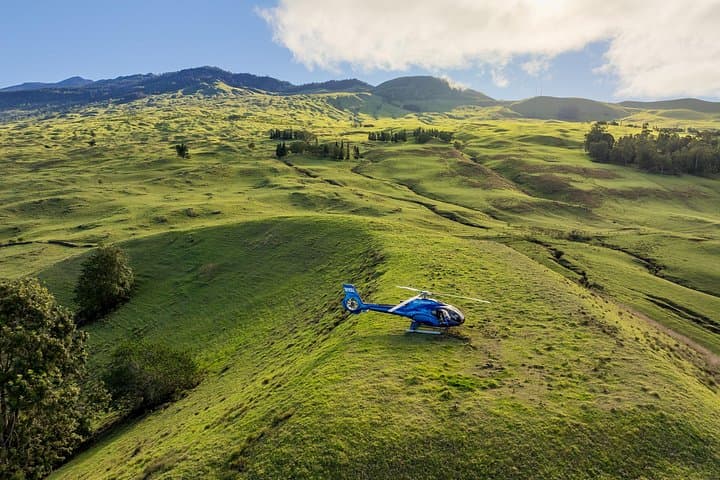
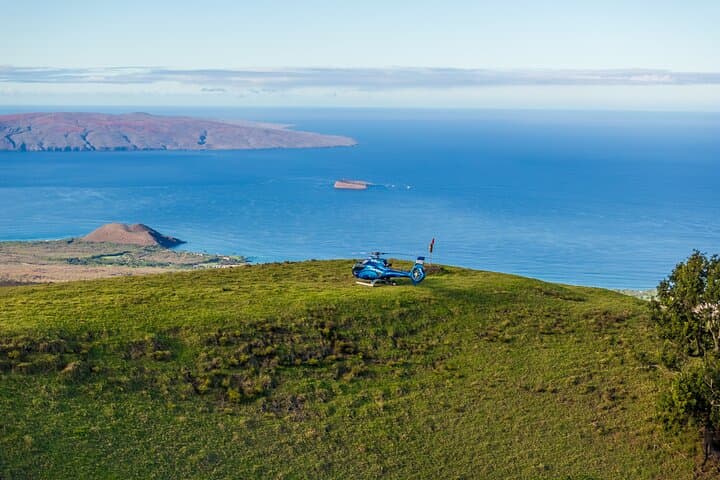
Practicalities are straightforward: the flight runs about 90 minutes with Bose headsets and a certified pilot-guide narrating. Expect a weight check and 45-minute preflight check-in. Weather dictates the route—trades can push you or clear the views—and the Ulupalakua landing gives a 20-minute pause to step out, photograph, and feel the wind off both oceans. Bring layers, motion-sickness remedies if you’re sensitive, and dark clothing to avoid reflections in photos. This is a high-reward, low-effort way to read Maui’s landscapes from the angle that reveals how islands were carved and how they continue to move beneath the sky.
easy.
1.5 hours.
Suitable for all fitness levels; you only need to board and deplane safely
No—bags, large cameras, and extending selfie sticks are not allowed in the helicopter; bring a small camera or phone only.
Tours are canceled for unsafe flying conditions; you’ll be offered a full refund or alternate dates per the operator’s policy.
Yes—infants under 24 months may lap‑sit; full booking questions include ages and names for every passenger.
The heliport and helicopter have accessibility accommodations and a wheelchair lift at base; notify the operator ahead for assistance.
West Maui and Molokai carry deep Hawaiian histories; Iao Valley was an important population and ceremonial center, while ranching at Ulupalakua represents 19th‑century land use shifts.
Operators work within strict flight corridors to minimize noise and disturbance; follow ground host instructions at landing sites and avoid leaving any waste.
Blue Hawaiian Helicopters - Maui operates guided outdoor trips and adventures with an emphasis on safety, stewardship, and memorable experiences.
You lift off from West Maui and the island exhales below you: valleys unfurl like folded maps, waterfalls thread silver down rainforest walls, and the channel to Molokai appears as a strip of moving blue. From the headset the pilot’s calm voice frames what you’re seeing—ancient ridge lines, the cut of Iao Valley, and the raw drop of Molokai’s sea cliffs that only aircraft regularly reveal.
You lift off from West Maui and the island exhales below you: valleys unfurl like folded maps, waterfalls thread silver down rainforest walls, and the channel to Molokai appears as a strip of moving blue. From the headset the pilot’s calm voice frames what you’re seeing—ancient ridge lines, the cut of Iao Valley, and the raw drop of Molokai’s sea cliffs that only aircraft regularly reveal.
Geology and history arrive together here. West Maui is an eroded shield volcano—Mauna Kahālāwai—whose steep ridges and stream-cut valleys tell a story of relentless rain and time. Molokai’s cliffs are lava flows fossilized into sheer faces, while Ulupalakua on Maui’s leeward slopes shows pastoral ranchland shaped by 19th-century cattle culture and paniolo history.
Culturally the islands read as working landscapes as much as scenic ones: taro terraces, Hawaiian place names, and land divisions called ahupuaʻa reflect centuries of stewardship. From the air you’ll see how microclimates collide—rainforest greens give way to sunbaked pasture in minutes.
Practicalities are straightforward: the flight runs about 90 minutes with Bose headsets and a certified pilot-guide narrating. Expect a weight check and 45-minute preflight check-in. Weather dictates the route—trades can push you or clear the views—and the Ulupalakua landing gives a 20-minute pause to step out, photograph, and feel the wind off both oceans. Bring layers, motion-sickness remedies if you’re sensitive, and dark clothing to avoid reflections in photos. This is a high-reward, low-effort way to read Maui’s landscapes from the angle that reveals how islands were carved and how they continue to move beneath the sky.