THE ADVENTURE COLLECTIVE® · Independent discovery and booking for outdoor travel

Board a small, photographer-friendly vessel from Lahaina and spend two hours searching Maui’s protected waters for humpback whales. Midday light, hydrophones, and experienced crew make this an intimate whale-watching experience that highlights Maui’s marine sanctuary and island panoramas.
Board a small, photographer-friendly vessel from Lahaina and spend two hours searching Maui’s protected waters for humpback whales. Midday light, hydrophones, and experienced crew make this an intimate whale-watching experience that highlights Maui’s marine sanctuary and island panoramas.
The boat slips away from Front Street and the island exhales: mid day light lays clean on the ocean, and the small pink vessel carves a fast lane across glassy blue. Within minutes the West Maui mountains recede and the water takes over, punctuated by the spout and rolling backs of humpback whales that come to breed and calve in these protected waters.
Verified experiences and guided adventures in the surrounding area.
Operated by Maui Ocean Adventures · Lahaina, Hawaii
The boat slips away from Front Street and the island exhales: mid day light lays clean on the ocean, and the small pink vessel carves a fast lane across glassy blue. Within minutes the West Maui mountains recede and the water takes over, punctuated by the spout and rolling backs of humpback whales that come to breed and calve in these protected waters.
Maui’s winter whale season (roughly December–April) draws North Pacific humpbacks to the shallow continental shelf off west and south Maui. The region sits inside the Hawaiian Islands Humpback Whale National Marine Sanctuary, created to protect migration, breeding and calf-rearing habitat. Geology frames the view—Haleakalā’s broad shield looming to the east, eroded lava benches of Molokaʻi and the steep cliffs of Lanaʻi nearby—reminders that these waters sit within a volcanic archipelago shaped by fire and sea.
Local crews, many from Lahaina and some rebuilding after the 2023 fires, run small-group tours with hydrophones so you can hear whale song underwater. Expect a photographer-friendly layout with 360-degree visibility, interpretive commentary, and close but lawful approach distances enforced by experienced captains.
Practicalities: check in at Mala Boat Ramp at least 20 minutes early, plan for a 2-hour tour, and leave bulky shoes at the dock—this is a no-shoes cruise. Bring sun protection, a wind layer, and seasickness remedies if you’re prone; the boat caters to families and photographers but movement on deck and short ladders require basic mobility. Since the operator guarantees sightings, confirm refund policy at booking; otherwise, enjoy the rare chance to hear and see whales in one of the world’s most accessible marine sanctuaries.
easy.
2 hours.
Moderate mobility and balance recommended for boarding and moving on deck; no technical fitness required.
The operator advertises guaranteed sightings; check booking terms for their specific policy on refunds or rebookings if a sighting does not occur.
Meet at Mala Boat Ramp in Lahaina—look for the 'Jesus Coming Soon' sign on Front Street and walk toward the water; plan for nearby parking limits and consider ride-share.
Yes—tours are family-friendly, but parents should supervise children around the rail and during boarding; capacity is limited to about 23 passengers.
Yes—the boat carries a hydrophone so you can listen to humpback song and calls when animals are nearby, adding a rare acoustic dimension to sightings.
Lahaina was once the capital of the Hawaiian Kingdom and a 19th-century whaling hub; today tours operate from historic Front Street and nearby Mala Ramp with crews rooted in the local community.
The Hawaiian Islands Humpback Whale National Marine Sanctuary protects breeding habitat and enforces vessel approach rules; choose operators that follow sanctuary guidelines to minimize disturbance.
Maui Ocean Adventures operates guided outdoor trips and adventures with an emphasis on safety, stewardship, and memorable experiences.
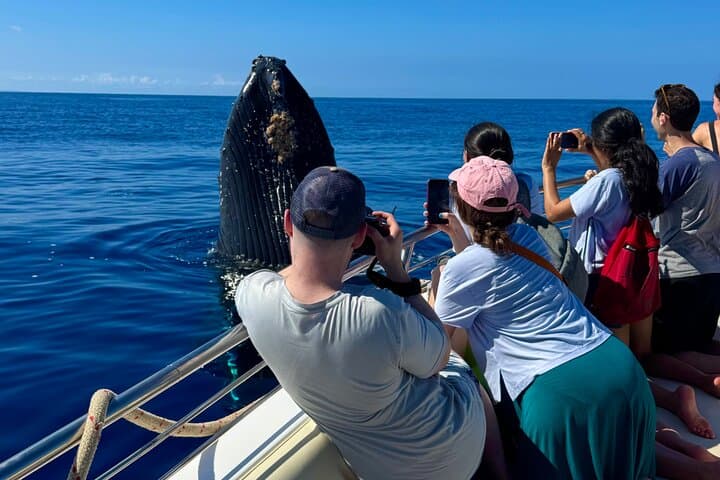
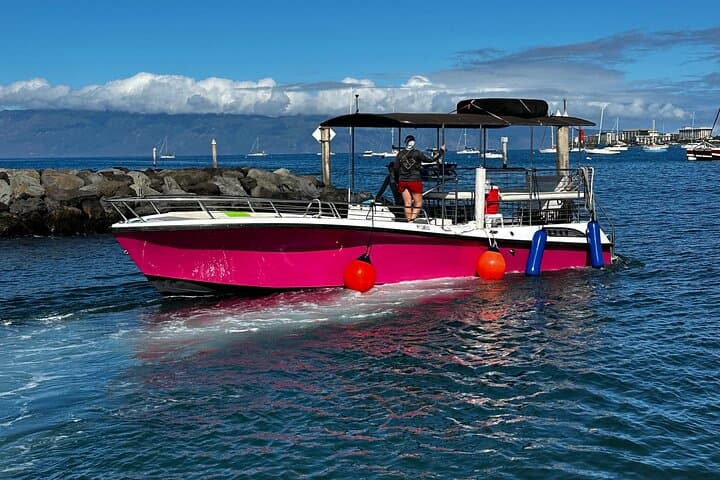
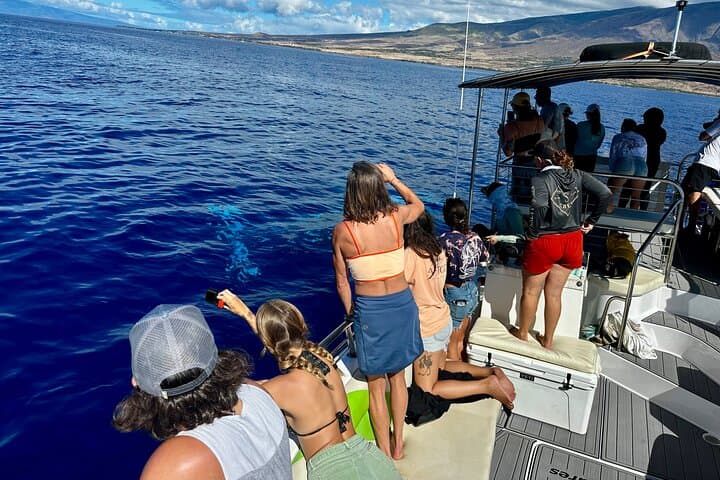
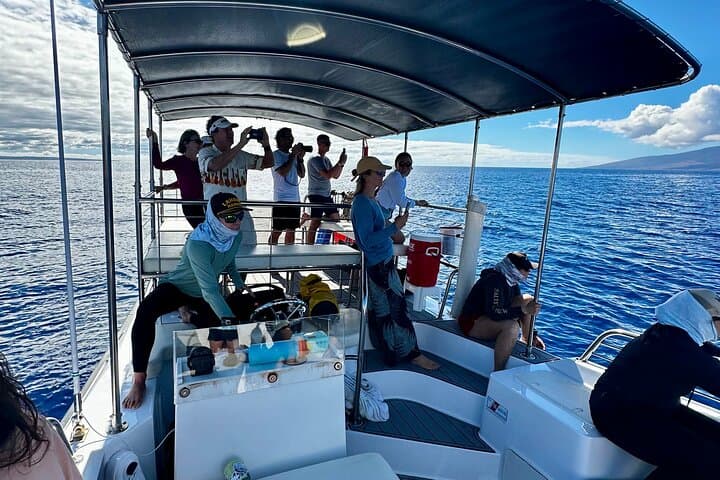
The boat slips away from Front Street and the island exhales: mid day light lays clean on the ocean, and the small pink vessel carves a fast lane across glassy blue. Within minutes the West Maui mountains recede and the water takes over, punctuated by the spout and rolling backs of humpback whales that come to breed and calve in these protected waters.
The boat slips away from Front Street and the island exhales: mid day light lays clean on the ocean, and the small pink vessel carves a fast lane across glassy blue. Within minutes the West Maui mountains recede and the water takes over, punctuated by the spout and rolling backs of humpback whales that come to breed and calve in these protected waters.
Maui’s winter whale season (roughly December–April) draws North Pacific humpbacks to the shallow continental shelf off west and south Maui. The region sits inside the Hawaiian Islands Humpback Whale National Marine Sanctuary, created to protect migration, breeding and calf-rearing habitat. Geology frames the view—Haleakalā’s broad shield looming to the east, eroded lava benches of Molokaʻi and the steep cliffs of Lanaʻi nearby—reminders that these waters sit within a volcanic archipelago shaped by fire and sea.
Local crews, many from Lahaina and some rebuilding after the 2023 fires, run small-group tours with hydrophones so you can hear whale song underwater. Expect a photographer-friendly layout with 360-degree visibility, interpretive commentary, and close but lawful approach distances enforced by experienced captains.
Practicalities: check in at Mala Boat Ramp at least 20 minutes early, plan for a 2-hour tour, and leave bulky shoes at the dock—this is a no-shoes cruise. Bring sun protection, a wind layer, and seasickness remedies if you’re prone; the boat caters to families and photographers but movement on deck and short ladders require basic mobility. Since the operator guarantees sightings, confirm refund policy at booking; otherwise, enjoy the rare chance to hear and see whales in one of the world’s most accessible marine sanctuaries.