THE ADVENTURE COLLECTIVE® · Independent discovery and booking for outdoor travel

Spend a full day exploring Matobo (Matopos) National Park from Bulawayo with a guided game drive and walking rhino tracking. Expect granite kopjes, rock paintings, and close but controlled encounters with black and white rhino.
Spend a full day exploring Matobo (Matopos) National Park from Bulawayo with a guided game drive and walking rhino tracking. Expect granite kopjes, rock paintings, and close but controlled encounters with black and white rhino.
You arrive before the sun fully clears the granite skyline, headlights cutting silhouettes of enormous balancing rocks that seem to lean in to listen. The air here is dry and sharp; wind scrapes across two-billion-year-old domes and the first zebras are already moving like punctuation across grassy slopes.
Verified experiences and guided adventures in the surrounding area.
Operated by ThisAndThat Safaris · Bulawayo, Matabeleland South
You arrive before the sun fully clears the granite skyline, headlights cutting silhouettes of enormous balancing rocks that seem to lean in to listen. The air here is dry and sharp; wind scrapes across two-billion-year-old domes and the first zebras are already moving like punctuation across grassy slopes.
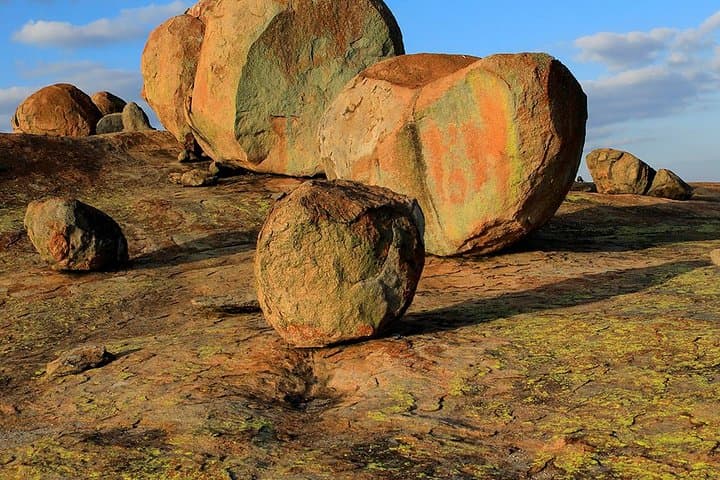
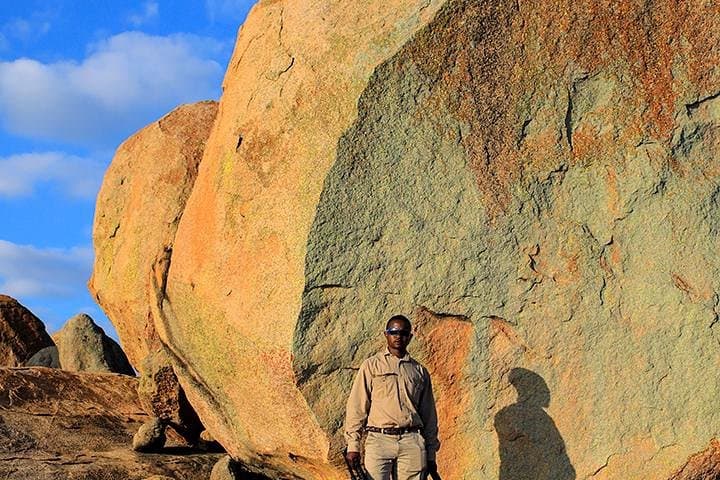
Matobo (Matopos) National Park is defined by its ancient granite kopjes—rounded hills and piled boulders carved by millennia of weathering. The park holds World’s View and the grave of Cecil Rhodes, and nearby caves shelter more than 3,000 Stone Age rock paintings. That mix of living wildlife and deep human history gives the place a layered character: geology that insists on attention, and culture that keeps the land in view.
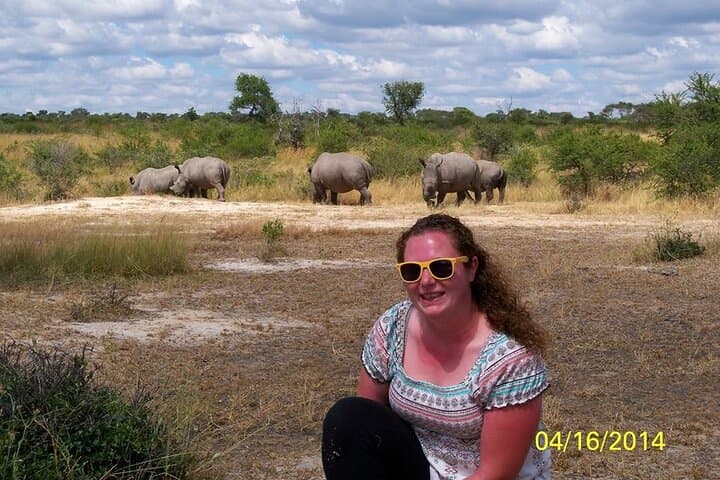
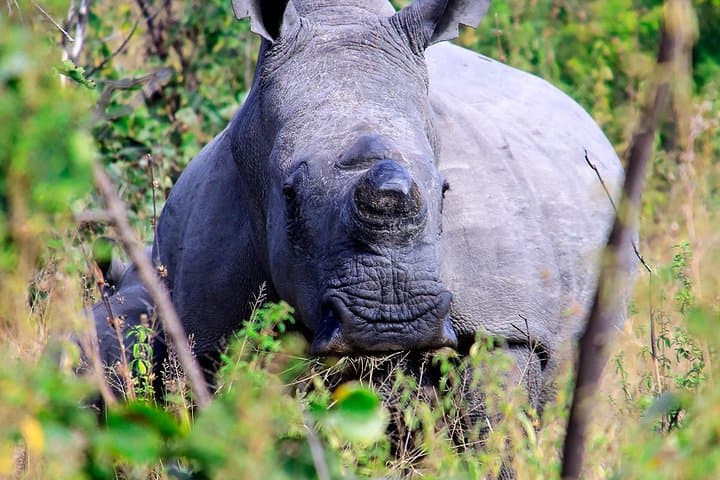
A guided day trip from Bulawayo (about 40–45 minutes by road) pairs a vehicle game drive with a guided walk for close-range rhino tracking. Terrain alternates between open savanna, rocky outcrops and short but uneven footpaths—expect firm but irregular footing. Wildlife commonly seen includes white and black rhino, giraffe, zebra, kudu and various antelope; predators are present but elusive.
Practical notes: bring binoculars, sturdy footwear and sun protection, and prepare for a full 6–8 hour day that includes a light picnic lunch and driving between viewpoints. Follow your guide’s instructions at all times—rhino tracking is intimate but controlled, and safety distances are non-negotiable. Time your visit for the dry season if your priority is sighting concentration; wet months bring greener scenery and more birds. With informed guides and a curriculum of rock art and geology, this is a day that balances adrenaline and context—close encounters framed by one of southern Africa’s most distinctive landscapes.
moderate.
6–8 hours.
Moderate fitness for short walking sections over uneven rock and grassland; ability to climb low steps and stand for tracking required.
Typical drive time to Matobo Park is about 40–45 minutes each way from central Bulawayo; the full excursion runs roughly 6–8 hours including drives, walks and a picnic lunch.
Guided walking portions are designed for up-close observation under strict safety protocols; guides manage approach distances and you must follow their directions at all times.
Infants must sit on laps and the tour isn’t recommended for travelers with spinal injuries or serious heart conditions; moderate fitness is required for short walks on uneven ground.
Common sightings include black and white rhino, giraffe, zebra, impala and kudu; predators such as leopard and hyena occur but are less frequently seen on a single-day visit.
The Matobo Hills have been occupied for millennia; rock shelters preserve Stone Age paintings and the area is also home to colonial-era sites like Rhodes’ grave at World’s View.
Rhino populations here are the focus of active anti-poaching and translocation efforts; visitors support conservation by following park rules and using licensed guides.
ThisAndThat Safaris operates guided outdoor trips and adventures with an emphasis on safety, stewardship, and memorable experiences.
You arrive before the sun fully clears the granite skyline, headlights cutting silhouettes of enormous balancing rocks that seem to lean in to listen. The air here is dry and sharp; wind scrapes across two-billion-year-old domes and the first zebras are already moving like punctuation across grassy slopes.
You arrive before the sun fully clears the granite skyline, headlights cutting silhouettes of enormous balancing rocks that seem to lean in to listen. The air here is dry and sharp; wind scrapes across two-billion-year-old domes and the first zebras are already moving like punctuation across grassy slopes.
Matobo (Matopos) National Park is defined by its ancient granite kopjes—rounded hills and piled boulders carved by millennia of weathering. The park holds World’s View and the grave of Cecil Rhodes, and nearby caves shelter more than 3,000 Stone Age rock paintings. That mix of living wildlife and deep human history gives the place a layered character: geology that insists on attention, and culture that keeps the land in view.
A guided day trip from Bulawayo (about 40–45 minutes by road) pairs a vehicle game drive with a guided walk for close-range rhino tracking. Terrain alternates between open savanna, rocky outcrops and short but uneven footpaths—expect firm but irregular footing. Wildlife commonly seen includes white and black rhino, giraffe, zebra, kudu and various antelope; predators are present but elusive.
Practical notes: bring binoculars, sturdy footwear and sun protection, and prepare for a full 6–8 hour day that includes a light picnic lunch and driving between viewpoints. Follow your guide’s instructions at all times—rhino tracking is intimate but controlled, and safety distances are non-negotiable. Time your visit for the dry season if your priority is sighting concentration; wet months bring greener scenery and more birds. With informed guides and a curriculum of rock art and geology, this is a day that balances adrenaline and context—close encounters framed by one of southern Africa’s most distinctive landscapes.