THE ADVENTURE COLLECTIVE® · Independent discovery and booking for outdoor travel

A private, all-inclusive car day trip from Delhi to Mathura and Vrindavan that covers key temples, ghats, and cultural highlights in a single 12-hour excursion. Ideal for travelers wanting a focused cultural pilgrimage with local guidance.
A private, all-inclusive car day trip from Delhi to Mathura and Vrindavan that covers key temples, ghats, and cultural highlights in a single 12-hour excursion. Ideal for travelers wanting a focused cultural pilgrimage with local guidance.
By dawn the highway unfurls south from Delhi, the city’s skyline shrinking as the plains open toward the Yamuna. In a private car the landscape slides by—fields, small towns, and the river that seems to pull the region together—until the domes and temple spires of Mathura and nearby Vrindavan rise into view. The day is built around movement: short walks between sacred sites, quiet moments at ghats, and the ritual sound of bells and conches that mark time here.
Verified experiences and guided adventures in the surrounding area.
Operated by India saying namaste Trips · Mathura, Uttar Pradesh
By dawn the highway unfurls south from Delhi, the city’s skyline shrinking as the plains open toward the Yamuna. In a private car the landscape slides by—fields, small towns, and the river that seems to pull the region together—until the domes and temple spires of Mathura and nearby Vrindavan rise into view. The day is built around movement: short walks between sacred sites, quiet moments at ghats, and the ritual sound of bells and conches that mark time here.
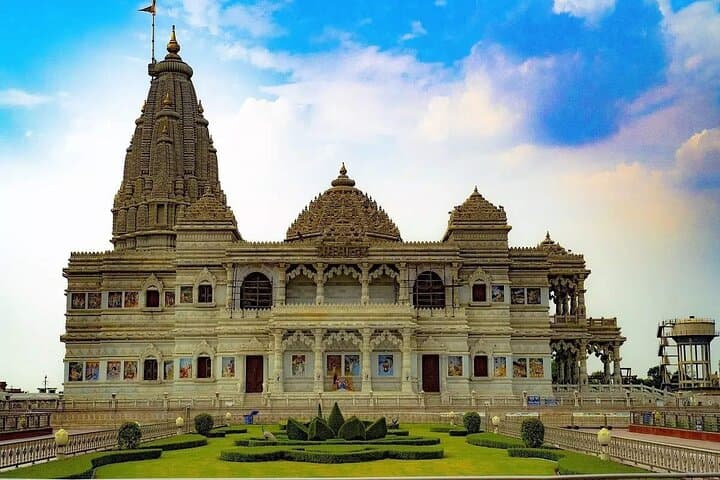
Mathura claims the birth of Krishna; its Janmabhoomi complex and the nearby Kans Qila speak to layers of myth and medieval contest. Vrindavan grew as the landscape of Krishna’s youth—sacred groves, old wells and dozens of temples, including Banke Bihari and ISKCON, where ritual and community life remain central. Geologically this is the Gangetic alluvial plain—flat, fertile, and shaped by the Yamuna’s seasonal moods, which historically determined settlement patterns and pilgrimage routes.
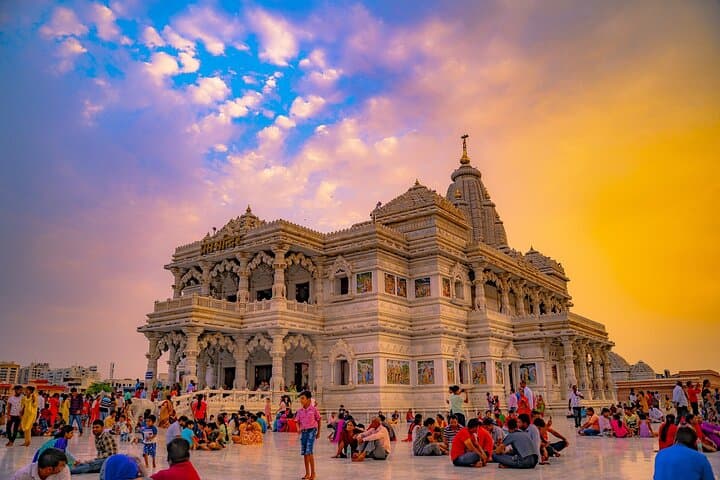
Local life is tactile: vendors selling prasad and flowers, priests arranging puja plates, and narrow lanes that reward slow exploration. Lesser-known stops include the quieter ghats near Mathura’s western edge and a small 18th-century stepwell in Vrindavan that most itineraries skip.
Practical guidance: plan for a 12-hour day (roughly 150 km round trip from Delhi), start early to avoid traffic, and dress modestly—shoulders and knees covered for temple entry. Wear shoes that are easy to slip off, carry cash for small offerings, and bring sun protection and a refillable water bottle. Expect flat, urban walking with occasional steps and crowded temple interiors; pacing and respect for local customs make the day far more rewarding.
easy.
12 hours.
Suitable for all fitness levels; expect multiple short walks and periods of standing in temple courtyards
By car it's roughly 150 km one-way depending on your start point in Delhi; expect about 3–4 hours each way without heavy traffic.
Most temples are free to enter; private shrine access or guided inner sanctum visits may require donations or separate permission.
Yes—it's a low-impact day trip, but plan for long hours in a car, walking on flat surfaces, and crowded temple interiors.
Cooler months (November–March) offer comfortable weather and clearer skies; avoid major festival days like Holi if you prefer a calmer visit.
Mathura and Vrindavan are ancient pilgrimage centers tied to Krishna legends; successive empires and local patronage shaped the dense network of temples seen today.
The Yamuna’s health affects local livelihoods and pilgrimage access; travelers can reduce impact by avoiding plastic and using refillable water bottles.
India saying namaste Trips operates guided outdoor trips and adventures with an emphasis on safety, stewardship, and memorable experiences.
By dawn the highway unfurls south from Delhi, the city’s skyline shrinking as the plains open toward the Yamuna. In a private car the landscape slides by—fields, small towns, and the river that seems to pull the region together—until the domes and temple spires of Mathura and nearby Vrindavan rise into view. The day is built around movement: short walks between sacred sites, quiet moments at ghats, and the ritual sound of bells and conches that mark time here.
By dawn the highway unfurls south from Delhi, the city’s skyline shrinking as the plains open toward the Yamuna. In a private car the landscape slides by—fields, small towns, and the river that seems to pull the region together—until the domes and temple spires of Mathura and nearby Vrindavan rise into view. The day is built around movement: short walks between sacred sites, quiet moments at ghats, and the ritual sound of bells and conches that mark time here.
Mathura claims the birth of Krishna; its Janmabhoomi complex and the nearby Kans Qila speak to layers of myth and medieval contest. Vrindavan grew as the landscape of Krishna’s youth—sacred groves, old wells and dozens of temples, including Banke Bihari and ISKCON, where ritual and community life remain central. Geologically this is the Gangetic alluvial plain—flat, fertile, and shaped by the Yamuna’s seasonal moods, which historically determined settlement patterns and pilgrimage routes.
Local life is tactile: vendors selling prasad and flowers, priests arranging puja plates, and narrow lanes that reward slow exploration. Lesser-known stops include the quieter ghats near Mathura’s western edge and a small 18th-century stepwell in Vrindavan that most itineraries skip.
Practical guidance: plan for a 12-hour day (roughly 150 km round trip from Delhi), start early to avoid traffic, and dress modestly—shoulders and knees covered for temple entry. Wear shoes that are easy to slip off, carry cash for small offerings, and bring sun protection and a refillable water bottle. Expect flat, urban walking with occasional steps and crowded temple interiors; pacing and respect for local customs make the day far more rewarding.