THE ADVENTURE COLLECTIVE® · Independent discovery and booking for outdoor travel

A full-day excursion from Moshi that combines a 40-minute trek to an 80m waterfall, a hands-on Chagga coffee experience, and a swim at Kikuletwa Hot Springs. Expect culture, cooling pools, and volcanic landscapes within a single day.
A full-day excursion from Moshi that combines a 40-minute trek to an 80m waterfall, a hands-on Chagga coffee experience, and a swim at Kikuletwa Hot Springs. Expect culture, cooling pools, and volcanic landscapes within a single day.
Dawn breaks over the southern slopes of Kilimanjaro as a narrow road winds from Moshi toward Materuni village. Mist lifts off cultivated terraces and the guide points to a line of banana trees; the air smells of wet earth and fresh-roasted coffee. The approach sets the mood: friendly households, carved wooden doors, and the distant rush of water daring you up the path.
Verified experiences and guided adventures in the surrounding area.
Operated by Travel Africa Safari Agency · Materuni, Kilimanjaro Region
Dawn breaks over the southern slopes of Kilimanjaro as a narrow road winds from Moshi toward Materuni village. Mist lifts off cultivated terraces and the guide points to a line of banana trees; the air smells of wet earth and fresh-roasted coffee. The approach sets the mood: friendly households, carved wooden doors, and the distant rush of water daring you up the path.
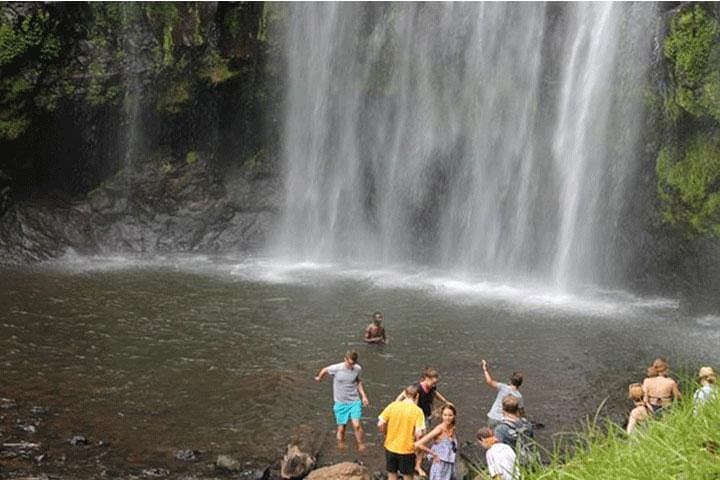
Materuni sits on ancient volcanic soils whose streams cut deep into steep ridges, producing cascades that tumble more than 80 meters into a shaded plunge pool. The area is Chagga country — an agrarian culture shaped by irrigation furrows (furrows the Chagga engineered centuries ago) and a coffee tradition that threads local ritual into daily life. Kikuletwa (Chemka) Hot Springs downstream offers a contrasting geology: clear, warm groundwater bubbling from fractured basalt into a turquoise pool.
Practically, expect a 30–50 minute walk on uneven, sometimes muddy trail to reach the falls, with short steep sections and a handful of steps. You’ll learn coffee processing by hand, taste banana beer, and have time for a swim at the falls and later at Kikuletwa’s warm spring if included. Bring swimwear, sturdy shoes, and cash for village purchases and tips.
Best visited in the morning for clearer Kilimanjaro views and gentler heat; plan a full day trip from Moshi or Arusha, and allow flexibility for transportation time. Respect household customs when visiting the village and pack out waste — these landscapes are sustained by small communities whose livelihoods depend on tourism and clean water.
moderate.
6–8 hours.
Basic to moderate fitness; able to walk 30–50 minutes on uneven terrain and negotiate short steep sections.
The trail from the village office to the falls is typically a 30–50 minute walk depending on pace and conditions, with some short steep segments.
Yes for most, but there are uneven surfaces and steps; those with mobility issues should check accessibility options and consider local advice.
Yes—there are swimming opportunities at the plunge pool below Materuni Falls and at Kikuletwa Hot Springs; always assess water depth and current before entering.
Bring local currency for tips, souvenirs, and optional purchases in the village; the tour usually includes admissions and a boxed lunch.
The Chagga developed sophisticated irrigation and terracing systems on Kilimanjaro’s lower slopes; coffee cultivation has shaped village life since the colonial era.
Local communities manage waterways and forest patches; visitors should avoid single-use plastics, stay on trails, and follow guide instructions to limit erosion and protect water sources.
Travel Africa Safari Agency operates guided outdoor trips and adventures with an emphasis on safety, stewardship, and memorable experiences.



Dawn breaks over the southern slopes of Kilimanjaro as a narrow road winds from Moshi toward Materuni village. Mist lifts off cultivated terraces and the guide points to a line of banana trees; the air smells of wet earth and fresh-roasted coffee. The approach sets the mood: friendly households, carved wooden doors, and the distant rush of water daring you up the path.
Dawn breaks over the southern slopes of Kilimanjaro as a narrow road winds from Moshi toward Materuni village. Mist lifts off cultivated terraces and the guide points to a line of banana trees; the air smells of wet earth and fresh-roasted coffee. The approach sets the mood: friendly households, carved wooden doors, and the distant rush of water daring you up the path.
Materuni sits on ancient volcanic soils whose streams cut deep into steep ridges, producing cascades that tumble more than 80 meters into a shaded plunge pool. The area is Chagga country — an agrarian culture shaped by irrigation furrows (furrows the Chagga engineered centuries ago) and a coffee tradition that threads local ritual into daily life. Kikuletwa (Chemka) Hot Springs downstream offers a contrasting geology: clear, warm groundwater bubbling from fractured basalt into a turquoise pool.
Practically, expect a 30–50 minute walk on uneven, sometimes muddy trail to reach the falls, with short steep sections and a handful of steps. You’ll learn coffee processing by hand, taste banana beer, and have time for a swim at the falls and later at Kikuletwa’s warm spring if included. Bring swimwear, sturdy shoes, and cash for village purchases and tips.
Best visited in the morning for clearer Kilimanjaro views and gentler heat; plan a full day trip from Moshi or Arusha, and allow flexibility for transportation time. Respect household customs when visiting the village and pack out waste — these landscapes are sustained by small communities whose livelihoods depend on tourism and clean water.