THE ADVENTURE COLLECTIVE® · Independent discovery and booking for outdoor travel

A half‑day excursion from Moshi that mixes a 45‑minute rainforest hike to a 90m waterfall with hands‑on Arabica coffee processing and a Chagga lunch. Expect muddy trails, cooling pools and a close cultural look at Kilimanjaro’s coffee economy.
A half‑day excursion from Moshi that mixes a 45‑minute rainforest hike to a 90m waterfall with hands‑on Arabica coffee processing and a Chagga lunch. Expect muddy trails, cooling pools and a close cultural look at Kilimanjaro’s coffee economy.
A cool mist hangs at the lip of Materuni Waterfall as the group leaves Moshi behind, climbing the village track that skirts the lower slopes of Kilimanjaro.
Verified experiences and guided adventures in the surrounding area.
Operated by Boni · Materuni, Kilimanjaro Region
A cool mist hangs at the lip of Materuni Waterfall as the group leaves Moshi behind, climbing the village track that skirts the lower slopes of Kilimanjaro.
The walk threads through banana terraces and smallholder coffee plots; birds call from the forest edge and the trail slips from packed earth to slippery clay. At the waterfall the water winters the rocks and dares you to step closer — a 90‑metre drop that shapes its own pool and offers a sharp, refreshing swim for those ready to cool off.
This route sits on the cultivated flank of Kilimanjaro where volcanic soils and orographic rain create rich ground for Arabica coffee. The Chagga people have shaped these fields for generations, combining irrigation furrows called furrows and hand‑processing techniques that remain in daily use. Visitors typically see cherry sorting, roasting on small stoves and traditional pounding to pull beans from their husks.
Practical details matter: the full trip runs about four to five hours door‑to‑door from Moshi, with roughly 45 minutes each way on the waterfall trail over uneven and sometimes muddy ground; expect short steep sections rather than sustained climbs. Bring sturdy shoes with traction, a quick‑dry layer, at least 1L of water and a small towel if you plan to swim. Guides lead the coffee demo, handle village introductions and serve a Chagga lunch — the cultural stop is as deliberate as the hike.
Plan mornings or late afternoons to avoid mid‑day heat and the wettest parts of the year. Respect local customs during the village visit, and pack out any non‑biodegradable trash to keep the streamside forest healthy.
moderate.
4–5 hours.
Suitable for travelers in average fitness who can handle a short steep descent and uneven, potentially muddy terrain.
The walking portion is about 30–45 minutes each way on a trail that is short but can be steep and muddy in places.
Yes — the guided coffee demonstration includes hands‑on processing and a tasting of freshly brewed local Arabica.
Pickup and return to Moshi hotels is typically included; confirm pickup point when booking.
Yes, the tour is family friendly but the waterfall access requires caution around slippery rocks and currents; small children should be supervised.
The Chagga people have farmed the southern and eastern slopes of Kilimanjaro for centuries, developing terraced agriculture and communal irrigation that support coffee cultivation today.
The forest strips around Materuni are small and sensitive; stay on trails, avoid bathing with soap in streams and support local guides who invest tourism revenue in community conservation.
Boni operates guided outdoor trips and adventures with an emphasis on safety, stewardship, and memorable experiences.
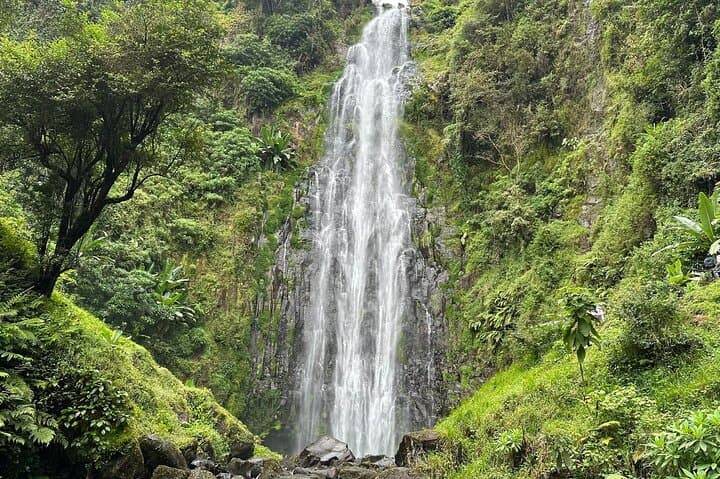


A cool mist hangs at the lip of Materuni Waterfall as the group leaves Moshi behind, climbing the village track that skirts the lower slopes of Kilimanjaro.
A cool mist hangs at the lip of Materuni Waterfall as the group leaves Moshi behind, climbing the village track that skirts the lower slopes of Kilimanjaro.
The walk threads through banana terraces and smallholder coffee plots; birds call from the forest edge and the trail slips from packed earth to slippery clay. At the waterfall the water winters the rocks and dares you to step closer — a 90‑metre drop that shapes its own pool and offers a sharp, refreshing swim for those ready to cool off.
This route sits on the cultivated flank of Kilimanjaro where volcanic soils and orographic rain create rich ground for Arabica coffee. The Chagga people have shaped these fields for generations, combining irrigation furrows called furrows and hand‑processing techniques that remain in daily use. Visitors typically see cherry sorting, roasting on small stoves and traditional pounding to pull beans from their husks.
Practical details matter: the full trip runs about four to five hours door‑to‑door from Moshi, with roughly 45 minutes each way on the waterfall trail over uneven and sometimes muddy ground; expect short steep sections rather than sustained climbs. Bring sturdy shoes with traction, a quick‑dry layer, at least 1L of water and a small towel if you plan to swim. Guides lead the coffee demo, handle village introductions and serve a Chagga lunch — the cultural stop is as deliberate as the hike.
Plan mornings or late afternoons to avoid mid‑day heat and the wettest parts of the year. Respect local customs during the village visit, and pack out any non‑biodegradable trash to keep the streamside forest healthy.