THE ADVENTURE COLLECTIVE® · Independent discovery and booking for outdoor travel

Follow trail 406 from the ancient Sassi into the Rupestrian Churches park, cross a Tibetan suspension bridge, and climb onto the Murgia plateau for sweeping views. This guided 2.5-hour trek pairs history, geology, and a bit of adrenaline.
Follow trail 406 from the ancient Sassi into the Rupestrian Churches park, cross a Tibetan suspension bridge, and climb onto the Murgia plateau for sweeping views. This guided 2.5-hour trek pairs history, geology, and a bit of adrenaline.
You step out from a narrow stairway in the Sassi and the city’s stone breathes around you — sun-warmed calcarenite, carved dwellings, and staircases that forget where they began. The guide threads the group through alleys that drop into the canyon; soon the urban rhythm loosens and the path leads into the Regional Park of the Rupestrian Churches, where cliffs open like ledger pages of centuries.
Verified experiences and guided adventures in the surrounding area.
Operated by Martulli Viaggi · Matera, Basilicata
You step out from a narrow stairway in the Sassi and the city’s stone breathes around you — sun-warmed calcarenite, carved dwellings, and staircases that forget where they began. The guide threads the group through alleys that drop into the canyon; soon the urban rhythm loosens and the path leads into the Regional Park of the Rupestrian Churches, where cliffs open like ledger pages of centuries.
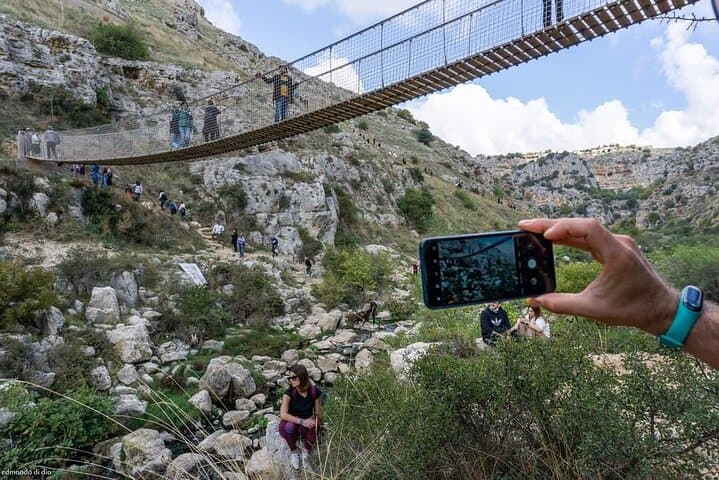
The route follows trail 406, worn by shepherds and pilgrims. Geology here is straightforward: soft limestone and sandstone sculpted into caves, ravines, and plateaus over millennia. The rock-hewn churches you pass hold fresco fragments and carved niches — cultural fingerprints of Byzantine, Norman and local peasant life that have endured in stone. On the canyon, a Tibetan-style suspension bridge arcs between cliffs; crossing it is a measured rush as the bridge nudges the wind and your balance.
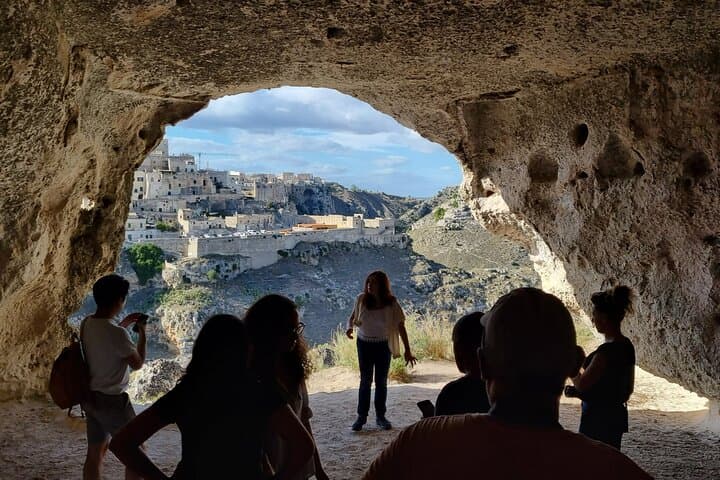
Beyond, the Murgia plateau stretches with maquis scrub, wild herbs, and thin-soiled grasslands where skylarks and raptors patrol thermals. The trail climbs to panoramic edges that frame the Sassi’s honey-colored blocks below — a stage for sunset and a photo point that rewards steady breathing more than speed.
Practicalities: the trek is a guided, roughly 2.5-hour loop with short technical sections and exposed ledges; trekking shoes, layered clothing, sun protection and 1–2 liters of water are recommended. Expect mixed terrain: paved alleys, narrow footpaths, loose scree, and the bridge itself. A shuttle returns groups to Matera center. Start before late-afternoon to catch light on the rock faces and allow time for steady, unhurried crossings of the bridge.
moderate.
2–3 hours.
Requires moderate fitness: comfortable walking on uneven terrain, short steep sections, and brief exposure on the bridge.
The guided itinerary runs about 150 minutes and is rated light-to-moderate: uneven ground and some short climbs, but no technical climbing.
The bridge is maintained for pedestrian use, but not recommended for people with severe vertigo or mobility issues; minimum age is generally 16.
Admission to specified rock churches and the Regional Park is included in the tour package as listed.
A shuttle is provided at the end of the trek to bring participants back to the city center; schedules may vary with sunset times.
The Sassi are ancient cave dwellings with continuous human occupation for millennia; many rock churches hold Byzantine- and medieval-era frescoes.
The Regional Park balances public access with protection of fragile rock-hewn sites and steppe flora — stick to marked trails and avoid touching frescoes.
Martulli Viaggi operates guided outdoor trips and adventures with an emphasis on safety, stewardship, and memorable experiences.


You step out from a narrow stairway in the Sassi and the city’s stone breathes around you — sun-warmed calcarenite, carved dwellings, and staircases that forget where they began. The guide threads the group through alleys that drop into the canyon; soon the urban rhythm loosens and the path leads into the Regional Park of the Rupestrian Churches, where cliffs open like ledger pages of centuries.
You step out from a narrow stairway in the Sassi and the city’s stone breathes around you — sun-warmed calcarenite, carved dwellings, and staircases that forget where they began. The guide threads the group through alleys that drop into the canyon; soon the urban rhythm loosens and the path leads into the Regional Park of the Rupestrian Churches, where cliffs open like ledger pages of centuries.
The route follows trail 406, worn by shepherds and pilgrims. Geology here is straightforward: soft limestone and sandstone sculpted into caves, ravines, and plateaus over millennia. The rock-hewn churches you pass hold fresco fragments and carved niches — cultural fingerprints of Byzantine, Norman and local peasant life that have endured in stone. On the canyon, a Tibetan-style suspension bridge arcs between cliffs; crossing it is a measured rush as the bridge nudges the wind and your balance.
Beyond, the Murgia plateau stretches with maquis scrub, wild herbs, and thin-soiled grasslands where skylarks and raptors patrol thermals. The trail climbs to panoramic edges that frame the Sassi’s honey-colored blocks below — a stage for sunset and a photo point that rewards steady breathing more than speed.
Practicalities: the trek is a guided, roughly 2.5-hour loop with short technical sections and exposed ledges; trekking shoes, layered clothing, sun protection and 1–2 liters of water are recommended. Expect mixed terrain: paved alleys, narrow footpaths, loose scree, and the bridge itself. A shuttle returns groups to Matera center. Start before late-afternoon to catch light on the rock faces and allow time for steady, unhurried crossings of the bridge.