THE ADVENTURE COLLECTIVE® · Independent discovery and booking for outdoor travel

Drive the Glenn Highway to stand on one of the largest car-accessible glaciers in the U.S. This full-day winter hike combines hands-on crampon time, geology lessons from experienced guides, and striking blue-ice photo opportunities.
Drive the Glenn Highway to stand on one of the largest car-accessible glaciers in the U.S. This full-day winter hike combines hands-on crampon time, geology lessons from experienced guides, and striking blue-ice photo opportunities.
You step off the van with your breath fogging, the Glenn Highway already slipping behind you like a ribbon of black. Ahead, the glacier waits—an enormous river of blue and white that pushes through the valley, not static but alive, cracking and sighing as snowpack and pressure reshape its surface. A guide checks your crampons, points to a crevasse rim a few dozen yards away, and for a few heartbeats the landscape feels both brutal and intimate: raw ice underfoot, wind that seems to test your intent, wide skies that make everything feel immediate.
Verified experiences and guided adventures in the surrounding area.
Operated by Alaska's Finest Tours & Cruises · Palmer, Alaska
You step off the van with your breath fogging, the Glenn Highway already slipping behind you like a ribbon of black. Ahead, the glacier waits—an enormous river of blue and white that pushes through the valley, not static but alive, cracking and sighing as snowpack and pressure reshape its surface. A guide checks your crampons, points to a crevasse rim a few dozen yards away, and for a few heartbeats the landscape feels both brutal and intimate: raw ice underfoot, wind that seems to test your intent, wide skies that make everything feel immediate.
Matanuska Glacier is one of North America’s most accessible valley glaciers—roughly 27 miles long and up to 4 miles wide—carved by millennia of ice flow from the Chugach Mountains. For centuries the area was part of the ancestral territories of Athabascan people; later it drew prospectors and scientists curious about Alaska’s moving ice. Today the glacier’s terminus is a popular site for guided winter crossings because the cold locks features in place, revealing sculpted blue ice and snow bridges made visible by low-angle light.
Geology here is readable: medial moraines sweep like ink strokes across ice, moulins and crevasses reveal the glacier’s internal plumbing, and the braided Matanuska River below dares you to follow where meltwater drains. Wildlife is present but careful—moose browse the nearby alder, and bald eagles ride thermals along the valley rim. Local guides combine safety instruction with interpretation: how crevasses form, why ice goes blue, and what the glacier’s advance and retreat say about regional climate patterns.
Practically, this is a full day. Expect 7–8 hours total from Anchorage, with roughly two hours’ drive each way on the Glenn Highway and about three hours active on the ice. Guides provide glacier walking equipment and basic training in crampon use; you bring sturdy, waterproof insulated boots and layered clothing. Winter here means low sun angles, intense glare from snow and ice, and temperatures that can bite—sunscreen and sunglasses matter as much as a warm parka.
Plan for variable winter conditions: the group’s route may change with weather and snowpack. Fitness requirements are moderate—regular hikers in reasonable condition will be comfortable, but the tour is not recommended for people with serious heart or spinal conditions. Bring extra batteries (cold kills them), a fully charged phone in an inner pocket, and leave no trace: the glacier is fragile and the best souvenir is a good photograph.
On the right day, the light scours the ice into impossible blue, the silence is punctuated only by distant cracking, and you’ll understand why people drive hours to stand on this moving world.
moderate.
7–8 hours.
Moderately fit: able to walk on uneven icy terrain for several hours and handle short steep sections.
Plan on about a 2-hour drive each way along the scenic Glenn Highway; total trip time is roughly 7–8 hours.
No—guides provide training and glacier walking equipment; basic mobility and comfort on uneven icy terrain are sufficient.
Layered clothing, waterproof outer shell, insulated boots compatible with crampons, warm hat and gloves, and UV-blocking sunglasses.
Age policies can vary; check with the operator at booking—groups require participants who can follow guide instructions and handle the physical demands.
Tours can be canceled for unsafe weather or insufficient travelers; refunds are generally available if cancelled at least 24 hours beforehand.
Guides choose safe routes and rope up when necessary, but glaciers have inherent hazards like crevasses—follow guide instructions and stay with the group.
Matanuska has long been part of Athabascan territory and later attracted miners and scientists; its movements store climate history in ice layers.
Groups are limited and guided to reduce impact; follow Leave No Trace principles and avoid disturbing ice formations or depositing litter on the glacier.
Alaska's Finest Tours & Cruises operates guided outdoor trips and adventures with an emphasis on safety, stewardship, and memorable experiences.
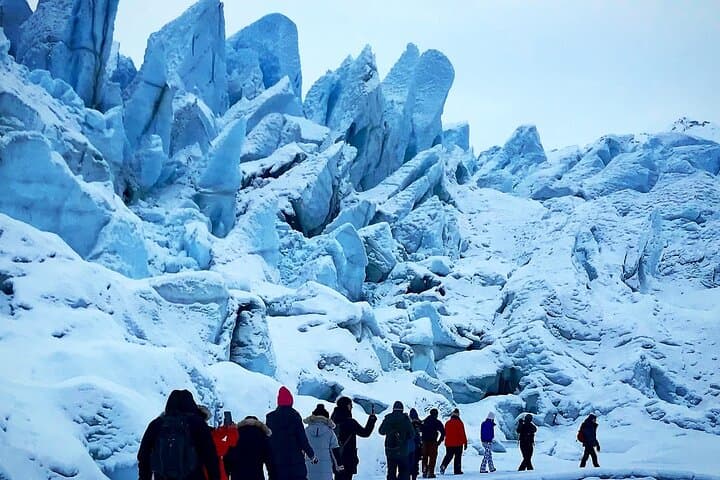
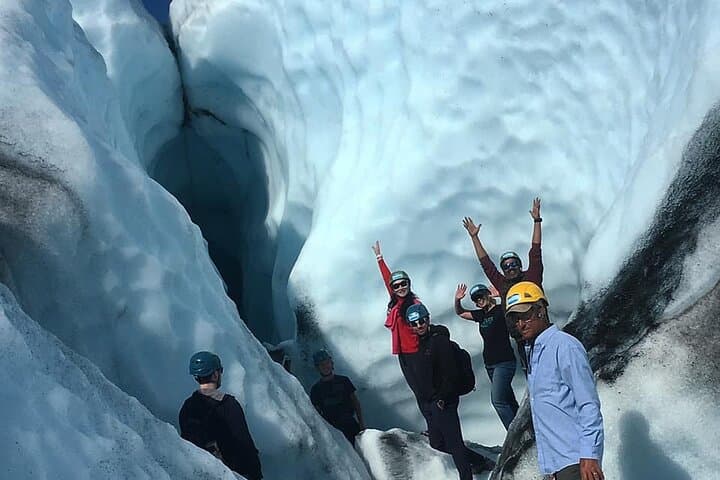
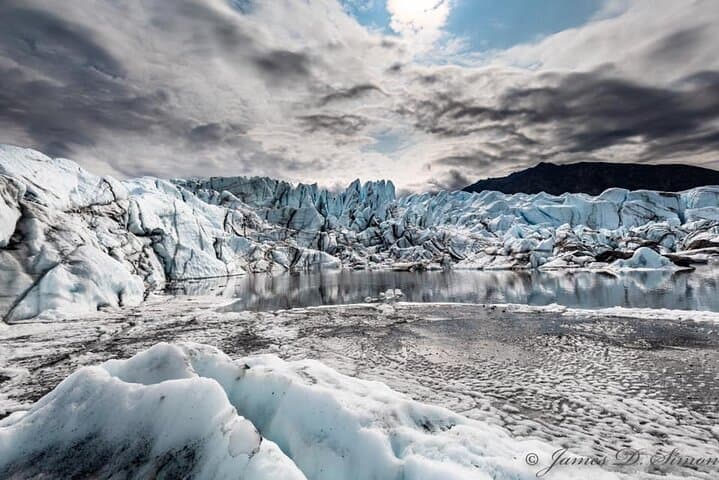
You step off the van with your breath fogging, the Glenn Highway already slipping behind you like a ribbon of black. Ahead, the glacier waits—an enormous river of blue and white that pushes through the valley, not static but alive, cracking and sighing as snowpack and pressure reshape its surface. A guide checks your crampons, points to a crevasse rim a few dozen yards away, and for a few heartbeats the landscape feels both brutal and intimate: raw ice underfoot, wind that seems to test your intent, wide skies that make everything feel immediate.
You step off the van with your breath fogging, the Glenn Highway already slipping behind you like a ribbon of black. Ahead, the glacier waits—an enormous river of blue and white that pushes through the valley, not static but alive, cracking and sighing as snowpack and pressure reshape its surface. A guide checks your crampons, points to a crevasse rim a few dozen yards away, and for a few heartbeats the landscape feels both brutal and intimate: raw ice underfoot, wind that seems to test your intent, wide skies that make everything feel immediate.
Matanuska Glacier is one of North America’s most accessible valley glaciers—roughly 27 miles long and up to 4 miles wide—carved by millennia of ice flow from the Chugach Mountains. For centuries the area was part of the ancestral territories of Athabascan people; later it drew prospectors and scientists curious about Alaska’s moving ice. Today the glacier’s terminus is a popular site for guided winter crossings because the cold locks features in place, revealing sculpted blue ice and snow bridges made visible by low-angle light.
Geology here is readable: medial moraines sweep like ink strokes across ice, moulins and crevasses reveal the glacier’s internal plumbing, and the braided Matanuska River below dares you to follow where meltwater drains. Wildlife is present but careful—moose browse the nearby alder, and bald eagles ride thermals along the valley rim. Local guides combine safety instruction with interpretation: how crevasses form, why ice goes blue, and what the glacier’s advance and retreat say about regional climate patterns.
Practically, this is a full day. Expect 7–8 hours total from Anchorage, with roughly two hours’ drive each way on the Glenn Highway and about three hours active on the ice. Guides provide glacier walking equipment and basic training in crampon use; you bring sturdy, waterproof insulated boots and layered clothing. Winter here means low sun angles, intense glare from snow and ice, and temperatures that can bite—sunscreen and sunglasses matter as much as a warm parka.
Plan for variable winter conditions: the group’s route may change with weather and snowpack. Fitness requirements are moderate—regular hikers in reasonable condition will be comfortable, but the tour is not recommended for people with serious heart or spinal conditions. Bring extra batteries (cold kills them), a fully charged phone in an inner pocket, and leave no trace: the glacier is fragile and the best souvenir is a good photograph.
On the right day, the light scours the ice into impossible blue, the silence is punctuated only by distant cracking, and you’ll understand why people drive hours to stand on this moving world.