THE ADVENTURE COLLECTIVE® · Independent discovery and booking for outdoor travel

Traverse the terminal moraine and step onto Alaska’s Matanuska Glacier with an experienced guide. This three‑hour tour reaches the Ice Falls, where towering seracs and meltwater pools reveal the glacier’s power and changeable nature.
Traverse the terminal moraine and step onto Alaska’s Matanuska Glacier with an experienced guide. This three‑hour tour reaches the Ice Falls, where towering seracs and meltwater pools reveal the glacier’s power and changeable nature.
You step off the shuttle onto a ragged moraine, the air sharp with glacial chill and the glacier’s pale blue face looming ahead like a moving wall. The guides clip on crampons and hand out helmets; the ground crunches underfoot as you cross cobbles left by ice and melt. The Ice Falls—where dense glacier ice tips and fractures into towering seracs—dominates the field of view, and meltwater threads down into a silver lake that feeds the Matanuska River.
Verified experiences and guided adventures in the surrounding area.
Operated by NOVA Alaska Guides, Whitewater Rafting & Glacier Tours · Palmer, Alaska
You step off the shuttle onto a ragged moraine, the air sharp with glacial chill and the glacier’s pale blue face looming ahead like a moving wall. The guides clip on crampons and hand out helmets; the ground crunches underfoot as you cross cobbles left by ice and melt. The Ice Falls—where dense glacier ice tips and fractures into towering seracs—dominates the field of view, and meltwater threads down into a silver lake that feeds the Matanuska River.
Matanuska is one of Alaska’s most accessible valley glaciers, stretching roughly 26 miles from the Chugach Mountains to its terminus at the park edge. Its exposed terminal moraine records repeated advances and retreats since the last glaciation; today the glacier is dynamic, crevassed, and visibly retreating with seasonal melt. Local Athabascan and Denaʼina people have long known these landscapes, and modern guiding here blends natural-history interpretation with practical safety.
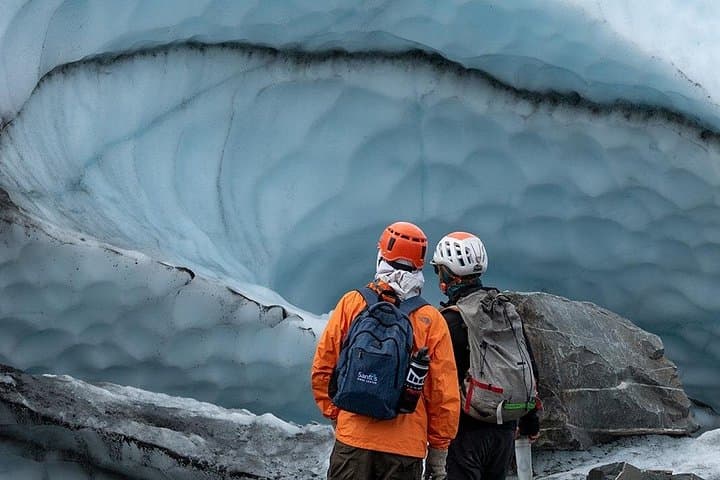
Expect rugged, uneven terrain, crevasses, moulins and spire-like seracs; guides route the group where ice is stable and point out features that tell the story of ice flow and bedrock below. Practical advice: layer for wind and wet, bring sunglasses for high-reflectance glare, and walk slowly—balance is more useful than speed. The tour is about three hours total, with active time on the glacier under guided supervision. Photograph the blue ice and melt pools, refill a bottle from glacier runoff if offered, but follow all guide instructions—these are live landscapes that change hourly.
moderate.
3 hours.
Light-to-moderate fitness: able to walk on uneven, sometimes slippery terrain for 1–2 miles and climb short rocky sections.
The tour is approximately three hours total with about 1–2 miles of walking on moraine and ice; active glacier time is guided and paced for the whole group.
Operators commonly require participants to be between roughly 10 and 73 years old and in reasonable health; not recommended for pregnant travelers or those with serious back or heart problems.
Guides provide helmets, boots and boot spikes (crampons) as part of the tour; participants should bring appropriate clothing and sturdy base layers.
Guides may offer glacier meltwater; follow their guidance on safety and consider treating water if instructed—bring a bottle with a secure cap.
Matanuska is a classic Alaskan valley glacier formed during the late Pleistocene; its terminal moraine preserves records of historic advances and the glacier has been monitored for decades as it retreats.
The glacier is sensitive to warming and seasonal melt; stick to guided routes, pack out all trash, and avoid disturbing ice features to minimize impact.
NOVA Alaska Guides, Whitewater Rafting & Glacier Tours operates guided outdoor trips and adventures with an emphasis on safety, stewardship, and memorable experiences.
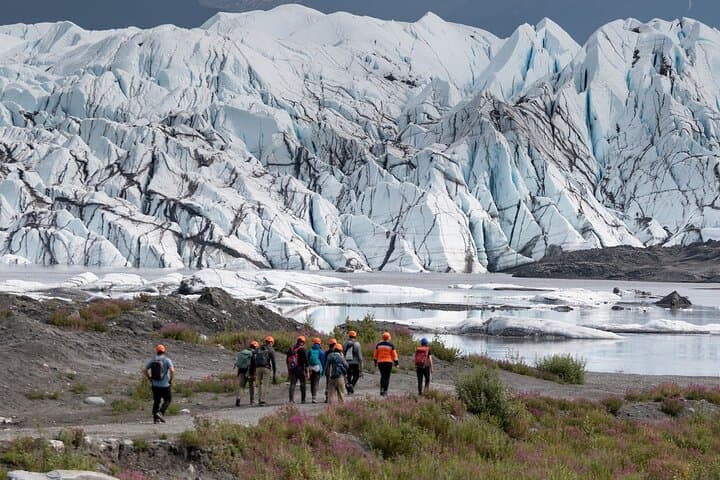
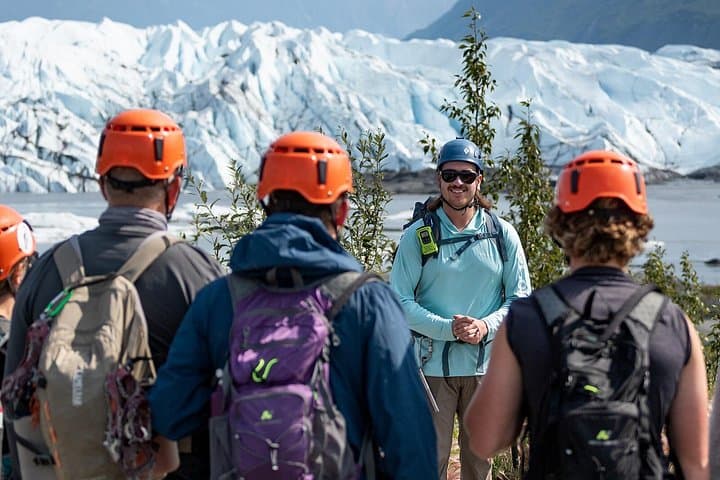
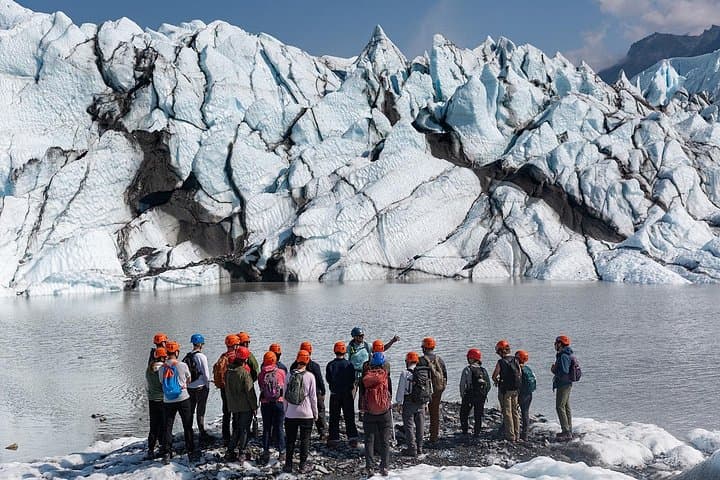
You step off the shuttle onto a ragged moraine, the air sharp with glacial chill and the glacier’s pale blue face looming ahead like a moving wall. The guides clip on crampons and hand out helmets; the ground crunches underfoot as you cross cobbles left by ice and melt. The Ice Falls—where dense glacier ice tips and fractures into towering seracs—dominates the field of view, and meltwater threads down into a silver lake that feeds the Matanuska River.
You step off the shuttle onto a ragged moraine, the air sharp with glacial chill and the glacier’s pale blue face looming ahead like a moving wall. The guides clip on crampons and hand out helmets; the ground crunches underfoot as you cross cobbles left by ice and melt. The Ice Falls—where dense glacier ice tips and fractures into towering seracs—dominates the field of view, and meltwater threads down into a silver lake that feeds the Matanuska River.
Matanuska is one of Alaska’s most accessible valley glaciers, stretching roughly 26 miles from the Chugach Mountains to its terminus at the park edge. Its exposed terminal moraine records repeated advances and retreats since the last glaciation; today the glacier is dynamic, crevassed, and visibly retreating with seasonal melt. Local Athabascan and Denaʼina people have long known these landscapes, and modern guiding here blends natural-history interpretation with practical safety.
Expect rugged, uneven terrain, crevasses, moulins and spire-like seracs; guides route the group where ice is stable and point out features that tell the story of ice flow and bedrock below. Practical advice: layer for wind and wet, bring sunglasses for high-reflectance glare, and walk slowly—balance is more useful than speed. The tour is about three hours total, with active time on the glacier under guided supervision. Photograph the blue ice and melt pools, refill a bottle from glacier runoff if offered, but follow all guide instructions—these are live landscapes that change hourly.