THE ADVENTURE COLLECTIVE® · Independent discovery and booking for outdoor travel

Spend a full day hiking on Matanuska Glacier with local guides—accessible, educational, and scenically bold. Expect a 7–8 hour round trip from Anchorage with a 2–3 hour on-ice guided walk, glacier clamps provided.
Spend a full day hiking on Matanuska Glacier with local guides—accessible, educational, and scenically bold. Expect a 7–8 hour round trip from Anchorage with a 2–3 hour on-ice guided walk, glacier clamps provided.
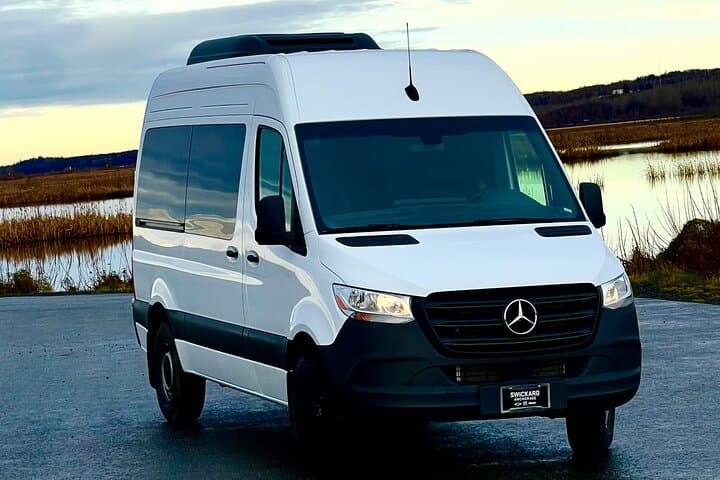
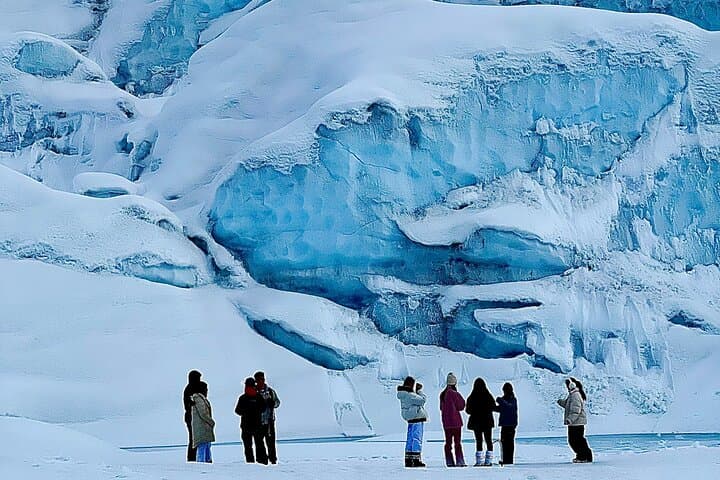
You step out of the Sprinter as a cold, blue light bounces off a wall of ice—granular, cracked, and alive. The Matanuska River hurries nearby, daring you to follow its glacial melt downstream as a guide tightens clamps to your boots. The air smells faintly of mineral and snow; the glacier ahead is both a playground and a map of geological time.
Verified experiences and guided adventures in the surrounding area.
Operated by Kelley Thompson · Palmer, Alaska
You step out of the Sprinter as a cold, blue light bounces off a wall of ice—granular, cracked, and alive. The Matanuska River hurries nearby, daring you to follow its glacial melt downstream as a guide tightens clamps to your boots. The air smells faintly of mineral and snow; the glacier ahead is both a playground and a map of geological time.
Matanuska is one of Alaska’s largest valley glaciers, carved by millennia of ice flowing from the Chugach and Talkeetna ranges. Early Athabaskan peoples travelled these valleys; later prospectors and homesteaders used the glacier’s meltwater to shape local settlement. The ice here displays layered bands of compacted snow and trapped rock—visual clues to past advances and retreats.
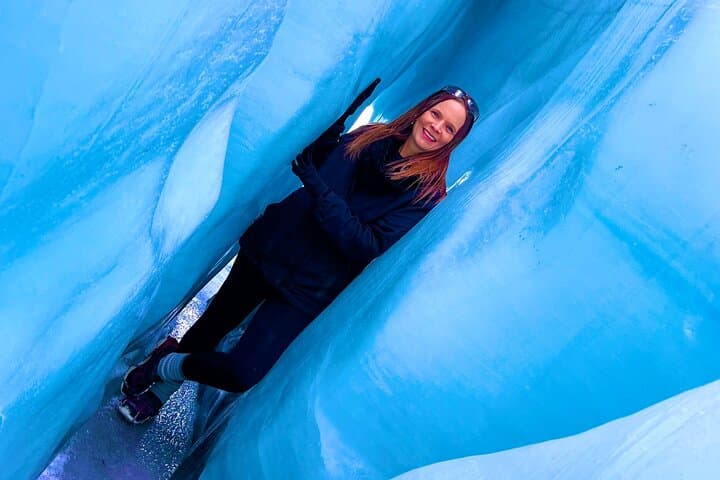
On a typical day trip you’ll spend 7–8 hours total: a scenic drive from Anchorage, a guided 2–3 hour traverse across the glacier, and stops at river overlooks for lunch. Terrain is uneven—ice ridges, shallow crevasses, and slick blue runs—so the pace is steady rather than fast. Guides route each walk around current ice conditions; expect a mapped route with photo stops at ice caves and seracs when safe.
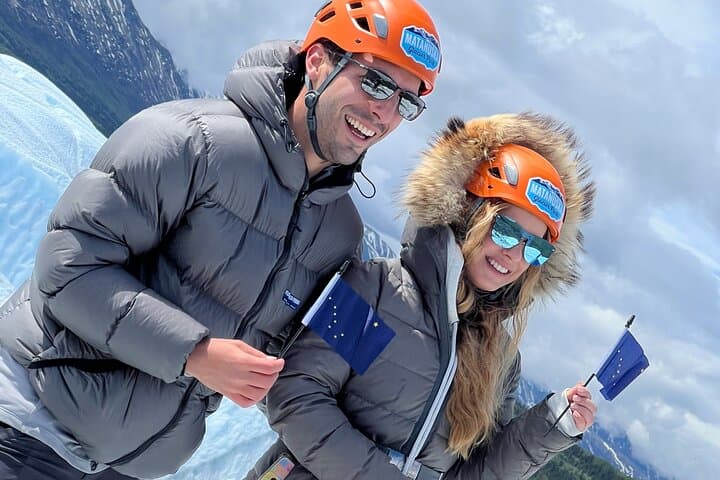
Practical notes: wear insulated, waterproof hiking boots (glacier clamps provided), layer for wind and sun, and bring sunglasses and sunscreen for intense glare. Hydrate well—the cold masks exertion—and keep a lightweight shell accessible. Wildlife sightings, especially moose along the river, are common on the return drive. For first-time glacier walkers the trip is accessible and exhilarating; for more experienced trekkers it’s a chance to read the ice and learn glacier safety from local pros.
moderate.
7–8 hours.
Good baseline fitness for 2–3 hours of uneven walking on ice and a full day of travel; able to walk 3 miles with stops.
Guides typically lead a 2–3 hour guided walk on the glacier with time to view caves and ice features; total tour time from Anchorage is about 7–8 hours.
Guides supply traction devices (glacier clamps) for boots and will carry any necessary technical gear; participants do not need to bring crampons or axes for the standard tour.
Age and ability requirements vary by operator, but tours commonly accept older children who can walk steadily on uneven ice—confirm at booking and note pickup questions request ages.
Tours may be canceled for unsafe ice or severe weather; operators typically allow refunds or rescheduling if the glacier route is not safe.
Local Athabaskan people and later settlers used the Matanuska valley for travel and subsistence; the glacier’s modern access increased with road development along the Glenn Highway in the 20th century.
Matanuska’s mass balance is sensitive to warming; visitors are asked to stay on guided routes to reduce ice disturbance and pack out all waste to protect fragile glacial and riparian ecosystems.
Kelley Thompson operates guided outdoor trips and adventures with an emphasis on safety, stewardship, and memorable experiences.
You step out of the Sprinter as a cold, blue light bounces off a wall of ice—granular, cracked, and alive. The Matanuska River hurries nearby, daring you to follow its glacial melt downstream as a guide tightens clamps to your boots. The air smells faintly of mineral and snow; the glacier ahead is both a playground and a map of geological time.
You step out of the Sprinter as a cold, blue light bounces off a wall of ice—granular, cracked, and alive. The Matanuska River hurries nearby, daring you to follow its glacial melt downstream as a guide tightens clamps to your boots. The air smells faintly of mineral and snow; the glacier ahead is both a playground and a map of geological time.
Matanuska is one of Alaska’s largest valley glaciers, carved by millennia of ice flowing from the Chugach and Talkeetna ranges. Early Athabaskan peoples travelled these valleys; later prospectors and homesteaders used the glacier’s meltwater to shape local settlement. The ice here displays layered bands of compacted snow and trapped rock—visual clues to past advances and retreats.
On a typical day trip you’ll spend 7–8 hours total: a scenic drive from Anchorage, a guided 2–3 hour traverse across the glacier, and stops at river overlooks for lunch. Terrain is uneven—ice ridges, shallow crevasses, and slick blue runs—so the pace is steady rather than fast. Guides route each walk around current ice conditions; expect a mapped route with photo stops at ice caves and seracs when safe.
Practical notes: wear insulated, waterproof hiking boots (glacier clamps provided), layer for wind and sun, and bring sunglasses and sunscreen for intense glare. Hydrate well—the cold masks exertion—and keep a lightweight shell accessible. Wildlife sightings, especially moose along the river, are common on the return drive. For first-time glacier walkers the trip is accessible and exhilarating; for more experienced trekkers it’s a chance to read the ice and learn glacier safety from local pros.