THE ADVENTURE COLLECTIVE® · Independent discovery and booking for outdoor travel

Head south from Chania for a private day that mixes Neolithic caves-turned-hippie-havens in Matala, the fountained charm of Spili and the mirror calm of Lake Kournas. Expect beach time, village coffee stops and easy walking with strong photo opportunities.
Head south from Chania for a private day that mixes Neolithic caves-turned-hippie-havens in Matala, the fountained charm of Spili and the mirror calm of Lake Kournas. Expect beach time, village coffee stops and easy walking with strong photo opportunities.
The bus peels away from Chania’s harbor and the road moves south, olive groves sliding past until the sea reappears as a wash of turquoise. Arriving in Matala, the cliff face of carved caves looms just above a wide, sandy bay—ancient rock chambers that once held Neolithic burials and later hosted the loose, improvisational life of 1960s hippies.
Verified experiences and guided adventures in the surrounding area.
Operated by SeaByBus Explore Crete · Matala, Crete
The bus peels away from Chania’s harbor and the road moves south, olive groves sliding past until the sea reappears as a wash of turquoise. Arriving in Matala, the cliff face of carved caves looms just above a wide, sandy bay—ancient rock chambers that once held Neolithic burials and later hosted the loose, improvisational life of 1960s hippies.
Spili’s stone fountain tells a different story: 25 lion-head spouts, cool spring water and shaded kafenia where locals exchange news the same way for generations. The route then turns inland to Lake Kournas, Crete’s only freshwater lake, its still surface throwing back the silhouette of the White Mountains; reeds edge the water and turtles and herons find refuge in quieter coves.
Geology here alternates limestone cliffs, karst caves and freshwater wetland—each revealing why people settled, worshipped and later sought escape in these spaces. Culturally the day is low-pressure: slow coffees, small tavernas, and an easy rhythm that still carries traces of the island’s defiant independence.
Practical side: the private, air-conditioned vehicle covers roughly 200–250 km round-trip with three main stops (Spili ~30 minutes, Matala ~3 hours, Kournas ~1 hour). Bring swimwear and shoes for mixed sand and rock; sunscreen and cash for small shops and tavernas. Expect moderate walking, some uneven surfaces and busy summer crowds at Matala. Respect signs around archaeological caves and the Natura 2000 protections at Kournas—stay on paths, carry out litter, and time photography for early or late light to avoid the busiest hours.
easy.
10 hours.
Suitable for most fitness levels; involves short to moderate walks on uneven ground and standing during visits.
Yes — the private tour departs from Chania with pickup options; confirm your pickup point when booking.
Yes, Matala has a sandy beach suited for swimming; Kournas allows swimming and paddleboats, though water temperature varies by season.
The caves are visible from the bay and accessible in parts, but several areas are archaeologically sensitive—follow signs and avoid entering restricted sections.
Snacks, Cretan kalitsounia and cold drinks are included; tavernas at stops offer fuller meals at additional cost.
Matala’s caves began as Neolithic tombs; in the 1960s they became an improvised community for international travelers, leaving a bohemian legacy.
Lake Kournas is part of the Natura 2000 network; avoid littering, do not disturb nesting birds and respect local signage around sensitive wetlands.
SeaByBus Explore Crete operates guided outdoor trips and adventures with an emphasis on safety, stewardship, and memorable experiences.
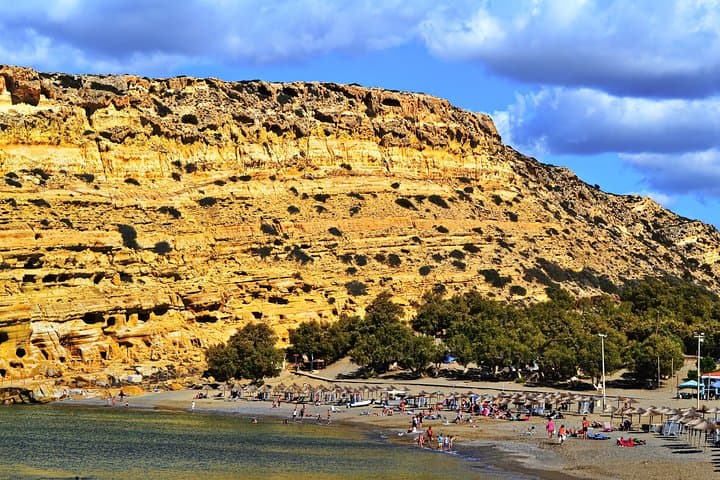
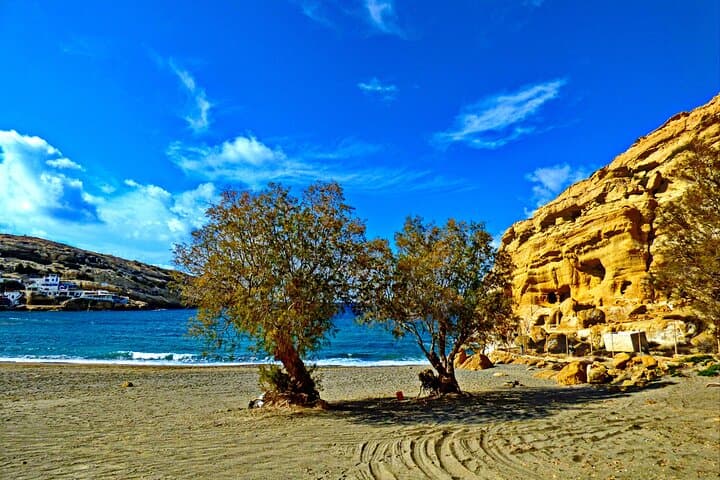
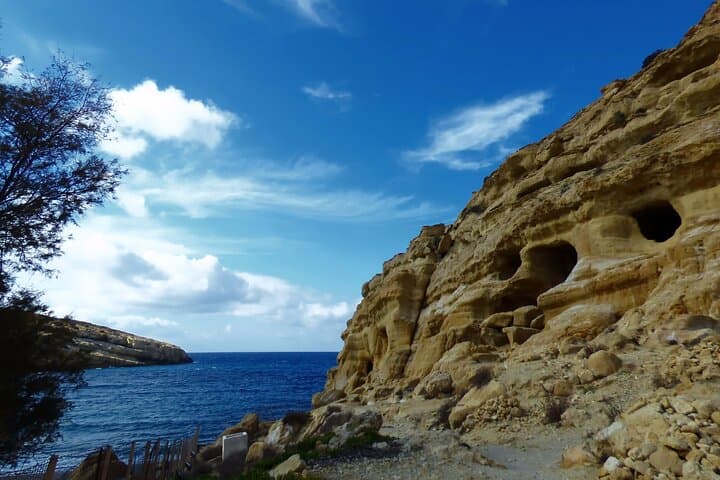
The bus peels away from Chania’s harbor and the road moves south, olive groves sliding past until the sea reappears as a wash of turquoise. Arriving in Matala, the cliff face of carved caves looms just above a wide, sandy bay—ancient rock chambers that once held Neolithic burials and later hosted the loose, improvisational life of 1960s hippies.
The bus peels away from Chania’s harbor and the road moves south, olive groves sliding past until the sea reappears as a wash of turquoise. Arriving in Matala, the cliff face of carved caves looms just above a wide, sandy bay—ancient rock chambers that once held Neolithic burials and later hosted the loose, improvisational life of 1960s hippies.
Spili’s stone fountain tells a different story: 25 lion-head spouts, cool spring water and shaded kafenia where locals exchange news the same way for generations. The route then turns inland to Lake Kournas, Crete’s only freshwater lake, its still surface throwing back the silhouette of the White Mountains; reeds edge the water and turtles and herons find refuge in quieter coves.
Geology here alternates limestone cliffs, karst caves and freshwater wetland—each revealing why people settled, worshipped and later sought escape in these spaces. Culturally the day is low-pressure: slow coffees, small tavernas, and an easy rhythm that still carries traces of the island’s defiant independence.
Practical side: the private, air-conditioned vehicle covers roughly 200–250 km round-trip with three main stops (Spili ~30 minutes, Matala ~3 hours, Kournas ~1 hour). Bring swimwear and shoes for mixed sand and rock; sunscreen and cash for small shops and tavernas. Expect moderate walking, some uneven surfaces and busy summer crowds at Matala. Respect signs around archaeological caves and the Natura 2000 protections at Kournas—stay on paths, carry out litter, and time photography for early or late light to avoid the busiest hours.