THE ADVENTURE COLLECTIVE® · Independent discovery and booking for outdoor travel

Explore Matala’s famous sea caves and sun-soaked beach on a short coastal trip from Heraklion. Expect easy cliffside walking, a tavern lunch by the water, and a jump into clear Mediterranean blue.
Explore Matala’s famous sea caves and sun-soaked beach on a short coastal trip from Heraklion. Expect easy cliffside walking, a tavern lunch by the water, and a jump into clear Mediterranean blue.
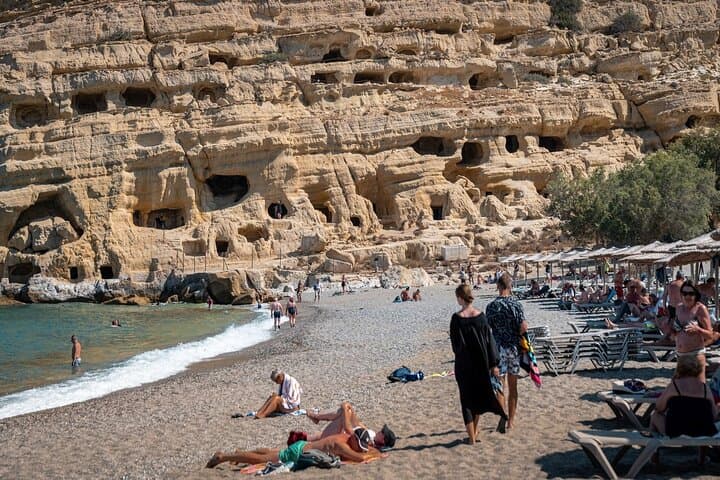
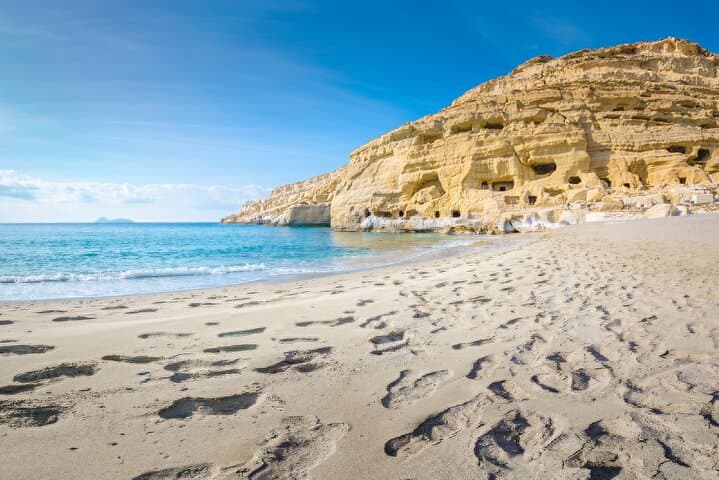
The bus eases down toward Crete’s southern rim and the coastline opens into a cove of sheer cliffs and a wide strip of sand. Matala’s sea pulls at you with clear, cool water; the cliffs above are cut with dark, rectangular caves where light and shadow play across ancient stone.
Verified experiences and guided adventures in the surrounding area.
Operated by PLATANOS TOURS · Matala, Crete
The bus eases down toward Crete’s southern rim and the coastline opens into a cove of sheer cliffs and a wide strip of sand. Matala’s sea pulls at you with clear, cool water; the cliffs above are cut with dark, rectangular caves where light and shadow play across ancient stone.
Geology here is simple and visible: soft limestone cliffs carved by Mediterranean surf and human hands. The caves began as Roman-era tombs and were repurposed across centuries — Minoan traders used Matala as a landing place, later Romans stacked boats on these shores, and in the late 1960s the caves became an improvised village for international hippies seeking sun and solitude.
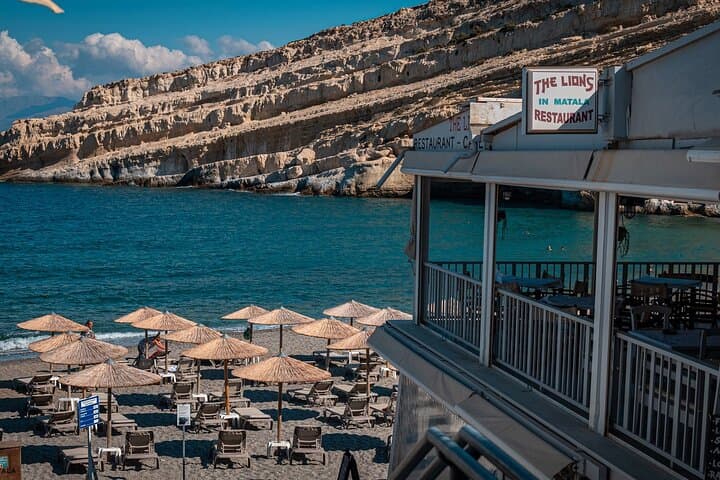
Cultural memory sits alongside geology: taverna tables spill onto the sand, and local guides narrate the Europa-and-the-bull myth that ties this shore to larger Greek lore. Walk the narrow paths to cave mouths, feel the grainy sand underfoot, and watch fishermen mend nets nearby.
Practical guidance: plan for uneven rock and short stair sections when visiting cave access points; swim from the beach where currents are generally mild but always check conditions. Wear shoes that grip wet rock, bring layered sun protection, and carry water—the nearest services cluster by the main beach.
This half-day tour typically includes hotel pickup from Heraklion-area resorts and a seaside lunch, making it useful for travelers who want a concentrated mix of history, easy coastal hiking, and a swim without a full-day commitment.
moderate.
7 hours.
Suitable for travelers with moderate fitness—requires short walks on uneven rock, some steps, and the ability to enter cave openings.
Yes—Matala’s beach is a common swim stop on the tour; water is usually clear and shallow near shore, but check local guides about currents before swimming.
Many cave mouths are accessible but can be narrow and uneven; exercise caution, watch for wet surfaces, and follow any posted restrictions.
Pickup and drop-off from Heraklion-area hotels (and nearby resorts like Malia and Hersonissos) are typically included—confirm your pickup point at booking.
There is no formal entrance fee for the open caves or beach; some guided sites or museums nearby may charge separately.
Matala served as a landing and harbor area from Minoan to Roman times and gained countercultural fame when 1960s–70s visitors lived in the cliff caves.
The beach is part of a coastal ecosystem with occasional protected nesting zones for sea turtles; visitors should avoid lighting fires, leaving litter, or disturbing cordoned areas.
PLATANOS TOURS operates guided outdoor trips and adventures with an emphasis on safety, stewardship, and memorable experiences.
The bus eases down toward Crete’s southern rim and the coastline opens into a cove of sheer cliffs and a wide strip of sand. Matala’s sea pulls at you with clear, cool water; the cliffs above are cut with dark, rectangular caves where light and shadow play across ancient stone.
The bus eases down toward Crete’s southern rim and the coastline opens into a cove of sheer cliffs and a wide strip of sand. Matala’s sea pulls at you with clear, cool water; the cliffs above are cut with dark, rectangular caves where light and shadow play across ancient stone.
Geology here is simple and visible: soft limestone cliffs carved by Mediterranean surf and human hands. The caves began as Roman-era tombs and were repurposed across centuries — Minoan traders used Matala as a landing place, later Romans stacked boats on these shores, and in the late 1960s the caves became an improvised village for international hippies seeking sun and solitude.
Cultural memory sits alongside geology: taverna tables spill onto the sand, and local guides narrate the Europa-and-the-bull myth that ties this shore to larger Greek lore. Walk the narrow paths to cave mouths, feel the grainy sand underfoot, and watch fishermen mend nets nearby.
Practical guidance: plan for uneven rock and short stair sections when visiting cave access points; swim from the beach where currents are generally mild but always check conditions. Wear shoes that grip wet rock, bring layered sun protection, and carry water—the nearest services cluster by the main beach.
This half-day tour typically includes hotel pickup from Heraklion-area resorts and a seaside lunch, making it useful for travelers who want a concentrated mix of history, easy coastal hiking, and a swim without a full-day commitment.