THE ADVENTURE COLLECTIVE® · Independent discovery and booking for outdoor travel

Ride from Maspalomas dunes into a green valley and up to Ayagaures dam on a guided 3‑hour e‑bike loop. Expect paved climbs, a cave tapas stop, and a fast downhill return — ideal for riders who want scenery with minimal strain.
Ride from Maspalomas dunes into a green valley and up to Ayagaures dam on a guided 3‑hour e‑bike loop. Expect paved climbs, a cave tapas stop, and a fast downhill return — ideal for riders who want scenery with minimal strain.
Wind off the Atlantic washes across the dunes as riders set off from the Maspalomas promenade — the soft sand to the right, the paved coastline to the left — and the electric motor hums underfoot, turning effort into motion. The route quickly leaves the tourist strip and climbs into a green valley of palms, cacti and Canary flora, the road rising in a steady, manageable grade until the ancient village of Ayagaures appears above the reservoir.
Verified experiences and guided adventures in the surrounding area.
Operated by Bici Bike Vintage · Maspalomas, Gran Canaria
Wind off the Atlantic washes across the dunes as riders set off from the Maspalomas promenade — the soft sand to the right, the paved coastline to the left — and the electric motor hums underfoot, turning effort into motion. The route quickly leaves the tourist strip and climbs into a green valley of palms, cacti and Canary flora, the road rising in a steady, manageable grade until the ancient village of Ayagaures appears above the reservoir.
This short corridor of southern Gran Canaria mixes human and geological history: dunes shaped by trade winds, volcanic ridges that rise from old lava flows, and terraces that mark centuries of irrigation and settlement. The small cave bar — once used by prehispanic Gomeros and later adapted — gives a glimpse of island life: simple, resourceful, and tied to local ingredients. The Ayagaures dam itself captures scarce winter rains in a dramatic valley bowl, attracting waterfowl and offering a high, panoramic look back toward the coast.
Practical guidance: expect a 3‑hour loop with multiple short stops; total distance is typically in the 20–30 km range with roughly 300–600 m of climbing on the outbound leg, then a largely downhill return. Helmets and reflective vests are provided, but bring closed-toe shoes, sun protection and a lightweight jacket for winter winds. Tapas in the cave are an optional extra (seasonal blackout in July–August); bookings may require a minimum of two for tasting. The trail is fully paved; riders must be comfortable balancing on a bike and adhere to a 100 kg weight limit. The tour suits travelers looking for a coastal-to-mountain ride that combines mild exertion, sharp views and a short cultural stop.
moderate.
3 hours.
Suitable for people with basic cycling fitness who can manage 300–600 m of climbing and frequent short bursts; electric assist reduces sustained effort.
No advanced experience is required, but you must know how to ride a bicycle and be comfortable balancing and braking; guides provide brief instructions.
Bottled water and a tropical soft drink at the cave stop are included; tapas are optional for €15 per person (minimum two) and not available in July–August.
Most departures meet at the Maspalomas/Playa del Inglés promenade; exact meeting point is provided on your booking confirmation.
No — the tour follows paved roads and cycleways; there are no off‑road sections on this itinerary.
The southern Gran Canaria coastline and inland terraces reflect centuries of prehispanic cultivation and later agricultural adaptation; small caves and bridges show layers of local use.
The Maspalomas dunes are a protected natural reserve; visitors should stay on designated routes, avoid trampling dune vegetation, and follow guide instructions to minimize erosion and disturbance.
Bici Bike Vintage operates guided outdoor trips and adventures with an emphasis on safety, stewardship, and memorable experiences.
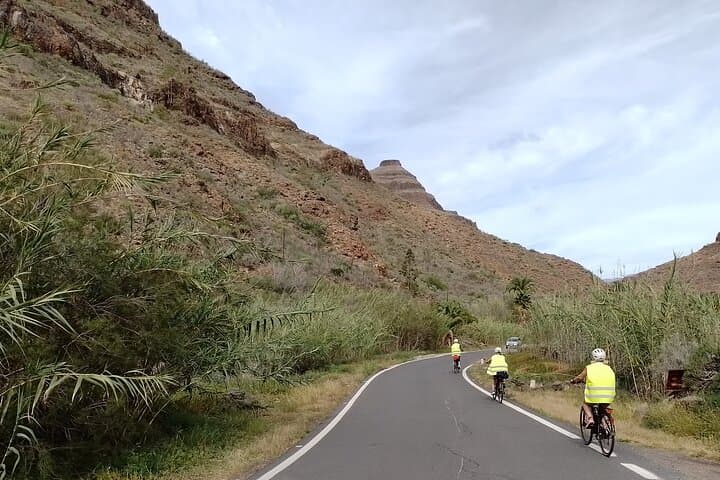
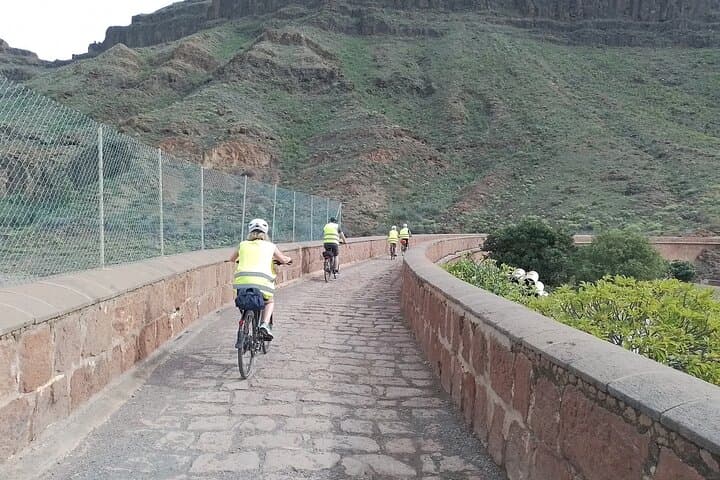
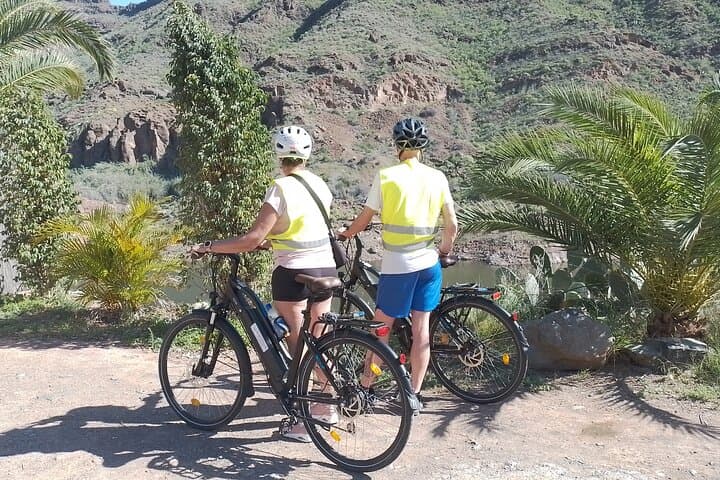
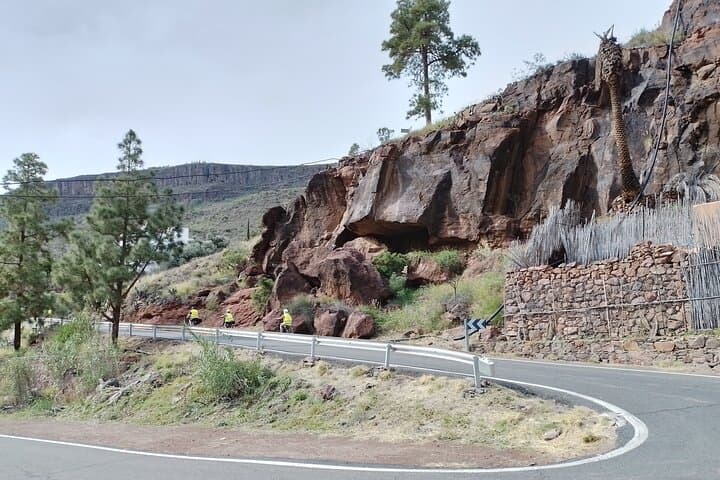
Wind off the Atlantic washes across the dunes as riders set off from the Maspalomas promenade — the soft sand to the right, the paved coastline to the left — and the electric motor hums underfoot, turning effort into motion. The route quickly leaves the tourist strip and climbs into a green valley of palms, cacti and Canary flora, the road rising in a steady, manageable grade until the ancient village of Ayagaures appears above the reservoir.
Wind off the Atlantic washes across the dunes as riders set off from the Maspalomas promenade — the soft sand to the right, the paved coastline to the left — and the electric motor hums underfoot, turning effort into motion. The route quickly leaves the tourist strip and climbs into a green valley of palms, cacti and Canary flora, the road rising in a steady, manageable grade until the ancient village of Ayagaures appears above the reservoir.
This short corridor of southern Gran Canaria mixes human and geological history: dunes shaped by trade winds, volcanic ridges that rise from old lava flows, and terraces that mark centuries of irrigation and settlement. The small cave bar — once used by prehispanic Gomeros and later adapted — gives a glimpse of island life: simple, resourceful, and tied to local ingredients. The Ayagaures dam itself captures scarce winter rains in a dramatic valley bowl, attracting waterfowl and offering a high, panoramic look back toward the coast.
Practical guidance: expect a 3‑hour loop with multiple short stops; total distance is typically in the 20–30 km range with roughly 300–600 m of climbing on the outbound leg, then a largely downhill return. Helmets and reflective vests are provided, but bring closed-toe shoes, sun protection and a lightweight jacket for winter winds. Tapas in the cave are an optional extra (seasonal blackout in July–August); bookings may require a minimum of two for tasting. The trail is fully paved; riders must be comfortable balancing on a bike and adhere to a 100 kg weight limit. The tour suits travelers looking for a coastal-to-mountain ride that combines mild exertion, sharp views and a short cultural stop.