THE ADVENTURE COLLECTIVE® · Independent discovery and booking for outdoor travel

Stand at the rim of Santiago crater as lava light pools and the sunset deepens. This short evening tour from Managua pairs dramatic volcanic glow with museum insights into Nicaraguan history and culture.
Stand at the rim of Santiago crater as lava light pools and the sunset deepens. This short evening tour from Managua pairs dramatic volcanic glow with museum insights into Nicaraguan history and culture.
You arrive at the rim as the sun leans low and the Santiago crater breathes orange; heat rolls gently toward you, fumaroles whistle and the crater’s glow pulses like a slow, living hearth. Guides position you where the light and lava play best, and the sky deepens from gold to molten crimson while the volcano seems to watch back.
Verified experiences and guided adventures in the surrounding area.
Operated by Show Me Nicaragua Tours · Masaya, Masaya Department
You arrive at the rim as the sun leans low and the Santiago crater breathes orange; heat rolls gently toward you, fumaroles whistle and the crater’s glow pulses like a slow, living hearth. Guides position you where the light and lava play best, and the sky deepens from gold to molten crimson while the volcano seems to watch back.
Masaya is one of Nicaragua’s most accessible active volcanoes and a highlight of the Central American volcanic arc. Geologically young basalt flows and persistent gas vents mark the crater; historically this ground sustained indigenous communities long before Spanish contact, and the on-site museum explains both pre-Columbian life and the region’s revolutionary era. From the overlook you can pick out old Managua and the shimmer of Lago Xolotlán on clear nights.
On an organized sunset tour expect a 2–4 hour outing with hotel pickup from Managua, a short drive to the park, and roughly 20–30 minutes at the rim for photos and museum stops. Trails are short but uneven; the rim has safety barriers—stay behind them. The volcanic gases can be strong: those with respiratory sensitivity should avoid the crater edge. Bring a headlamp for the return, a warm layer for cool nights, sturdy closed shoes, and cash for park fees and souvenirs—it’s common for admission not to be included in advertised fares.
Plan around weather: dry season evenings give the clearest views; rain and clouds obscure the glow. Respect park rules, keep distance from fumaroles, and pack out what you bring in—the crater commands attention, not disturbance.
easy.
2–4 hours.
Suitable for most fitness levels; requires short walks on uneven terrain and standing for photo stops.
Not always—many operators do not include park admission in the tour price; confirm with your booking and carry small cash in cordoba or USD.
Viewing is from the crater rim and established platforms; authorities restrict access to the active crater floor for safety—do not attempt to approach beyond barriers.
Yes, children may attend but must be accompanied by an adult and kept well away from edges and fumaroles.
Most sunset tours include hotel pickup and drop-off in Managua—confirm your pickup point and arrival time when booking.
Masaya has long been a focal point for local culture; indigenous communities revered the volcano and Spanish-era accounts describe it as an awe-inspiring, active landmark. The site also features exhibits on Nicaragua's revolutionary history.
The park manages visitor numbers to protect fragile volcanic soils and native vegetation; stick to marked trails, avoid littering, and follow guide instructions to minimize impact.
Show Me Nicaragua Tours operates guided outdoor trips and adventures with an emphasis on safety, stewardship, and memorable experiences.
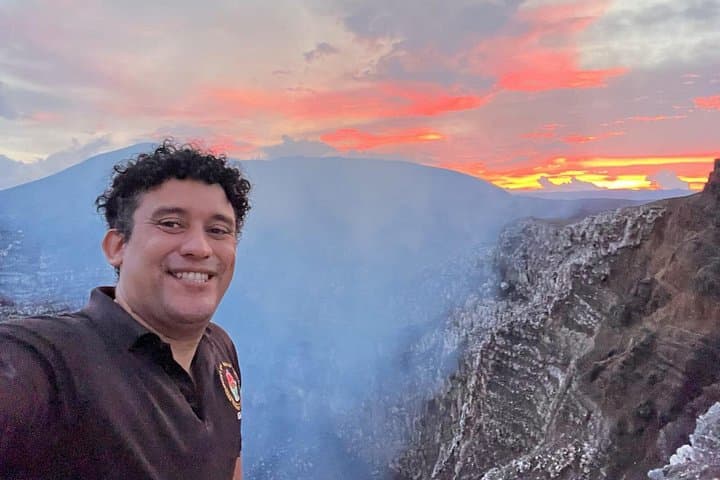
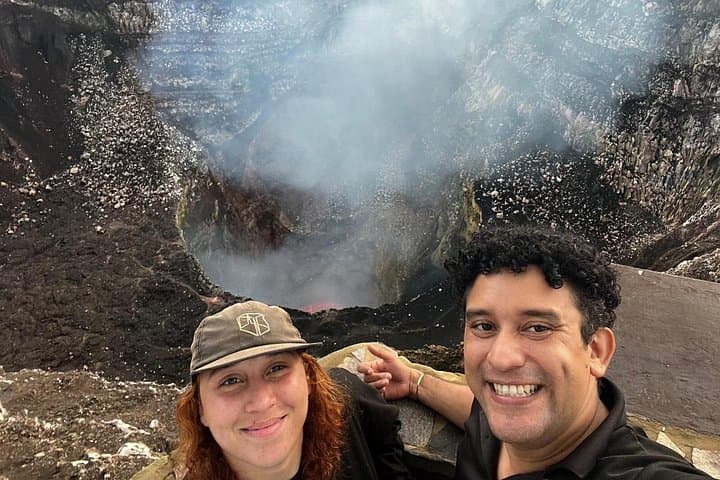
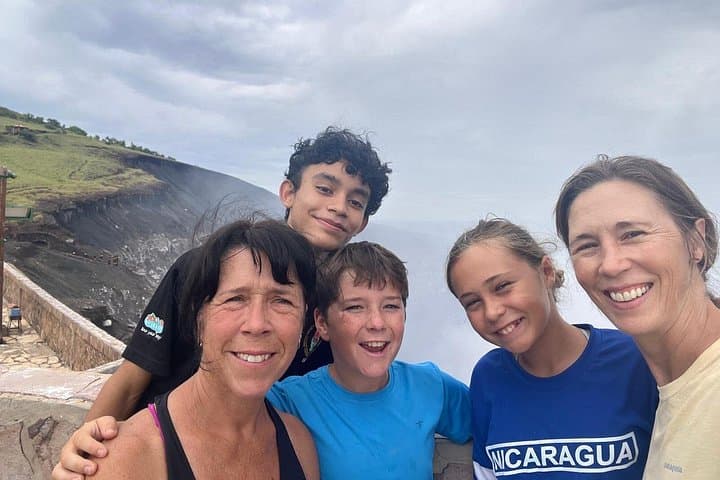
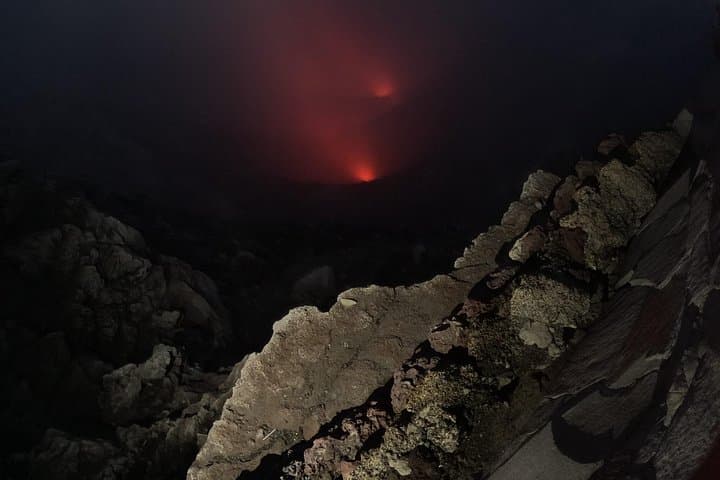
You arrive at the rim as the sun leans low and the Santiago crater breathes orange; heat rolls gently toward you, fumaroles whistle and the crater’s glow pulses like a slow, living hearth. Guides position you where the light and lava play best, and the sky deepens from gold to molten crimson while the volcano seems to watch back.
You arrive at the rim as the sun leans low and the Santiago crater breathes orange; heat rolls gently toward you, fumaroles whistle and the crater’s glow pulses like a slow, living hearth. Guides position you where the light and lava play best, and the sky deepens from gold to molten crimson while the volcano seems to watch back.
Masaya is one of Nicaragua’s most accessible active volcanoes and a highlight of the Central American volcanic arc. Geologically young basalt flows and persistent gas vents mark the crater; historically this ground sustained indigenous communities long before Spanish contact, and the on-site museum explains both pre-Columbian life and the region’s revolutionary era. From the overlook you can pick out old Managua and the shimmer of Lago Xolotlán on clear nights.
On an organized sunset tour expect a 2–4 hour outing with hotel pickup from Managua, a short drive to the park, and roughly 20–30 minutes at the rim for photos and museum stops. Trails are short but uneven; the rim has safety barriers—stay behind them. The volcanic gases can be strong: those with respiratory sensitivity should avoid the crater edge. Bring a headlamp for the return, a warm layer for cool nights, sturdy closed shoes, and cash for park fees and souvenirs—it’s common for admission not to be included in advertised fares.
Plan around weather: dry season evenings give the clearest views; rain and clouds obscure the glow. Respect park rules, keep distance from fumaroles, and pack out what you bring in—the crater commands attention, not disturbance.