THE ADVENTURE COLLECTIVE® · Independent discovery and booking for outdoor travel

Lift off at dawn over the Masai Mara and watch elephants, giraffes and migrating herds unfold beneath you. This sunrise balloon flight pairs a serene aerial perspective with a champagne bush breakfast — ideal for wildlife photographers and celebration trips.
Lift off at dawn over the Masai Mara and watch elephants, giraffes and migrating herds unfold beneath you. This sunrise balloon flight pairs a serene aerial perspective with a champagne bush breakfast — ideal for wildlife photographers and celebration trips.
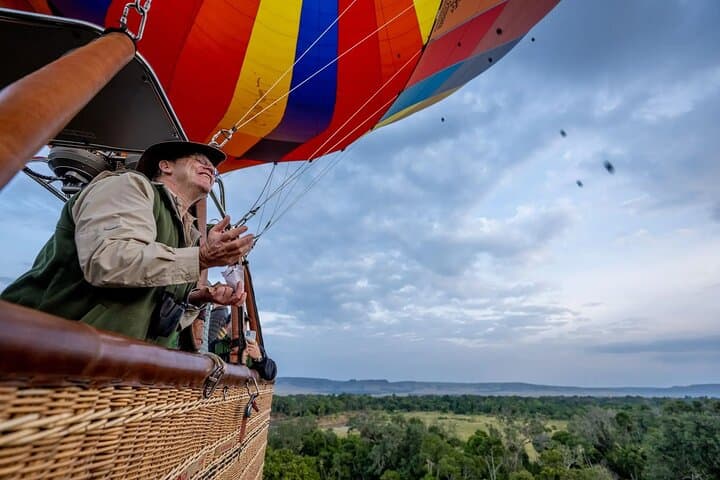
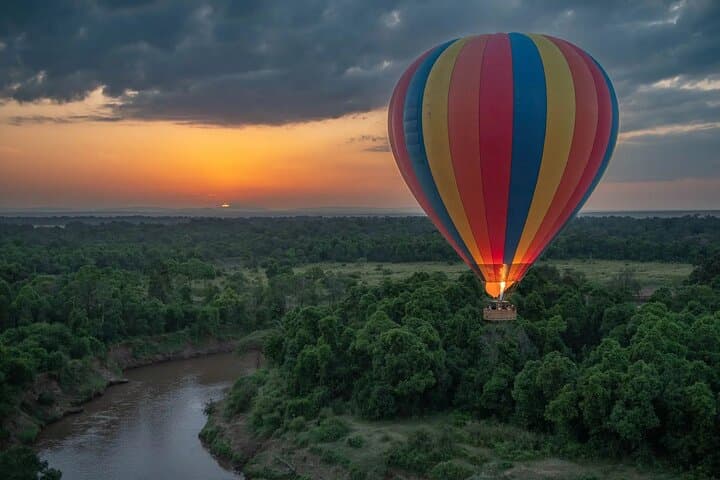
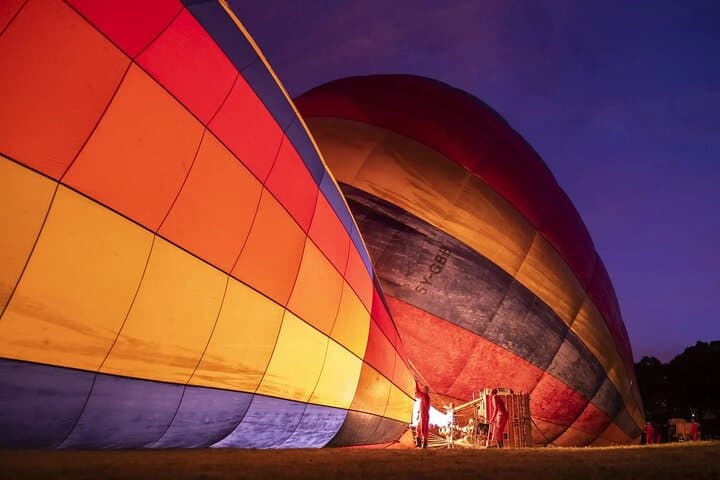
Before first light the savannah exhales; a row of burners punctures twilight and a giant balloon yawns into the air. As the basket lifts, the Mara opens like a moving map — winding rivers daring you to find the next herd, acacia crowns punctuating plains, and silhouettes of elephants and giraffe tracing slow arcs below.
Verified experiences and guided adventures in the surrounding area.
Operated by Top Africa Safaris · Masai Mara, Narok County
Before first light the savannah exhales; a row of burners punctures twilight and a giant balloon yawns into the air. As the basket lifts, the Mara opens like a moving map — winding rivers daring you to find the next herd, acacia crowns punctuating plains, and silhouettes of elephants and giraffe tracing slow arcs below.
The Masai Mara sits on the western edge of the Great Rift Valley and forms the northern anchor to the Serengeti ecosystem. Its rolling grasslands and riverine woodlands are molded by volcanic soils and seasonal rains, and the Mara’s story is inseparable from the Maasai people whose pastoral culture has shaped the reserve’s land use for generations.
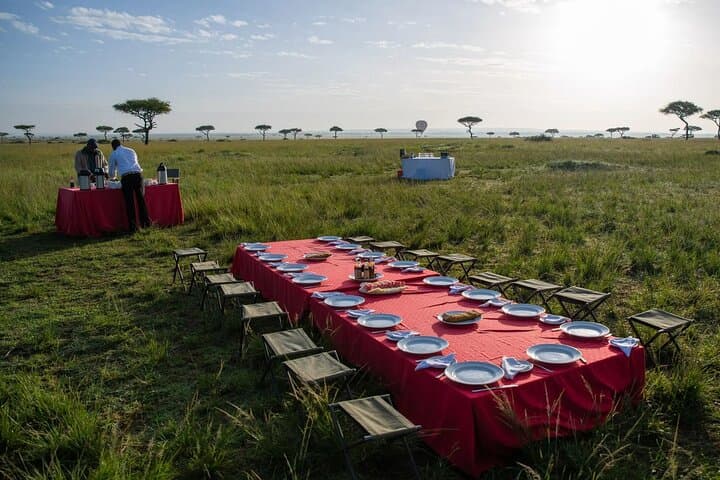
A sunrise balloon flight offers a quiet, high-angle view of a living landscape: wildebeest migrations crossing floodplains in season, lion prides warming themselves on termite mounds, and hippos threading the river’s shallows. The craft floats with minimal disturbance, translating the Mara’s scale into immediate, photographic frames — then lands back on the plains for a Kenyan breakfast under open sky.
Practical guidance: expect a pre-dawn pickup and a 45–60 minute airborne window; bring layered clothing for chilly mornings and sun protection for when the day warms. Binoculars and a fast telephoto lens improve sightings; closed-toe shoes and a small daypack keep you comfortable on wind-swept landings. Weather can ground flights — operators prioritize safety and will reschedule when conditions are unsuitable. Book early in high season (June–October) to secure sunrise slots and arrange lodge transfers in advance.
easy.
1–3 hours.
Suitable for most fitness levels; passengers must be able to step into and stand in the basket for the duration of the flight.
The airborne portion is typically 45–60 minutes; total time including transfers and the post-flight breakfast can be 2–3 hours depending on lodge pickup.
Operators follow strict safety procedures with licensed pilots; flights are weather-dependent and will be rescheduled or cancelled for safety reasons.
Many operators accept children and offer accessibility options for transfers; check age limits and wheelchair assistance with the provider when booking.
Most operators will offer a refund or rebooking; confirm the provider’s cancellation policy — many require 24+ hours notice for a full refund.
The Masai Mara is part of the larger Serengeti-Mara ecosystem and has been inhabited and managed by Maasai pastoralists for centuries; its name derives from the Maasai people and the Mara River.
Conservation in the Mara balances tourism, community land use and wildlife corridors; support locally managed conservancies and follow leave-no-trace principles to minimize impact.
Top Africa Safaris operates guided outdoor trips and adventures with an emphasis on safety, stewardship, and memorable experiences.
Before first light the savannah exhales; a row of burners punctures twilight and a giant balloon yawns into the air. As the basket lifts, the Mara opens like a moving map — winding rivers daring you to find the next herd, acacia crowns punctuating plains, and silhouettes of elephants and giraffe tracing slow arcs below.
Before first light the savannah exhales; a row of burners punctures twilight and a giant balloon yawns into the air. As the basket lifts, the Mara opens like a moving map — winding rivers daring you to find the next herd, acacia crowns punctuating plains, and silhouettes of elephants and giraffe tracing slow arcs below.
The Masai Mara sits on the western edge of the Great Rift Valley and forms the northern anchor to the Serengeti ecosystem. Its rolling grasslands and riverine woodlands are molded by volcanic soils and seasonal rains, and the Mara’s story is inseparable from the Maasai people whose pastoral culture has shaped the reserve’s land use for generations.
A sunrise balloon flight offers a quiet, high-angle view of a living landscape: wildebeest migrations crossing floodplains in season, lion prides warming themselves on termite mounds, and hippos threading the river’s shallows. The craft floats with minimal disturbance, translating the Mara’s scale into immediate, photographic frames — then lands back on the plains for a Kenyan breakfast under open sky.
Practical guidance: expect a pre-dawn pickup and a 45–60 minute airborne window; bring layered clothing for chilly mornings and sun protection for when the day warms. Binoculars and a fast telephoto lens improve sightings; closed-toe shoes and a small daypack keep you comfortable on wind-swept landings. Weather can ground flights — operators prioritize safety and will reschedule when conditions are unsuitable. Book early in high season (June–October) to secure sunrise slots and arrange lodge transfers in advance.