THE ADVENTURE COLLECTIVE® · Independent discovery and booking for outdoor travel

Four days of concentrated Kenyan wildlife: tracking the Big Five across Masai Mara’s golden plains, then trading savannah for the bird-rich shores of Lake Nakuru. Expect early starts, long drives, and high-probability encounters guided by local rangers.
Four days of concentrated Kenyan wildlife: tracking the Big Five across Masai Mara’s golden plains, then trading savannah for the bird-rich shores of Lake Nakuru. Expect early starts, long drives, and high-probability encounters guided by local rangers.
Dawn breaks over the Masai Mara with acacia crowns etched against a pale sky and a throat of dust rising where a herd pushes across the plain. Vehicles creep along red tracks; guides scan the grass and point—lions, then a tower of giraffes silhouetted against the escarpment. Later, the landscape shifts: the Rift Valley opens, and Lake Nakuru’s glassy surface waits, fringed by the pink of flamingos and pockets of dense woodland.
Verified experiences and guided adventures in the surrounding area.
Operated by Jossec Tours and Safaris · Nairobi, Nairobi County
Dawn breaks over the Masai Mara with acacia crowns etched against a pale sky and a throat of dust rising where a herd pushes across the plain. Vehicles creep along red tracks; guides scan the grass and point—lions, then a tower of giraffes silhouetted against the escarpment. Later, the landscape shifts: the Rift Valley opens, and Lake Nakuru’s glassy surface waits, fringed by the pink of flamingos and pockets of dense woodland.
This compact four-day circuit pairs two of Kenya’s most different wildlife theaters. The Masai Mara’s rolling savannahs and riverine stands are sculpted by grasslands and the slow tectonic lift of the Rift escarpment, while Lake Nakuru is a shallow soda lake whose fluctuating levels shape bird concentrations. Expect Masai cultural stops near Narok, discussions of colonial-era conservation, and guides fluent in animal behavior and local history.
Practical edge: departures typically start from Nairobi early morning, with long but scenic drives; roads in the Mara can be rough after rains. Accommodations range from budget tented camps in the Mara to modest hotels in Nakuru. Game drives run dawn-to-midday and late afternoon—wildlife is most active in cooler hours. Bring layered clothing for chilly mornings, sun protection for midday, and a good pair of binoculars and camera with a telephoto lens. Carry some Kenyan shillings for park fees or tips and confirm any health and visa requirements before travel.
This itinerary is ideal for first-time safarigoers who want concentrated wildlife viewing, vivid birdlife, and a short cultural exchange without the time of a longer circuit.
moderate.
4 days.
Light to moderate fitness; able to handle several hours in a vehicle and short walks at game-viewing stops
The dry months (June–September and January–February) concentrate wildlife around water and offer better road access; rains (March–May, October–November) bring fewer vehicles and lush scenery but can make some tracks muddy.
Most travelers require a visa for Kenya and should be up to date on routine vaccinations; yellow fever vaccination is required if arriving from an infected country—check current embassy and health guidance before travel.
The migration timing varies by year; parts of the Mara see migration herds mainly July–October—this four-day trip can coincide with migration depending on timing but is not guaranteed.
Accessibility varies by provider; this tour lists wheelchair-accessible options but confirm specific vehicle and accommodation accessibility when booking.
The Masai Mara region is named for the Maasai people and the Mara River; the Rift Valley’s geology and colonial-era conservation shaped the parks’ boundaries and early safari routes.
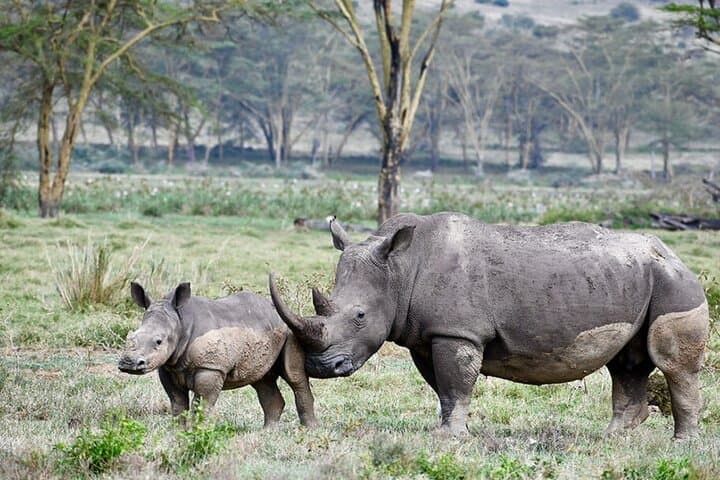
Rhino protection and anti-poaching patrols are active around Lake Nakuru and the Mara; visitors can support local conservation by following park rules and choosing operators that contribute to community programs.
Jossec Tours and Safaris operates guided outdoor trips and adventures with an emphasis on safety, stewardship, and memorable experiences.
Dawn breaks over the Masai Mara with acacia crowns etched against a pale sky and a throat of dust rising where a herd pushes across the plain. Vehicles creep along red tracks; guides scan the grass and point—lions, then a tower of giraffes silhouetted against the escarpment. Later, the landscape shifts: the Rift Valley opens, and Lake Nakuru’s glassy surface waits, fringed by the pink of flamingos and pockets of dense woodland.
Dawn breaks over the Masai Mara with acacia crowns etched against a pale sky and a throat of dust rising where a herd pushes across the plain. Vehicles creep along red tracks; guides scan the grass and point—lions, then a tower of giraffes silhouetted against the escarpment. Later, the landscape shifts: the Rift Valley opens, and Lake Nakuru’s glassy surface waits, fringed by the pink of flamingos and pockets of dense woodland.
This compact four-day circuit pairs two of Kenya’s most different wildlife theaters. The Masai Mara’s rolling savannahs and riverine stands are sculpted by grasslands and the slow tectonic lift of the Rift escarpment, while Lake Nakuru is a shallow soda lake whose fluctuating levels shape bird concentrations. Expect Masai cultural stops near Narok, discussions of colonial-era conservation, and guides fluent in animal behavior and local history.
Practical edge: departures typically start from Nairobi early morning, with long but scenic drives; roads in the Mara can be rough after rains. Accommodations range from budget tented camps in the Mara to modest hotels in Nakuru. Game drives run dawn-to-midday and late afternoon—wildlife is most active in cooler hours. Bring layered clothing for chilly mornings, sun protection for midday, and a good pair of binoculars and camera with a telephoto lens. Carry some Kenyan shillings for park fees or tips and confirm any health and visa requirements before travel.
This itinerary is ideal for first-time safarigoers who want concentrated wildlife viewing, vivid birdlife, and a short cultural exchange without the time of a longer circuit.