THE ADVENTURE COLLECTIVE® · Independent discovery and booking for outdoor travel

Watch the sun rise over the Dead Sea from the Masada fortress, hike the switchbacks of the Snake Path, explore the freshwater canyons of Ein Gedi, and float in the hyper-saline Dead Sea on this full-day trip from Tel Aviv.
Watch the sun rise over the Dead Sea from the Masada fortress, hike the switchbacks of the Snake Path, explore the freshwater canyons of Ein Gedi, and float in the hyper-saline Dead Sea on this full-day trip from Tel Aviv.
You set out before dawn, a pale ribbon of headlamps winding up the Snake Path as the desert exhales cool air. By the time the sun breaches the horizon, the Dead Sea below gleams like molten metal and the plateau of Masada is washed in clean, hard light — an elemental moment that explains why people make the early call.
Verified experiences and guided adventures in the surrounding area.
You set out before dawn, a pale ribbon of headlamps winding up the Snake Path as the desert exhales cool air. By the time the sun breaches the horizon, the Dead Sea below gleams like molten metal and the plateau of Masada is washed in clean, hard light — an elemental moment that explains why people make the early call.
Masada is a steep, flat-topped fortress built by Herod the Great and later the site of the last stand of Jewish rebels against Rome in 73–74 CE; its cliffs are carved from Late Cretaceous sandstone and the salt-choked basin below is the lowest point on Earth. The itinerary usually pairs the 90-minute ascent of the Snake Path (a steep series of switchbacks) with a stroll through Ein Gedi’s spring-fed canyons — a rare band of freshwater waterfalls and shade in the Judean Desert — and a post-hike float in the hyper-saline Dead Sea where buoyancy is immediate and exfoliation inevitable.
Practicalities matter: the hike is moderate in exposure but short on shade, so plan for a pre-dawn start, bring 1.5–2 L of water, a headlamp for the walk up, and sturdy shoes for loose rock. Allow time to change and shower before the Dead Sea stop; the high-salinity water stings cuts and contacts lenses. Expect long travel time if departing from Tel Aviv — this is a full-day excursion — but the sequence of sunrise, oasis, and float makes a compact, intensely geological and historical day in the Holy Land.
moderate.
11–12 hours.
Good general fitness for a 60–90 minute steep ascent and sustained walking; able to manage uneven trail and heat.
Most guides take 45–90 minutes to ascend depending on fitness; it's a steep switchback trail with loose stone in places.
You float rather than swim; avoid splashing, keep your head clear of the water, and rinse off in fresh water afterward.
The day includes a steep climb and long bus transfers; children and seniors in good health may participate but should assess stamina and heat tolerance.
Wear sturdy shoes, bring a small daypack with water and sun protection, and be prepared for short rocky scrambles near waterfalls.
Masada was fortified by Herod and later became the site of a 1st-century CE siege; excavations reveal palaces, storerooms, and Roman camps below.
The Judean Desert is an arid, fragile environment—stay on marked trails, pack out trash, and avoid disturbing archaeological remains or wildlife.
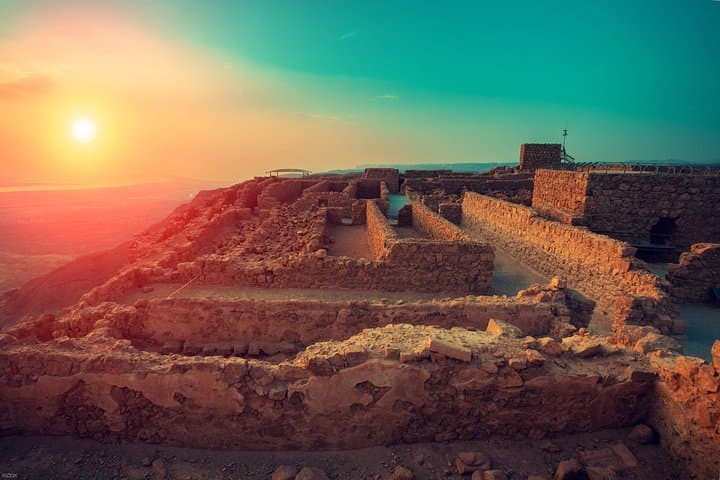
You set out before dawn, a pale ribbon of headlamps winding up the Snake Path as the desert exhales cool air. By the time the sun breaches the horizon, the Dead Sea below gleams like molten metal and the plateau of Masada is washed in clean, hard light — an elemental moment that explains why people make the early call.
You set out before dawn, a pale ribbon of headlamps winding up the Snake Path as the desert exhales cool air. By the time the sun breaches the horizon, the Dead Sea below gleams like molten metal and the plateau of Masada is washed in clean, hard light — an elemental moment that explains why people make the early call.
Masada is a steep, flat-topped fortress built by Herod the Great and later the site of the last stand of Jewish rebels against Rome in 73–74 CE; its cliffs are carved from Late Cretaceous sandstone and the salt-choked basin below is the lowest point on Earth. The itinerary usually pairs the 90-minute ascent of the Snake Path (a steep series of switchbacks) with a stroll through Ein Gedi’s spring-fed canyons — a rare band of freshwater waterfalls and shade in the Judean Desert — and a post-hike float in the hyper-saline Dead Sea where buoyancy is immediate and exfoliation inevitable.
Practicalities matter: the hike is moderate in exposure but short on shade, so plan for a pre-dawn start, bring 1.5–2 L of water, a headlamp for the walk up, and sturdy shoes for loose rock. Allow time to change and shower before the Dead Sea stop; the high-salinity water stings cuts and contacts lenses. Expect long travel time if departing from Tel Aviv — this is a full-day excursion — but the sequence of sunrise, oasis, and float makes a compact, intensely geological and historical day in the Holy Land.