THE ADVENTURE COLLECTIVE® · Independent discovery and booking for outdoor travel

Spend a full day from Jerusalem exploring Qumran’s scroll caves, floating in the mineral-rich Dead Sea and touring Herod’s cliff-top fortress at Masada. This guided trip blends accessible history, stark desert geology and practical amenities like cable-car access and hotel pickup.
Spend a full day from Jerusalem exploring Qumran’s scroll caves, floating in the mineral-rich Dead Sea and touring Herod’s cliff-top fortress at Masada. This guided trip blends accessible history, stark desert geology and practical amenities like cable-car access and hotel pickup.
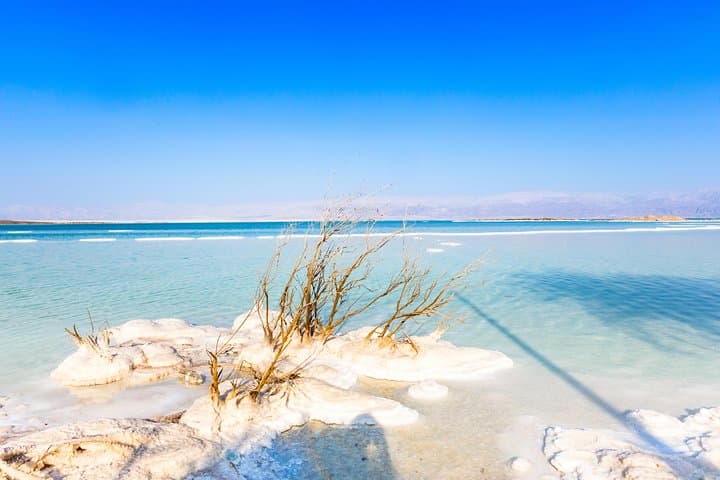
You step out of the air-conditioned vehicle into a sun-washed trough below sea level; the Dead Sea stretches like liquid glass, its salt buoying you before the desert wind has a chance to move you.
Verified experiences and guided adventures in the surrounding area.
Operated by CTO Israel · Masada, Southern District
You step out of the air-conditioned vehicle into a sun-washed trough below sea level; the Dead Sea stretches like liquid glass, its salt buoying you before the desert wind has a chance to move you.
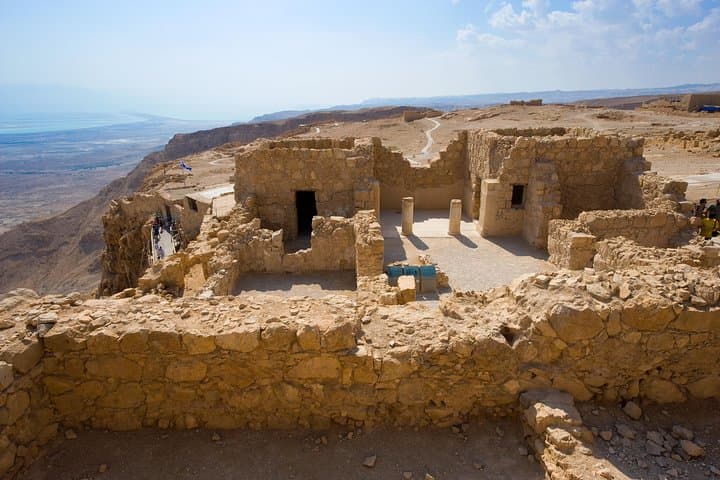
The day unfolds as a compact sweep of history and geology: first Qumran, where caves once yielded the Dead Sea Scrolls and the limestone shelves still whisper of ancient lives; then the surreal salt flats and mineral-rich mud of the Dead Sea, whose density will lift you without effort and whose shoreline tests your sense of balance; finally Masada, King Herod’s cliff-top fortress, reached by cable car and held in the slow, hot silence where a last stand against Rome ended in 73 CE.
Geologically, the Dead Sea basin is the planet’s deepest continental depression, its retreating shoreline revealing salt formations and sinkholes fed by human water diversion. Culturally, the route threads biblical-era Jericho and Ein Gedi’s oasis — an abrupt green pocket where spring water collects and ibex pick their way over cliffs.
Practicalities are straightforward: tours run about eight hours from Jerusalem with hotel pickup, include a cable car at Masada, and provide time to float and try therapeutic mud. Bring swimwear, a towel, plenty of water, high-SPF sun protection and sturdy shoes for uneven ruins. Expect strong sun, limited shade, and a series of short walks rather than long hikes.
This day fills quickly with contrasting sensations — saline buoyancy, hot rock underfoot and a sense of stepping into layered history — and rewards basic preparation with a memorable panorama of the lowest inhabited place on earth.
easy.
8 hours.
Suitable for most fitness levels; involves short walks, stairs and standing time but no sustained hikes.
The tour runs about eight hours from Jerusalem and typically includes hotel pickup, a guided visit to Qumran, time at the Dead Sea for floating/mud, and Masada with cable-car ascent; check the operator for exact inclusions.
Most people can float because of the high salinity, but avoid submerging your face, keep cuts covered, and pregnant people or those with serious skin conditions should consult a doctor.
A cable car reduces the climb, but Masada’s archaeological paths include uneven stone and steps—mobility constraints may limit site access beyond the main viewpoints.
Most tour stops at public beaches or hotel sections that offer changing rooms, showers and basic facilities; verify with the operator which site you’ll use.
Qumran is the discovery site of the Dead Sea Scrolls, documents dating over two millennia; Masada was fortified by King Herod and later became the site of a 1st-century CE siege by Roman forces.
The Dead Sea’s water level is dropping due to upstream diversion and extraction; follow leave-no-trace principles and use marked paths to protect fragile salt formations.
CTO Israel operates guided outdoor trips and adventures with an emphasis on safety, stewardship, and memorable experiences.


You step out of the air-conditioned vehicle into a sun-washed trough below sea level; the Dead Sea stretches like liquid glass, its salt buoying you before the desert wind has a chance to move you.
You step out of the air-conditioned vehicle into a sun-washed trough below sea level; the Dead Sea stretches like liquid glass, its salt buoying you before the desert wind has a chance to move you.
The day unfolds as a compact sweep of history and geology: first Qumran, where caves once yielded the Dead Sea Scrolls and the limestone shelves still whisper of ancient lives; then the surreal salt flats and mineral-rich mud of the Dead Sea, whose density will lift you without effort and whose shoreline tests your sense of balance; finally Masada, King Herod’s cliff-top fortress, reached by cable car and held in the slow, hot silence where a last stand against Rome ended in 73 CE.
Geologically, the Dead Sea basin is the planet’s deepest continental depression, its retreating shoreline revealing salt formations and sinkholes fed by human water diversion. Culturally, the route threads biblical-era Jericho and Ein Gedi’s oasis — an abrupt green pocket where spring water collects and ibex pick their way over cliffs.
Practicalities are straightforward: tours run about eight hours from Jerusalem with hotel pickup, include a cable car at Masada, and provide time to float and try therapeutic mud. Bring swimwear, a towel, plenty of water, high-SPF sun protection and sturdy shoes for uneven ruins. Expect strong sun, limited shade, and a series of short walks rather than long hikes.
This day fills quickly with contrasting sensations — saline buoyancy, hot rock underfoot and a sense of stepping into layered history — and rewards basic preparation with a memorable panorama of the lowest inhabited place on earth.