THE ADVENTURE COLLECTIVE® · Independent discovery and booking for outdoor travel

Trace Marylebone’s quiet cobbled lanes on a self-guided audio tour that links TV lore, music history, and political scandal to tight brick alleys. Perfect for walkers who want history, architecture, and local color at their own pace.
Trace Marylebone’s quiet cobbled lanes on a self-guided audio tour that links TV lore, music history, and political scandal to tight brick alleys. Perfect for walkers who want history, architecture, and local color at their own pace.
You step off Portland Place and into the hush of cobbled lanes that run like quiet veins behind Marylebone’s grand façades. The Langham and BBC Broadcasting House sit like guardians at the edge of bustle; the mews pull you inward, where tightly framed brick, painted doors, and clipped window boxes give the city a slower pulse.
Verified experiences and guided adventures in the surrounding area.
Operated by VoiceMap Audio Tours · London, England
You step off Portland Place and into the hush of cobbled lanes that run like quiet veins behind Marylebone’s grand façades. The Langham and BBC Broadcasting House sit like guardians at the edge of bustle; the mews pull you inward, where tightly framed brick, painted doors, and clipped window boxes give the city a slower pulse.
These mews began as 18th- and 19th-century service roads and stables for Georgian townhouses. Over time they were repurposed—stables to garages, workshops to homes—reflecting London’s social shifts: wartime damage, postwar rebuilding, and the 1960s cultural boom that transformed addresses into status symbols. You’ll pass lanes with TV-lore (The Avengers), addresses linked to music history, and a red-brick mansion tied to a famous scandal—each cobble a small piece of urban archaeology.
Geology here is understated: London clay underlies the streets, allowing narrow lanes and tight footprints; Victorian brick and stucco dominate the built palette. Culturally, Marylebone blends old-money architecture with creative professionals who prize quiet privacy. The audio format lets history and anecdote arrive exactly where you stand, aligning narration to GPS so the lane itself feels like a narrator.
Practical guidance: plan 90–120 minutes, wear supportive shoes for uneven cobbles, and bring headphones and a charged phone—the tour works offline but needs power. Visit midweek mornings for softer crowds; respect private residences and keep voices low in narrow spaces. The route is fully walkable and wheelchair accessible on firm surfaces, but some historic cobbles can be uneven. This is a slow, observational walk—listen, look, and let the lanes reveal their layered past.
easy.
1.5–2 hours.
Low; suitable for most walkers who can stand and stroll for up to two hours
The self-guided audio tour runs about 90–120 minutes depending on walking speed and how often you stop.
The tour begins outside the Langham Hotel/BBC Broadcasting House area and finishes near the red-brick mansion block around Bryanston Court in Marylebone.
Most of the route uses paved streets and is listed as wheelchair accessible, but some historic cobbles may be uneven—check the offline map for smooth alternatives.
Yes—audio is self-paced. The app supports offline playback and GPS so you can pause, revisit, or skip sections as you like.
Marylebone’s mews originated as service alleys for Georgian townhouses; many were rebuilt after WWII bombing and later converted into desirable residences during the 20th century.
This is a high-use urban heritage area—stay on paths, avoid leaving litter, and respect private property to reduce wear and disturbance.
VoiceMap Audio Tours operates guided outdoor trips and adventures with an emphasis on safety, stewardship, and memorable experiences.
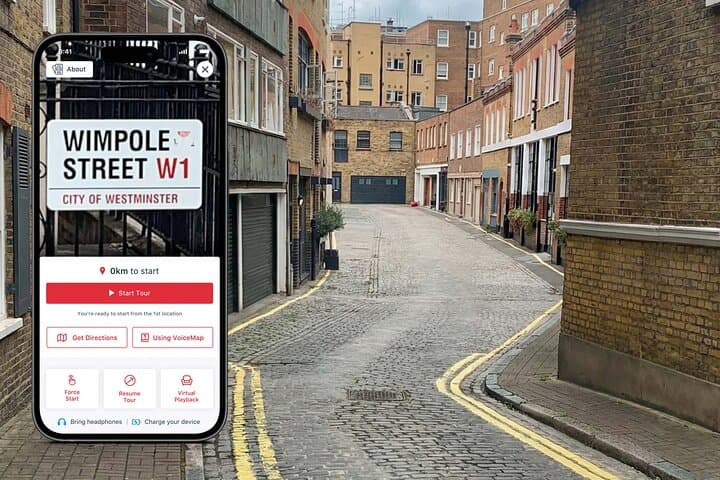


You step off Portland Place and into the hush of cobbled lanes that run like quiet veins behind Marylebone’s grand façades. The Langham and BBC Broadcasting House sit like guardians at the edge of bustle; the mews pull you inward, where tightly framed brick, painted doors, and clipped window boxes give the city a slower pulse.
You step off Portland Place and into the hush of cobbled lanes that run like quiet veins behind Marylebone’s grand façades. The Langham and BBC Broadcasting House sit like guardians at the edge of bustle; the mews pull you inward, where tightly framed brick, painted doors, and clipped window boxes give the city a slower pulse.
These mews began as 18th- and 19th-century service roads and stables for Georgian townhouses. Over time they were repurposed—stables to garages, workshops to homes—reflecting London’s social shifts: wartime damage, postwar rebuilding, and the 1960s cultural boom that transformed addresses into status symbols. You’ll pass lanes with TV-lore (The Avengers), addresses linked to music history, and a red-brick mansion tied to a famous scandal—each cobble a small piece of urban archaeology.
Geology here is understated: London clay underlies the streets, allowing narrow lanes and tight footprints; Victorian brick and stucco dominate the built palette. Culturally, Marylebone blends old-money architecture with creative professionals who prize quiet privacy. The audio format lets history and anecdote arrive exactly where you stand, aligning narration to GPS so the lane itself feels like a narrator.
Practical guidance: plan 90–120 minutes, wear supportive shoes for uneven cobbles, and bring headphones and a charged phone—the tour works offline but needs power. Visit midweek mornings for softer crowds; respect private residences and keep voices low in narrow spaces. The route is fully walkable and wheelchair accessible on firm surfaces, but some historic cobbles can be uneven. This is a slow, observational walk—listen, look, and let the lanes reveal their layered past.