THE ADVENTURE COLLECTIVE® · Independent discovery and booking for outdoor travel

Circle Issyk-Kul in three days: Burana Tower and steppe vistas, Barskoon’s waterfalls and the red sandstone of Canyon Fairy Tale, plus a night in a traditional yurt camp. This manageable circuit blends geology, nomadic culture and alpine forests into a concise Kyrgyz road trip.
Circle Issyk-Kul in three days: Burana Tower and steppe vistas, Barskoon’s waterfalls and the red sandstone of Canyon Fairy Tale, plus a night in a traditional yurt camp. This manageable circuit blends geology, nomadic culture and alpine forests into a concise Kyrgyz road trip.
A wind-driven rim of saltwater greets the road as you descend toward Issyk-Kul — a lake that refuses to freeze despite the mountains crowding its shores. On day one the highway unfurls through Chui Valley, and the Burana Tower rises from the steppe like a shard of rewritten history; climbers pause on its stone steps with the Tien Shan folding behind them.
Verified experiences and guided adventures in the surrounding area.
Operated by Visit Bishkek · Karakol, Issyk-Kul Region
A wind-driven rim of saltwater greets the road as you descend toward Issyk-Kul — a lake that refuses to freeze despite the mountains crowding its shores. On day one the highway unfurls through Chui Valley, and the Burana Tower rises from the steppe like a shard of rewritten history; climbers pause on its stone steps with the Tien Shan folding behind them.
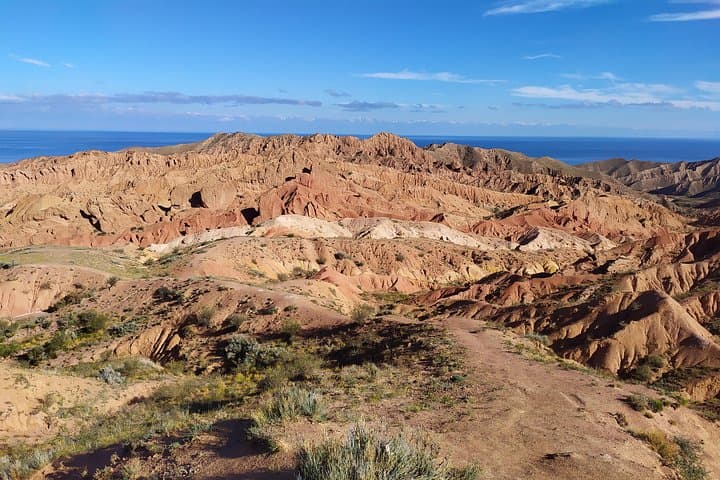
The next day the landscape tightens: Barskoon Gorge pushes you under spruce canopies and past waterfalls that seem to dare you to follow their channels upstream. Red sandstone in the Canyon Fairy Tale has been sculpted into improbable spires, every curve a slow argument between wind and time. The Seven Bulls jut from alpine forest as if a herd froze mid-charge; the scene reads like local geology with an opinion.
Cultural threads are visible everywhere — petroglyphs at Cholpon-Ata document millennia of human movement, and an overnight in a yurt camp places you in a living Kyrgyz tradition: felt, low tables, and boiled milk tea. Karakol supplies modest comforts after long days and a chance to soak in hot springs before the return drive to Bishkek.
Practical notes: expect long vehicle transfers with short walks and light trail scrambling, bring layered clothing for rapid temperature swings, and carry a refillable water bottle — potable sources are limited outside towns. Respect private pasturelands, pack out waste, and set expectations for simple but authentic accommodation in yurt camps and local guesthouses.
easy.
3 days (approx. 72 hours).
Suitable for travellers in general good health who can handle several short walks and vehicle transfers; minimal sustained hiking required.
This is a road-based circuit with daily transfers between sights; expect several hours in an air-conditioned vehicle each day interspersed with short walks and stops.
Yurt camps are simple but comfortable—expect traditional bedding, wood or gas stoves, shared facilities and locally prepared meals rather than hotel standards.
The itinerary is generally suitable for families and older travellers in good health, but it’s not recommended for those with serious spinal problems or pregnant travellers due to vehicle bumps and basic accommodations.
Visa requirements depend on nationality; many countries receive visa-free access or visa-on-arrival—check current Kyrgyzstan entry rules well before travel.
Issyk-Kul sits along historic mountain routes; Burana Tower is a remnant of the medieval city of Balasagun and Cholpon-Ata preserves petroglyphs dating back millennia.
Issyk-Kul is an endorheic (closed) basin sensitive to pollution and development; travelers should avoid single-use plastics, stay on trails, and support local guides and camps to benefit conservation-minded livelihoods.
Visit Bishkek operates guided outdoor trips and adventures with an emphasis on safety, stewardship, and memorable experiences.
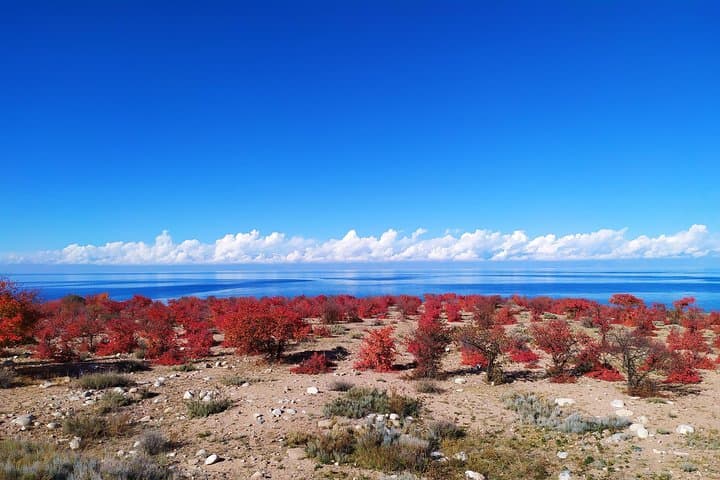
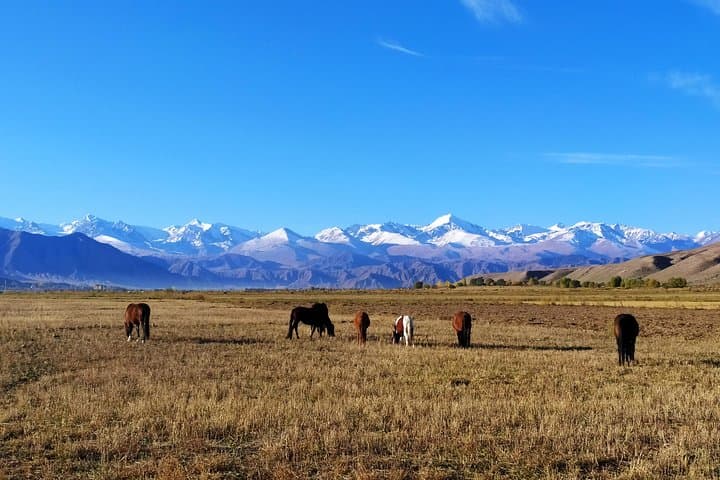
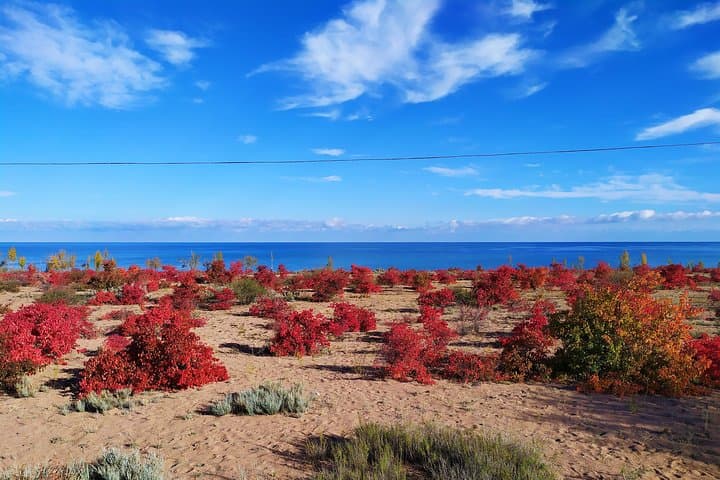
A wind-driven rim of saltwater greets the road as you descend toward Issyk-Kul — a lake that refuses to freeze despite the mountains crowding its shores. On day one the highway unfurls through Chui Valley, and the Burana Tower rises from the steppe like a shard of rewritten history; climbers pause on its stone steps with the Tien Shan folding behind them.
A wind-driven rim of saltwater greets the road as you descend toward Issyk-Kul — a lake that refuses to freeze despite the mountains crowding its shores. On day one the highway unfurls through Chui Valley, and the Burana Tower rises from the steppe like a shard of rewritten history; climbers pause on its stone steps with the Tien Shan folding behind them.
The next day the landscape tightens: Barskoon Gorge pushes you under spruce canopies and past waterfalls that seem to dare you to follow their channels upstream. Red sandstone in the Canyon Fairy Tale has been sculpted into improbable spires, every curve a slow argument between wind and time. The Seven Bulls jut from alpine forest as if a herd froze mid-charge; the scene reads like local geology with an opinion.
Cultural threads are visible everywhere — petroglyphs at Cholpon-Ata document millennia of human movement, and an overnight in a yurt camp places you in a living Kyrgyz tradition: felt, low tables, and boiled milk tea. Karakol supplies modest comforts after long days and a chance to soak in hot springs before the return drive to Bishkek.
Practical notes: expect long vehicle transfers with short walks and light trail scrambling, bring layered clothing for rapid temperature swings, and carry a refillable water bottle — potable sources are limited outside towns. Respect private pasturelands, pack out waste, and set expectations for simple but authentic accommodation in yurt camps and local guesthouses.