THE ADVENTURE COLLECTIVE® · Independent discovery and booking for outdoor travel

Float three miles down the Martha Brae River on traditional bamboo rafts guided by local captains. This private tour from Montego Bay blends gentle paddling, island history, and stops for food and shopping at the rafter village.
Float three miles down the Martha Brae River on traditional bamboo rafts guided by local captains. This private tour from Montego Bay blends gentle paddling, island history, and stops for food and shopping at the rafter village.
The first paddle stroke is a soft punctuation on the river: bamboo poles click against slow-moving water as the raft captain guides you through braids of green. On the Martha Brae River the landscape opens in stages — shaded corridors of mango and bamboo, occasional limestone banks, and sudden clearings where sunlight wakes the water.
Verified experiences and guided adventures in the surrounding area.
Operated by Trav Sun Tours · Falmouth, Trelawny
The first paddle stroke is a soft punctuation on the river: bamboo poles click against slow-moving water as the raft captain guides you through braids of green. On the Martha Brae River the landscape opens in stages — shaded corridors of mango and bamboo, occasional limestone banks, and sudden clearings where sunlight wakes the water.
Martha Brae has long been part of Trelawny’s rural economy; the river once ferried sugarcane and small cargo and today carries tourists on three-mile bamboo rafts. Geologically the river runs across a low karst plain carved from limestones, which produces shallow banks, small caves, and mineral-rich soils that support the herb gardens found at the rafter village.
Culturally the experience blends natural history and local storytelling: raft captains share legends of Martha Brae and point out medicinal plants used in Jamaican folk remedies. The rafter village itself has picnic grounds, a small pool, souvenir stalls, and roadside food vendors where you can sample local patties or jerk flavors after the ride.
Practical guidance: tours run about 60–90 minutes on the water plus transfer time from Montego Bay; expect light walking on uneven surfaces and intermittent steps to board. Bring reef-safe sunscreen, a quick-dry towel, and footwear that can get wet. If you want photos, use a dry bag or a secure pocket — captains usually steady the raft but sudden wakes happen.
Midday trips are warm and bright; early morning offers calmer water and fewer boats. The tour is family-friendly and easily combined with a stop in a nearby town for lunch or shopping at local craft stalls.
easy.
1–1.5 hours (on-river); allow 3–4 hours total with transfer.
Suitable for most fitness levels; requires light balance and short steps when boarding
Yes; the bamboo rafts are stable and captains handle the poles—children should be supervised and wear life vests if provided.
No—swimming is optional and sections are shallow, but non-swimmers should remain seated and follow the guide’s instructions.
Typical inclusions are round-trip private transport from Montego Bay, the guided bamboo raft trip, and stops at the rafter village; food and souvenirs are at your own expense.
Yes—the rafter village and nearby stands offer snacks, local crafts, and seating areas where you can eat after the raft ride for an additional cost.
The Martha Brae River was integral to local transport and small-scale agriculture; the rafting tradition developed as a tourism draw mid-20th century using locally made bamboo rafts.
Visitors should use reef-safe sunscreen and avoid littering; the rafter village works with guides to limit disturbances to shoreline plants and wildlife.
Trav Sun Tours operates guided outdoor trips and adventures with an emphasis on safety, stewardship, and memorable experiences.
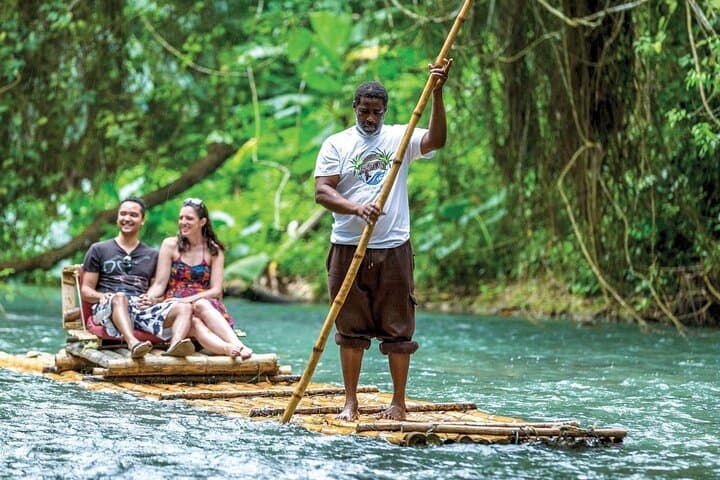
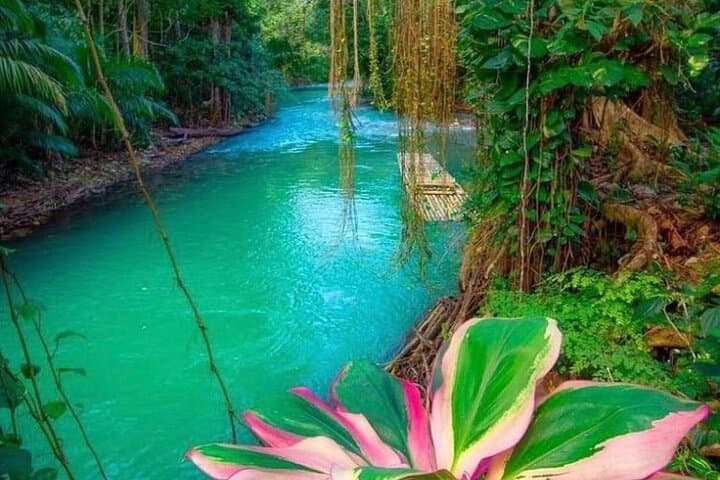
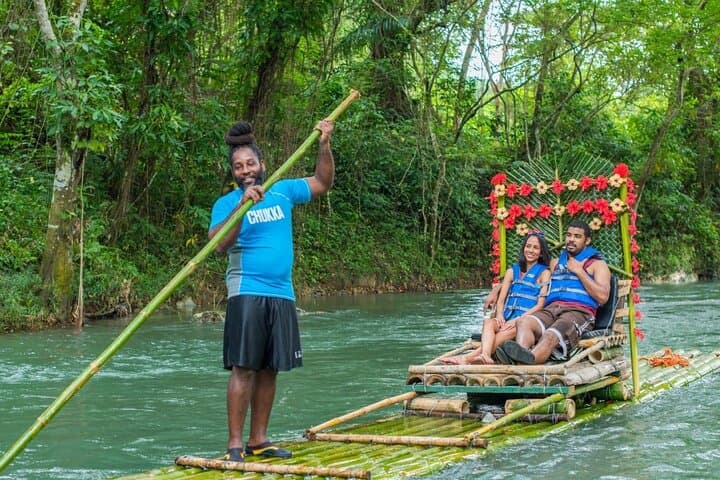
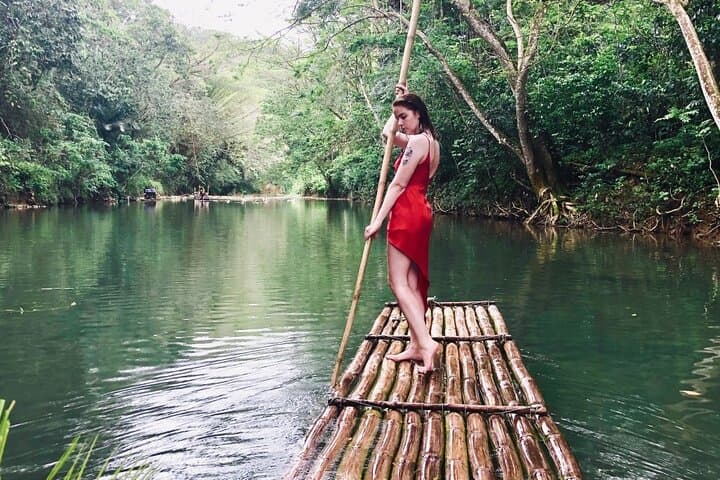
The first paddle stroke is a soft punctuation on the river: bamboo poles click against slow-moving water as the raft captain guides you through braids of green. On the Martha Brae River the landscape opens in stages — shaded corridors of mango and bamboo, occasional limestone banks, and sudden clearings where sunlight wakes the water.
The first paddle stroke is a soft punctuation on the river: bamboo poles click against slow-moving water as the raft captain guides you through braids of green. On the Martha Brae River the landscape opens in stages — shaded corridors of mango and bamboo, occasional limestone banks, and sudden clearings where sunlight wakes the water.
Martha Brae has long been part of Trelawny’s rural economy; the river once ferried sugarcane and small cargo and today carries tourists on three-mile bamboo rafts. Geologically the river runs across a low karst plain carved from limestones, which produces shallow banks, small caves, and mineral-rich soils that support the herb gardens found at the rafter village.
Culturally the experience blends natural history and local storytelling: raft captains share legends of Martha Brae and point out medicinal plants used in Jamaican folk remedies. The rafter village itself has picnic grounds, a small pool, souvenir stalls, and roadside food vendors where you can sample local patties or jerk flavors after the ride.
Practical guidance: tours run about 60–90 minutes on the water plus transfer time from Montego Bay; expect light walking on uneven surfaces and intermittent steps to board. Bring reef-safe sunscreen, a quick-dry towel, and footwear that can get wet. If you want photos, use a dry bag or a secure pocket — captains usually steady the raft but sudden wakes happen.
Midday trips are warm and bright; early morning offers calmer water and fewer boats. The tour is family-friendly and easily combined with a stop in a nearby town for lunch or shopping at local craft stalls.