THE ADVENTURE COLLECTIVE® · Independent discovery and booking for outdoor travel

Float two miles of calm river under a local raftsman’s calm control. Martha Brae bamboo rafting is a low-impact, story-rich way to see Jamaica’s north-coast riverlands—relaxing, scenic, and easy to prepare for.
Float two miles of calm river under a local raftsman’s calm control. Martha Brae bamboo rafting is a low-impact, story-rich way to see Jamaica’s north-coast riverlands—relaxing, scenic, and easy to prepare for.
The raft slips away from the bank and the river takes the lead—slow, steady, and insistent. On a two-person bamboo platform guided by a local raftsman, you move through green corridors where the current seems to dare you to hurry and the oaks and palms lean in to watch.
Verified experiences and guided adventures in the surrounding area.
Operated by Down To Earth Tours LLC · Falmouth, Trelawny Parish
The raft slips away from the bank and the river takes the lead—slow, steady, and insistent. On a two-person bamboo platform guided by a local raftsman, you move through green corridors where the current seems to dare you to hurry and the oaks and palms lean in to watch.
The Martha Brae River runs through Trelawny Parish on Jamaica’s north coast. Once part of plantation land shaped by limestone and alluvial soils, the river’s calm stretches became a leisure route in the 20th century when locals adapted bamboo rafts for visitors. Guides share stories of plantation life, folk medicine and how rafting became part of the island’s cultural draw.
Geologically the river carves a lowland channel fed by springs; you’ll pass shallow riffles and deeper pools framed by mangrove roots and riverine forest. Birds—kingfishers, herons—and the occasional iguana are common companions.
Practical side: most trips run 2–4 hours including hotel transfer from Montego Bay. Rafts carry two guests plus a guide; life jackets are standard. Wear quick-dry clothing, non-slip shoes or sandals, and bring sun protection and a dry bag for phones. Mornings are cooler and quieter; afternoons can be busier and sunnier. Tipping the guide is customary—expect to bring cash. If you want photos, ask the guide for pauses at scenic bends. The experience is gentle and accessible but respect the river: no litter, keep voices low to preserve wildlife, and follow your guide’s directions to enjoy a smooth, restorative float.
easy.
2–4 hours.
Minimal fitness required; able to step on/off a low raft and sit for 30–60 minutes.
The on-water portion is typically about 40–60 minutes; total trip time including transfers can be 2–4 hours.
Yes—rafts hold two passengers plus a guide and the ride is gentle; users should be able to step onto a low raft and sit for the duration.
Yes—operators provide life jackets and the guides are experienced; follow their safety instructions at all times.
Most operators include pickup and drop-off from Montego Bay hotels—confirm your pickup point and time at booking.
The Martha Brae area sits in Trelawny Parish, an agricultural zone shaped by plantation-era estates; recreational bamboo rafting developed locally as a gentle visitor experience in the 20th century.
Operators emphasize low-impact practices—avoid single-use plastics, stay on the raft unless directed, and follow guides to protect riverbank vegetation and wildlife.
Down To Earth Tours LLC operates guided outdoor trips and adventures with an emphasis on safety, stewardship, and memorable experiences.
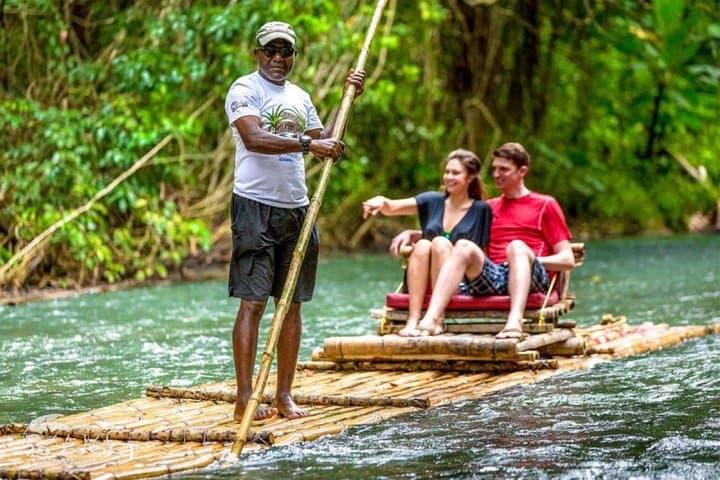
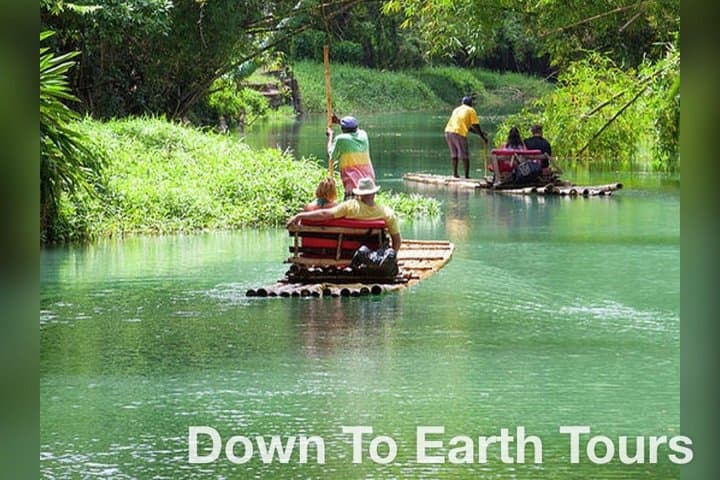
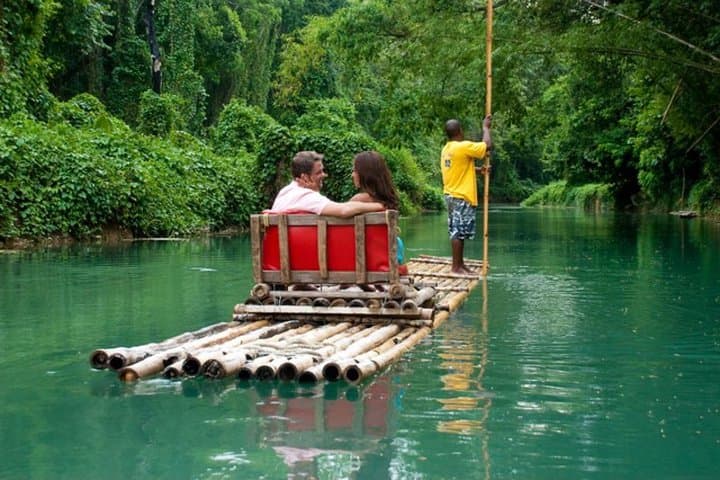
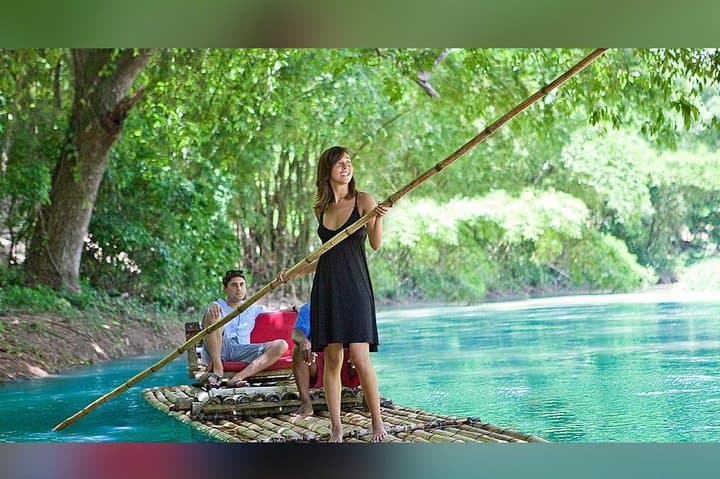
The raft slips away from the bank and the river takes the lead—slow, steady, and insistent. On a two-person bamboo platform guided by a local raftsman, you move through green corridors where the current seems to dare you to hurry and the oaks and palms lean in to watch.
The raft slips away from the bank and the river takes the lead—slow, steady, and insistent. On a two-person bamboo platform guided by a local raftsman, you move through green corridors where the current seems to dare you to hurry and the oaks and palms lean in to watch.
The Martha Brae River runs through Trelawny Parish on Jamaica’s north coast. Once part of plantation land shaped by limestone and alluvial soils, the river’s calm stretches became a leisure route in the 20th century when locals adapted bamboo rafts for visitors. Guides share stories of plantation life, folk medicine and how rafting became part of the island’s cultural draw.
Geologically the river carves a lowland channel fed by springs; you’ll pass shallow riffles and deeper pools framed by mangrove roots and riverine forest. Birds—kingfishers, herons—and the occasional iguana are common companions.
Practical side: most trips run 2–4 hours including hotel transfer from Montego Bay. Rafts carry two guests plus a guide; life jackets are standard. Wear quick-dry clothing, non-slip shoes or sandals, and bring sun protection and a dry bag for phones. Mornings are cooler and quieter; afternoons can be busier and sunnier. Tipping the guide is customary—expect to bring cash. If you want photos, ask the guide for pauses at scenic bends. The experience is gentle and accessible but respect the river: no litter, keep voices low to preserve wildlife, and follow your guide’s directions to enjoy a smooth, restorative float.