THE ADVENTURE COLLECTIVE® · Independent discovery and booking for outdoor travel

Explore Marseille at your own pace with a self-guided e-scavenger hunt through Vieux-Port and Le Panier. Solve clues on your phone, discover local history, and tailor the route to your group.
Explore Marseille at your own pace with a self-guided e-scavenger hunt through Vieux-Port and Le Panier. Solve clues on your phone, discover local history, and tailor the route to your group.
The gulls wheel over the Vieux-Port as you tap the first clue into your phone and step into Marseille’s surge of colors, smells and language. The waterfront spills fish markets and café terraces; narrow lanes in Le Panier climb toward battered façades and mosaic-tiled doorways. This self-guided e-scavenger hunt hands you the map and the riddles — the city supplies the atmosphere.
Verified experiences and guided adventures in the surrounding area.
Operated by Qula · Marseille, Provence-Alpes-Côte d'Azur
The gulls wheel over the Vieux-Port as you tap the first clue into your phone and step into Marseille’s surge of colors, smells and language. The waterfront spills fish markets and café terraces; narrow lanes in Le Panier climb toward battered façades and mosaic-tiled doorways. This self-guided e-scavenger hunt hands you the map and the riddles — the city supplies the atmosphere.
Marseille began as a Greek trading post around 600 BC, and its layers of history are visible from the Roman traces underfoot to the 19th-century Cathédrale de la Major. Geologically the region sits on Mediterranean limestone that forms the nearby Calanques — you’ll notice the stonework and seaside topography as you move between sights. Culturally Marseille is blunt and generous: bouillabaisse and seafood at the quayside, multilingual markets, and a strong local identity shaped by centuries of trade.
The app guides you between landmark stops — Vieux-Port, Le Panier, La Vieille Charité, Fort Saint-Nicolas — with timed challenges and local facts. Expect 2–3 hours of walking at an easy pace, variable depending on how long you linger at viewpoints or cafés. Practicalities: use GPS and offline maps if cellular service is spotty, keep the phone charged, and start earlier in summer to avoid heat and crowds. The route is stroller-accessible in many parts but includes cobbles and steps in historic quarters. Bring water, wear good walking shoes and allow time to sit at a terrace and watch the harbor change light — the game is as much about discovery as it is about speed.
easy.
2–3 hours.
Suitable for most fitness levels; involves continuous walking of several kilometers and some stair sections.
Yes — download and log into the game app after booking; having it installed beforehand avoids delays and helps if cellular service is patchy.
The game is family-friendly and many sections are stroller-accessible, but expect cobblestones and some steps in Le Panier that may require carrying a stroller.
Yes — the self-guided format lets you start, stop and resume at your own pace using the app's controls.
The tour is available in English, Spanish, German, French, Italian and Dutch according to the provider information.
Marseille was founded around 600 BC by Greek sailors from Phocaea; its long history as a trading port shaped its diverse culture and architecture.
Respect local neighborhoods and historic sites by following marked paths, avoiding graffiti on heritage structures, and minimizing single-use plastics to protect coastal waters.
Qula operates guided outdoor trips and adventures with an emphasis on safety, stewardship, and memorable experiences.


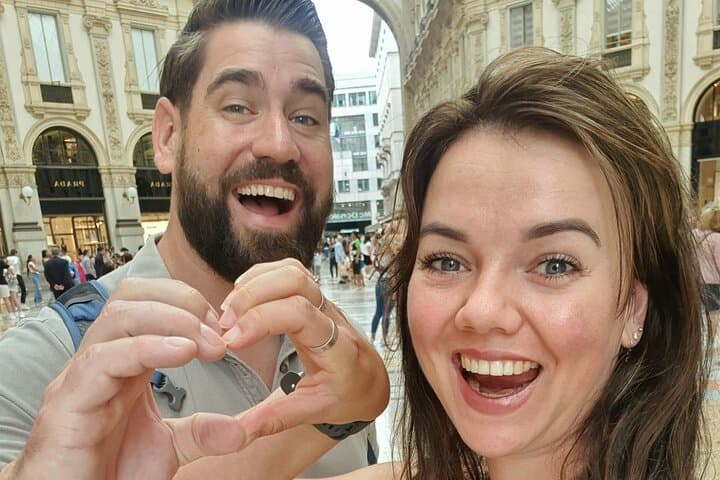

The gulls wheel over the Vieux-Port as you tap the first clue into your phone and step into Marseille’s surge of colors, smells and language. The waterfront spills fish markets and café terraces; narrow lanes in Le Panier climb toward battered façades and mosaic-tiled doorways. This self-guided e-scavenger hunt hands you the map and the riddles — the city supplies the atmosphere.
The gulls wheel over the Vieux-Port as you tap the first clue into your phone and step into Marseille’s surge of colors, smells and language. The waterfront spills fish markets and café terraces; narrow lanes in Le Panier climb toward battered façades and mosaic-tiled doorways. This self-guided e-scavenger hunt hands you the map and the riddles — the city supplies the atmosphere.
Marseille began as a Greek trading post around 600 BC, and its layers of history are visible from the Roman traces underfoot to the 19th-century Cathédrale de la Major. Geologically the region sits on Mediterranean limestone that forms the nearby Calanques — you’ll notice the stonework and seaside topography as you move between sights. Culturally Marseille is blunt and generous: bouillabaisse and seafood at the quayside, multilingual markets, and a strong local identity shaped by centuries of trade.
The app guides you between landmark stops — Vieux-Port, Le Panier, La Vieille Charité, Fort Saint-Nicolas — with timed challenges and local facts. Expect 2–3 hours of walking at an easy pace, variable depending on how long you linger at viewpoints or cafés. Practicalities: use GPS and offline maps if cellular service is spotty, keep the phone charged, and start earlier in summer to avoid heat and crowds. The route is stroller-accessible in many parts but includes cobbles and steps in historic quarters. Bring water, wear good walking shoes and allow time to sit at a terrace and watch the harbor change light — the game is as much about discovery as it is about speed.