THE ADVENTURE COLLECTIVE® · Independent discovery and booking for outdoor travel

Explore Marsala’s reclaimed quarries on a 90‑minute guided ring walk that takes you from open benches down to -30 meters into vaulted calcarenite tunnels. Expect honey‑lit walls, 25‑meter pillars, a mid‑walk refreshment, and clear interpretation of quarrying history.
Explore Marsala’s reclaimed quarries on a 90‑minute guided ring walk that takes you from open benches down to -30 meters into vaulted calcarenite tunnels. Expect honey‑lit walls, 25‑meter pillars, a mid‑walk refreshment, and clear interpretation of quarrying history.
You step off the lane and the scrub smells sharp — rosemary and thyme pushing into the wind — then the ground drops away and the quarry opens like a carved amphitheater. Calcarenite pinnacles rise in tiers; walls and overhangs frame shafts of light that make the old extraction faces glow honey-gold.
Verified experiences and guided adventures in the surrounding area.
Operated by PARCO DELLE CAVE MARSALA · Marsala, Sicily
You step off the lane and the scrub smells sharp — rosemary and thyme pushing into the wind — then the ground drops away and the quarry opens like a carved amphitheater. Calcarenite pinnacles rise in tiers; walls and overhangs frame shafts of light that make the old extraction faces glow honey-gold.
These are not natural canyons but the work of generations of quarrymen. From the road the route leads you down to levels cut as deep as 30 meters, across a ring circuit that moves from open-air benches into tunnelled halls. Inside the tunneled quarries, 25‑meter pillars stand like architectural ribs while former extraction scars reveal horizontal bedding and tool marks — a working record of local stonecraft used for buildings across western Sicily.
Marsala’s quarries sit at the meeting point of geology and economy: soft, fossil-rich calcarenite that was prized for easy shaping and local construction. Culturally, the park preserves the memory of a disappearing trade; today the landowner has reworked the site into an agricultural and cultural landscape that welcomes visitors rather than industrial extraction.
Expect a relaxed, 90‑minute guided walk with a mid‑point refreshment. Trails are mostly compact earth with some stairs on the descent and ascent; the last section into the tunnels includes steps that limit full wheelchair access. Wear sturdy shoes, carry water, and time visits for morning or late afternoon light when the quarry faces are most dramatic. Follow the guide, stay on marked paths, and leave artifacts undisturbed—this is both an outdoor walk and a living industrial memory.
easy.
1–2 hours.
Suitable for most fitness levels; involves short stair sections and moderate descents/ascents.
The tour is approximately 90 minutes and proceeds at a relaxed, interpretive walking pace with stops for explanation and a refreshment.
The park has vehicle access to central areas and is wheelchair accessible to that point, but the final 15‑minute descent into the tunnels involves a staircase and is not fully accessible.
Infants can be carried in strollers for much of the route; service animals are permitted but pets should be managed respectfully—check with the operator for age recommendations.
Booking is for one ticket per booking with mobile tickets accepted; full refunds are available if canceled at least 24 hours before the scheduled start.
The quarries are carved from calcarenite, historically extracted by local quarrymen for regional construction; the park preserves tool marks and benching that document changing extraction methods.
The site is privately managed with cultural interpretation; stick to marked trails and avoid removing stone samples to protect fragile strata and the spontaneous aromatic plants that recolonize worked faces.
PARCO DELLE CAVE MARSALA operates guided outdoor trips and adventures with an emphasis on safety, stewardship, and memorable experiences.
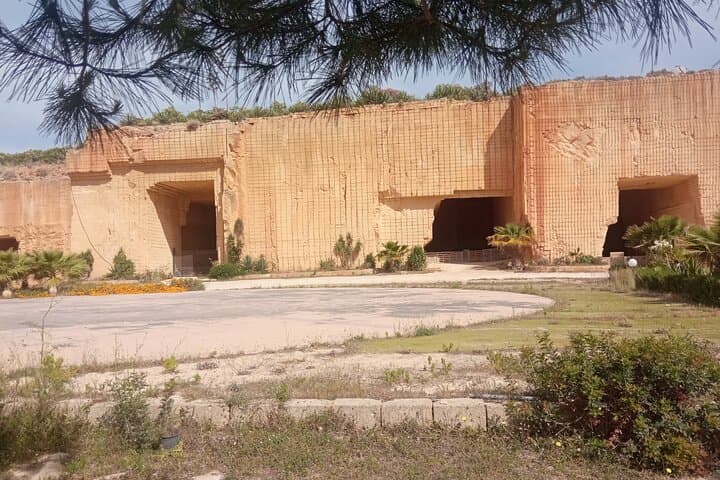


You step off the lane and the scrub smells sharp — rosemary and thyme pushing into the wind — then the ground drops away and the quarry opens like a carved amphitheater. Calcarenite pinnacles rise in tiers; walls and overhangs frame shafts of light that make the old extraction faces glow honey-gold.
You step off the lane and the scrub smells sharp — rosemary and thyme pushing into the wind — then the ground drops away and the quarry opens like a carved amphitheater. Calcarenite pinnacles rise in tiers; walls and overhangs frame shafts of light that make the old extraction faces glow honey-gold.
These are not natural canyons but the work of generations of quarrymen. From the road the route leads you down to levels cut as deep as 30 meters, across a ring circuit that moves from open-air benches into tunnelled halls. Inside the tunneled quarries, 25‑meter pillars stand like architectural ribs while former extraction scars reveal horizontal bedding and tool marks — a working record of local stonecraft used for buildings across western Sicily.
Marsala’s quarries sit at the meeting point of geology and economy: soft, fossil-rich calcarenite that was prized for easy shaping and local construction. Culturally, the park preserves the memory of a disappearing trade; today the landowner has reworked the site into an agricultural and cultural landscape that welcomes visitors rather than industrial extraction.
Expect a relaxed, 90‑minute guided walk with a mid‑point refreshment. Trails are mostly compact earth with some stairs on the descent and ascent; the last section into the tunnels includes steps that limit full wheelchair access. Wear sturdy shoes, carry water, and time visits for morning or late afternoon light when the quarry faces are most dramatic. Follow the guide, stay on marked paths, and leave artifacts undisturbed—this is both an outdoor walk and a living industrial memory.