THE ADVENTURE COLLECTIVE® · Independent discovery and booking for outdoor travel

Set off from Hamata Marina for a full-day Red Sea voyage to Shaab Samadai’s Dolphin House. Expect close dolphin sightings, two snorkel stops among thriving coral, and a chef-prepared lunch on board.
Set off from Hamata Marina for a full-day Red Sea voyage to Shaab Samadai’s Dolphin House. Expect close dolphin sightings, two snorkel stops among thriving coral, and a chef-prepared lunch on board.
The sun lifts over the Red Sea as the boat eases out of Hamata Marina, wake whispering against the hull and salt-stung wind pressing you forward. Within an hour the shoreline thins into low desert and the ocean opens—blue glass broken by a dark ribbon of reef where dolphins often gather. At Shaab Samadai, the water moves with intent; dolphins circle, leap, and call you into the clear below.
Verified experiences and guided adventures in the surrounding area.
Operated by Egyptra Travel Services · Marsa Alam, Red Sea Governorate
The sun lifts over the Red Sea as the boat eases out of Hamata Marina, wake whispering against the hull and salt-stung wind pressing you forward. Within an hour the shoreline thins into low desert and the ocean opens—blue glass broken by a dark ribbon of reef where dolphins often gather. At Shaab Samadai, the water moves with intent; dolphins circle, leap, and call you into the clear below.
This stretch of the southeastern Egyptian Red Sea has been a seafaring corridor for millennia, with Bedouin fishing camps and caravan routes skirting a coastline of coral pinnacles and sandy flats. Geologically the reefs are built on uplifted plates and volcanic substrate, producing steep coral walls and shallow lagoon gardens that support prolific marine life.
Culturally, the experience is framed by local crews and small marina communities in Hamata who blend traditional fishing knowledge with modern boat operations. The protected “Dolphin House” is regulated to reduce disturbance—guides emphasize distance and respectful observation.
Practically, expect a full-day trip (roughly eight hours including transfers) with two guided snorkel stops, onboard lunch, and provided snorkel kit and life jackets. Water visibility on good days can exceed 20–30 meters; currents are usually mild but can strengthen around channels. Bring reef-safe sunscreen, a snug mask, and a waterproof camera; follow the guide’s briefings on approach and exit. The day balances wildlife encounters with coral reef snorkeling—fast, sensory, and rooted in careful stewardship of a fragile ecosystem.
easy.
8 hours.
Minimal fitness required; participants should be comfortable in saltwater and able to swim short distances with a mask.
Guides aim to allow close observation without disturbing animals—expect to watch dolphins from the surface and sometimes swim near them when they approach naturally.
Yes, pickup and drop-off from hotels in Marsa Alam are included, with air‑conditioned transfers to Hamata Marina (about a multi-hour drive depending on pickup location).
Masks, fins, and life jackets are provided onboard; you may bring your own gear for a better fit or hygiene preferences.
Non-swimmers can join and use life jackets, but basic water comfort is recommended for snorkeling stops; inform the operator in advance to arrange additional support.
The Red Sea coast around Marsa Alam has long supported small fishing communities and sits near protected reserves established to preserve desert and marine habitats.
Shaab Samadai is a managed site with guidelines to minimize disturbance; visitors should use reef-safe products, avoid touching coral, and follow guide instructions to reduce impact.
Egyptra Travel Services operates guided outdoor trips and adventures with an emphasis on safety, stewardship, and memorable experiences.
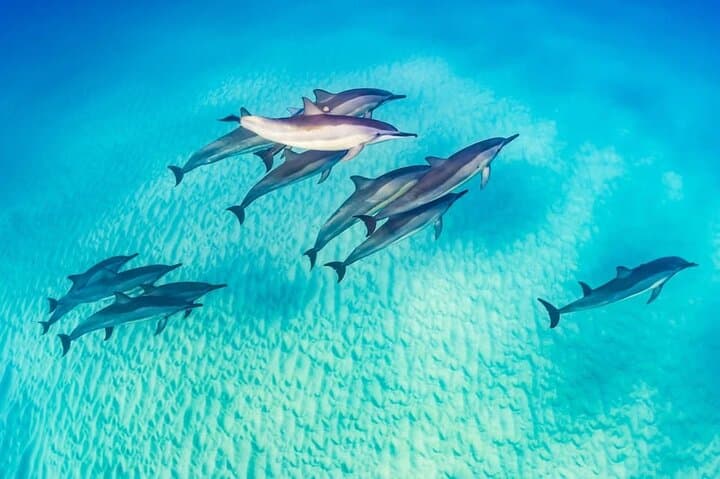
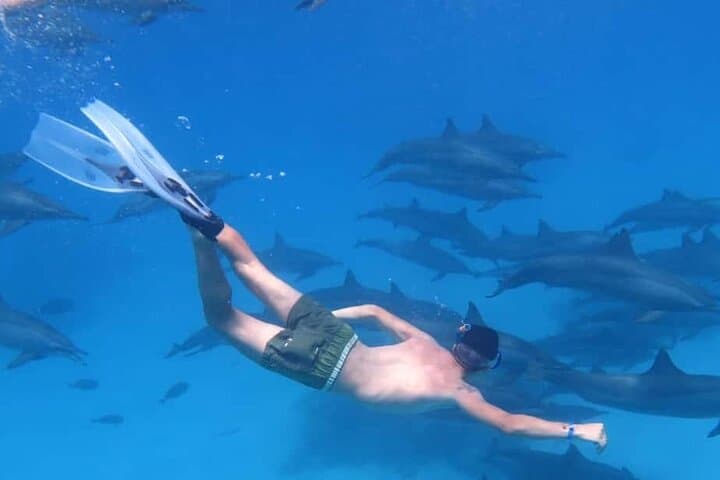
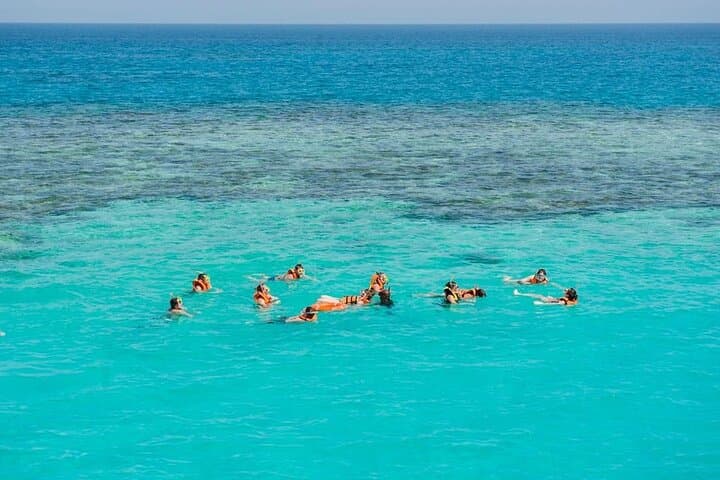
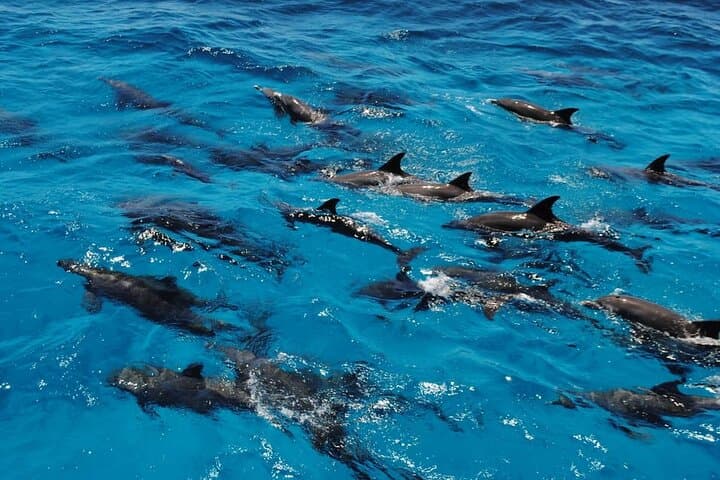
The sun lifts over the Red Sea as the boat eases out of Hamata Marina, wake whispering against the hull and salt-stung wind pressing you forward. Within an hour the shoreline thins into low desert and the ocean opens—blue glass broken by a dark ribbon of reef where dolphins often gather. At Shaab Samadai, the water moves with intent; dolphins circle, leap, and call you into the clear below.
The sun lifts over the Red Sea as the boat eases out of Hamata Marina, wake whispering against the hull and salt-stung wind pressing you forward. Within an hour the shoreline thins into low desert and the ocean opens—blue glass broken by a dark ribbon of reef where dolphins often gather. At Shaab Samadai, the water moves with intent; dolphins circle, leap, and call you into the clear below.
This stretch of the southeastern Egyptian Red Sea has been a seafaring corridor for millennia, with Bedouin fishing camps and caravan routes skirting a coastline of coral pinnacles and sandy flats. Geologically the reefs are built on uplifted plates and volcanic substrate, producing steep coral walls and shallow lagoon gardens that support prolific marine life.
Culturally, the experience is framed by local crews and small marina communities in Hamata who blend traditional fishing knowledge with modern boat operations. The protected “Dolphin House” is regulated to reduce disturbance—guides emphasize distance and respectful observation.
Practically, expect a full-day trip (roughly eight hours including transfers) with two guided snorkel stops, onboard lunch, and provided snorkel kit and life jackets. Water visibility on good days can exceed 20–30 meters; currents are usually mild but can strengthen around channels. Bring reef-safe sunscreen, a snug mask, and a waterproof camera; follow the guide’s briefings on approach and exit. The day balances wildlife encounters with coral reef snorkeling—fast, sensory, and rooted in careful stewardship of a fragile ecosystem.