THE ADVENTURE COLLECTIVE® · Independent discovery and booking for outdoor travel

Spend an evening in the Eastern Desert with a Bedouin-hosted dinner, a camel ride at sunset, and guided stargazing through telescopes. This half-day tour pairs cultural insight with one of the darkest skies in the region.
Spend an evening in the Eastern Desert with a Bedouin-hosted dinner, a camel ride at sunset, and guided stargazing through telescopes. This half-day tour pairs cultural insight with one of the darkest skies in the region.
Night falls quickly in the Eastern Desert—one moment the dunes are bronze and sharp, the next the sky opens into a high, cold bowl of stars. You arrive at a low camp as the last light slides off the ridges; camels sway and Bedouin tea steams in small cups. The guide points out the first bright planets while an open fire throws warm light across faces and flat, sandy ground.
Verified experiences and guided adventures in the surrounding area.
Operated by Saray El-Nile · Marsa Alam, Red Sea Governorate
Night falls quickly in the Eastern Desert—one moment the dunes are bronze and sharp, the next the sky opens into a high, cold bowl of stars. You arrive at a low camp as the last light slides off the ridges; camels sway and Bedouin tea steams in small cups. The guide points out the first bright planets while an open fire throws warm light across faces and flat, sandy ground.
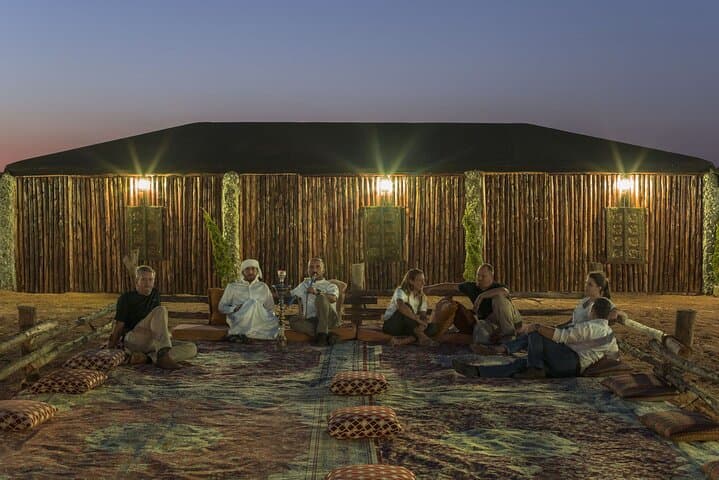
This stretch of desert has long been home to Bedouin communities whose routes and customs predate modern roads; the local geology is dominated by wind-sculpted sand and older limestone outcrops that preserve traces of ancient shorelines from when the Red Sea fluctuated. Cultural exchange—tea, bread baked on embers, storytelling—frames the evening as much as the night sky. Nearby Wadi el-Gemal’s scrub and hummock dunes harbor hardy life adapted to drought, and the lack of light pollution here makes the Milky Way a visible river of stars.
Practically, expect a flat, sandy terrain with short walks to viewpoints and a camel ride over gentle dunes at sunset. Telescopes and an astronomy guide will point out constellations and planets; restrooms and seating are basic but available. Dress in layers for rapid temperature drops after sunset, bring sun protection earlier in the day, and carry water. The experience is low-impact and accessible for most travelers; keep noise low to preserve the desert’s calm and follow local guidance on cultural etiquette. With simple preparation, the night becomes a clear, immediate lesson in desert sky and hospitality.
easy.
4–5 hours.
Suitable for most fitness levels; involves short walks on sand and a gentle camel ride.
Yes—hotel pick-up and drop-off in Marsa Alam are included in the tour price.
Both activities are gentle; the camel ride crosses shallow dunes and walking segments are short on flat sand.
High-powered telescopes and an astronomy guide are provided; expect small group rotations to view specific objects.
A buffet-style Bedouin dinner is offered—notify the operator in advance for dietary needs so they can accommodate requests.
The region’s Bedouin communities have traded, guided, and grazed across these dunes for centuries; their hospitality remains central to desert nights.
The desert is an ecologically fragile environment—stay on established paths, remove all trash, and avoid disturbing plant life and wildlife.
Saray El-Nile operates guided outdoor trips and adventures with an emphasis on safety, stewardship, and memorable experiences.
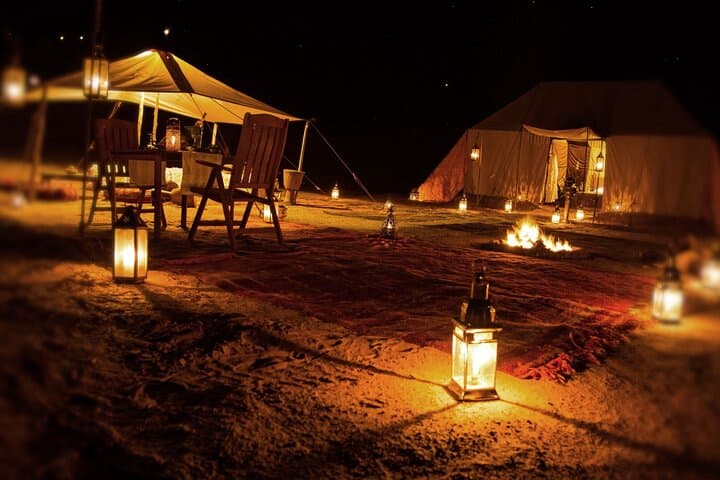
Night falls quickly in the Eastern Desert—one moment the dunes are bronze and sharp, the next the sky opens into a high, cold bowl of stars. You arrive at a low camp as the last light slides off the ridges; camels sway and Bedouin tea steams in small cups. The guide points out the first bright planets while an open fire throws warm light across faces and flat, sandy ground.
Night falls quickly in the Eastern Desert—one moment the dunes are bronze and sharp, the next the sky opens into a high, cold bowl of stars. You arrive at a low camp as the last light slides off the ridges; camels sway and Bedouin tea steams in small cups. The guide points out the first bright planets while an open fire throws warm light across faces and flat, sandy ground.
This stretch of desert has long been home to Bedouin communities whose routes and customs predate modern roads; the local geology is dominated by wind-sculpted sand and older limestone outcrops that preserve traces of ancient shorelines from when the Red Sea fluctuated. Cultural exchange—tea, bread baked on embers, storytelling—frames the evening as much as the night sky. Nearby Wadi el-Gemal’s scrub and hummock dunes harbor hardy life adapted to drought, and the lack of light pollution here makes the Milky Way a visible river of stars.
Practically, expect a flat, sandy terrain with short walks to viewpoints and a camel ride over gentle dunes at sunset. Telescopes and an astronomy guide will point out constellations and planets; restrooms and seating are basic but available. Dress in layers for rapid temperature drops after sunset, bring sun protection earlier in the day, and carry water. The experience is low-impact and accessible for most travelers; keep noise low to preserve the desert’s calm and follow local guidance on cultural etiquette. With simple preparation, the night becomes a clear, immediate lesson in desert sky and hospitality.