THE ADVENTURE COLLECTIVE® · Independent discovery and booking for outdoor travel

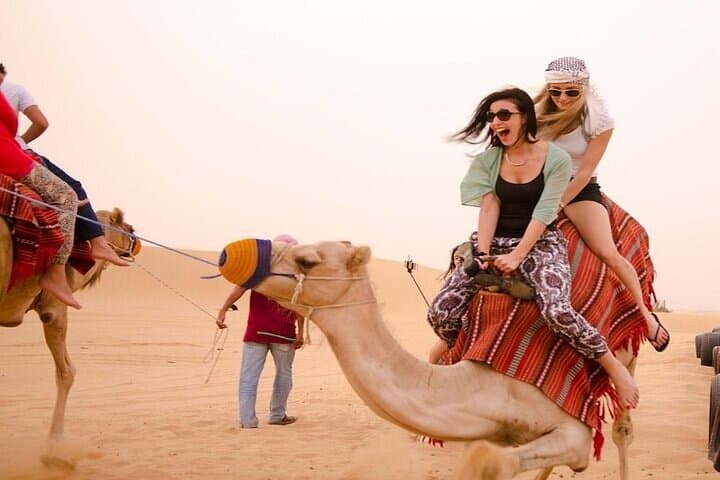
Charge dune crests on a guided three‑hour quad route outside Marsa Alam, then unwind with a brief camel ride and Bedouin tea. This tour mixes short bursts of adrenaline with cultural pauses and easy logistics like hotel pickup.
Charge dune crests on a guided three‑hour quad route outside Marsa Alam, then unwind with a brief camel ride and Bedouin tea. This tour mixes short bursts of adrenaline with cultural pauses and easy logistics like hotel pickup.
A low sun glances off wind-sculpted dunes as riders tighten helmets and listen to a short safety briefing. The quads hum to life and the desert answers—soft sand gives way to hard-packed tracks, then to a line of jagged rock where sunlight chisels contrast into sharp relief. For three hours the landscape keeps changing: broad, rolling dunes that dare riders to charge a crest, pebble-strewn flats that demand steady throttle, and scattered acacia thickets where Bedouin tea is served in a shaded tent.
Verified experiences and guided adventures in the surrounding area.
Operated by Al Rose Travel · Marsa Alam, Red Sea Governorate
A low sun glances off wind-sculpted dunes as riders tighten helmets and listen to a short safety briefing. The quads hum to life and the desert answers—soft sand gives way to hard-packed tracks, then to a line of jagged rock where sunlight chisels contrast into sharp relief. For three hours the landscape keeps changing: broad, rolling dunes that dare riders to charge a crest, pebble-strewn flats that demand steady throttle, and scattered acacia thickets where Bedouin tea is served in a shaded tent.
The Marsa Alam region sits at the edge of Egypt’s Red Sea coast and the Eastern Desert, an area shaped by ancient seas and tectonic uplift. Bedouin tribes have traversed these routes for centuries; modern quad tracks often parallel old camel paths. Geology shows a mix of Phanerozoic sedimentary layers and volcanic outcrops toward Gebel Elba, and cultural markers—simple cairns and temporary camps—hint at human presence across time.
Practical guidance: expect roughly 3 hours in the field with hotel pickup included. Terrain is primarily sand and compacted desert trails with minimal elevation gain—small ridges and dune crests under 100 meters. Bring closed-toe shoes, eye protection against blowing sand, and a camera with a secure strap. Start early or late in the afternoon to avoid peak heat; guides carry water and lead the group at variable paces to match rider experience. A short camel ride and a Bedouin tea break bookend the motorized excitement, giving time to cool off and take photos. Follow guide instructions, keep to designated routes to protect fragile desert soils, and be ready for sudden wind and shifting sand underfoot.
moderate.
3 hours.
Suitable for people in average physical condition; you should be able to mount/dismount an ATV and handle short standing periods.
No—brief safety instruction is provided and guides lead the group; riders should be comfortable with basic throttle and brake use.
Infants must sit on an adult’s lap; operators typically set age and weight limits—confirm during booking and on pickup.
Yes, air-conditioned hotel pickup and drop-off are listed as included in the tour price.
The cancellation policy allows refunds if you cancel at least 24 hours prior; operators rarely cancel for wind but may postpone for unsafe conditions—check locally.
Routes around Marsa Alam trace traditional Bedouin pathways linking coastal wells and inland grazing grounds; the area also lies near historical trade tracks to the Nile valley.
Stay on designated tracks to protect cryptobiotic soil and sparse vegetation; pack out all trash and avoid disturbing archaeological markers or animal burrows.
Al Rose Travel operates guided outdoor trips and adventures with an emphasis on safety, stewardship, and memorable experiences.
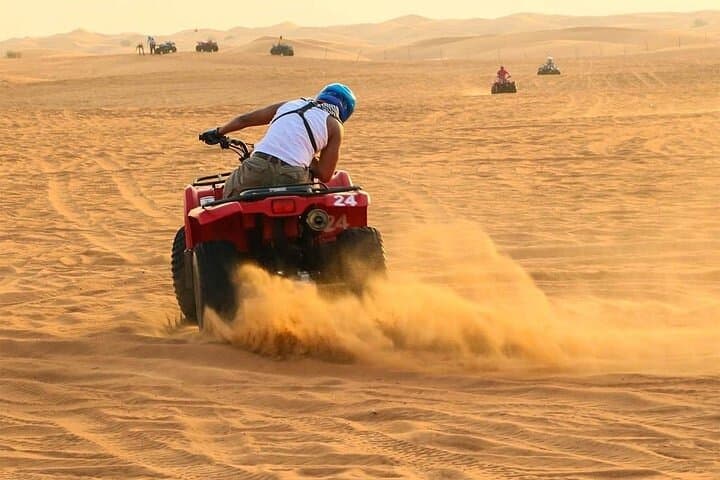
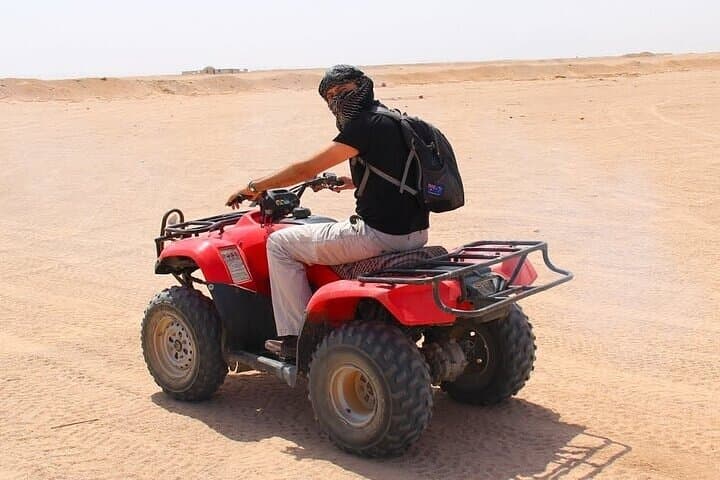
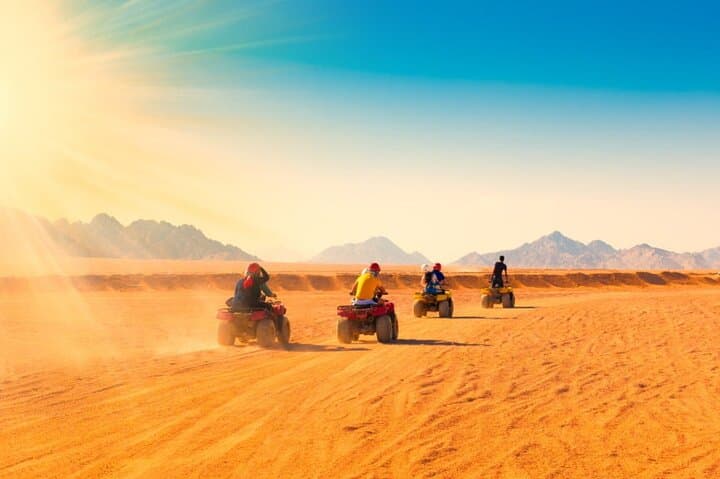
A low sun glances off wind-sculpted dunes as riders tighten helmets and listen to a short safety briefing. The quads hum to life and the desert answers—soft sand gives way to hard-packed tracks, then to a line of jagged rock where sunlight chisels contrast into sharp relief. For three hours the landscape keeps changing: broad, rolling dunes that dare riders to charge a crest, pebble-strewn flats that demand steady throttle, and scattered acacia thickets where Bedouin tea is served in a shaded tent.
A low sun glances off wind-sculpted dunes as riders tighten helmets and listen to a short safety briefing. The quads hum to life and the desert answers—soft sand gives way to hard-packed tracks, then to a line of jagged rock where sunlight chisels contrast into sharp relief. For three hours the landscape keeps changing: broad, rolling dunes that dare riders to charge a crest, pebble-strewn flats that demand steady throttle, and scattered acacia thickets where Bedouin tea is served in a shaded tent.
The Marsa Alam region sits at the edge of Egypt’s Red Sea coast and the Eastern Desert, an area shaped by ancient seas and tectonic uplift. Bedouin tribes have traversed these routes for centuries; modern quad tracks often parallel old camel paths. Geology shows a mix of Phanerozoic sedimentary layers and volcanic outcrops toward Gebel Elba, and cultural markers—simple cairns and temporary camps—hint at human presence across time.
Practical guidance: expect roughly 3 hours in the field with hotel pickup included. Terrain is primarily sand and compacted desert trails with minimal elevation gain—small ridges and dune crests under 100 meters. Bring closed-toe shoes, eye protection against blowing sand, and a camera with a secure strap. Start early or late in the afternoon to avoid peak heat; guides carry water and lead the group at variable paces to match rider experience. A short camel ride and a Bedouin tea break bookend the motorized excitement, giving time to cool off and take photos. Follow guide instructions, keep to designated routes to protect fragile desert soils, and be ready for sudden wind and shifting sand underfoot.