THE ADVENTURE COLLECTIVE® · Independent discovery and booking for outdoor travel

Crossing the High Atlas to the golden Erg Chebbi, this 4-day route links Marrakesh and Fez through kasbahs, gorges and a two-night desert stay. Expect long drives, dramatic geology and authentic Berber hospitality with camel treks and a star-filled camp night.
Crossing the High Atlas to the golden Erg Chebbi, this 4-day route links Marrakesh and Fez through kasbahs, gorges and a two-night desert stay. Expect long drives, dramatic geology and authentic Berber hospitality with camel treks and a star-filled camp night.
The first light in the High Atlas pins the road in hard gold as your driver steers up Tizi n’Tichka, the pass rising to about 2,260 m, and the landscape changes from ochre townscapes to serrated mountain ridges.
Verified experiences and guided adventures in the surrounding area.
Operated by Sahara tours · Merzouga, Drâa-Tafilalet
The first light in the High Atlas pins the road in hard gold as your driver steers up Tizi n’Tichka, the pass rising to about 2,260 m, and the landscape changes from ochre townscapes to serrated mountain ridges.
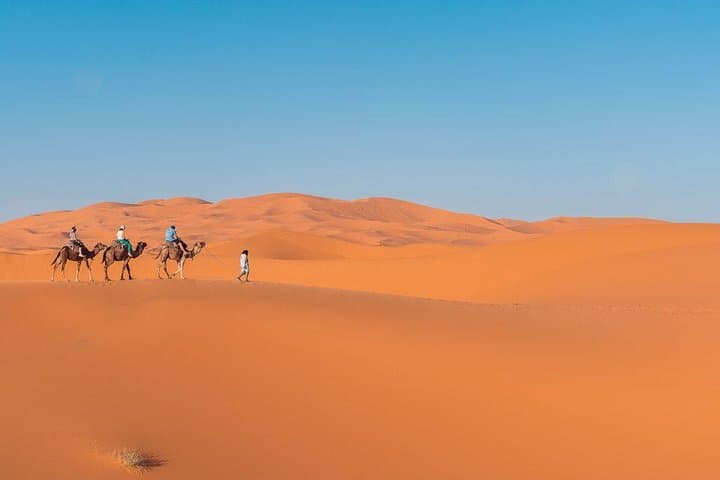
Over four days you cross valleys and kasbahs, skirt the cinematic walls of Aït Ben Haddou and drop into the palm-lined oases that feed the trade routes of old. Driving east unspools geology—folded sedimentary layers exposed by millennia of uplift—and the air dries as you descend toward the Erg Chebbi dunes where sand climbs as high as 120–150 m and dares you to walk to the crest at sunset.
Culturally the route follows old caravan corridors: kasbahs are fortified homes of historic tribal families, and towns like Kelâat M’Gouna still distill rose water in spring. In Azrou, cedar forests host Barbary macaques and a cooler, alpine feel; Ifrane closes the loop with European-style architecture born of French-era planning.
Practical guidance: expect long driving days (roughly 700–900 km total over four days), mixed paved and rural roads, and short walks in gorges and dunes. Pack layered clothing for hot days and cold desert nights, bring at least 2–3 liters of water for dune walks, and allow time for a camel ride at dusk and sunrise—both quieter and cooler. Respect local customs in villages, tip guides and camp staff, and choose a camp that practices sensible waste management. This trip blends scenery, history and overnight desert camping into a compact, manageable adventure.
moderate.
4 days.
Moderate fitness recommended—able to tolerate several hours of driving per day, short walks in gorges and standing/walking on sand.
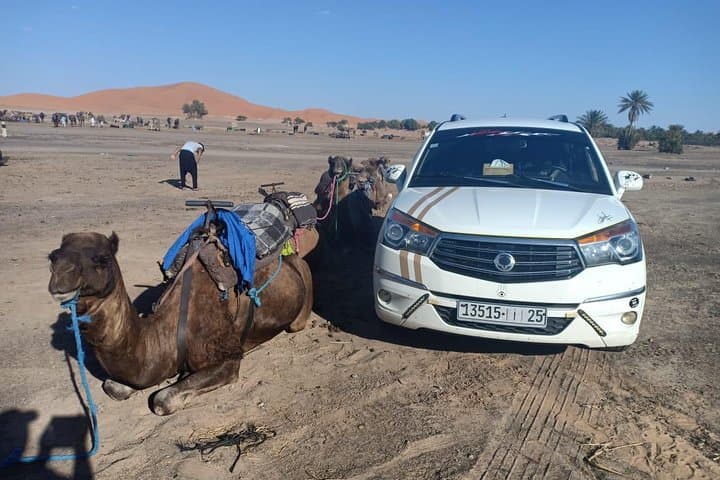
Routes typically start in Marrakesh and finish in Fez, with pickups from central hotels—confirm your exact pickup point at booking.
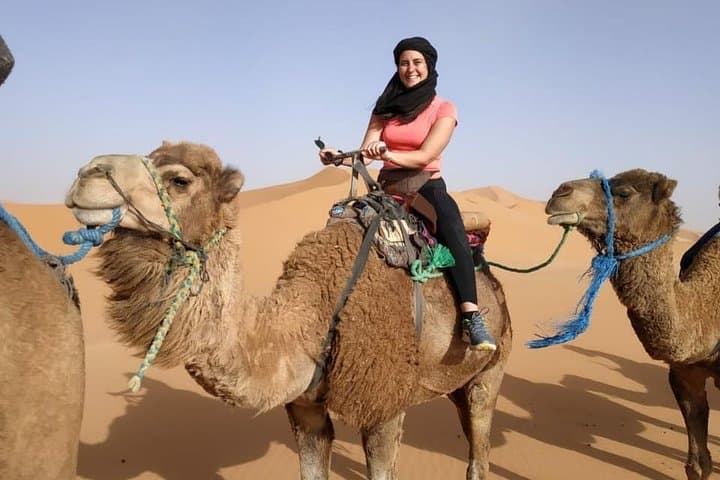
Camel rides to the Berber camp are generally 30–60 minutes each way, timed for sunset and sunrise; handlers manage the pace for comfort.
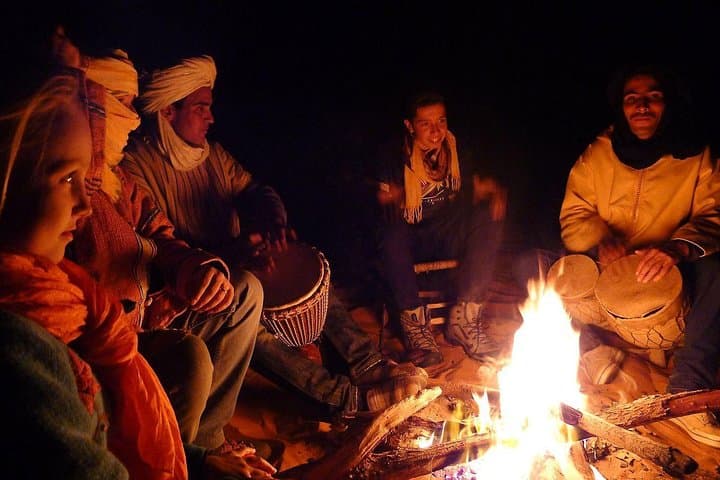
Nights include air-conditioned hotels in towns and traditional Berber tents in the desert; expect basic but clean facilities at camps with communal dining.
The itinerary is rated easy to moderate; long drives and uneven dune walking can be tiring—consult the operator about mobility needs and available support.
The route follows historic trans-Saharan corridors—Aït Ben Haddou is a UNESCO ksar used as a caravan stop and later as a film set—while kasbah architecture reflects centuries of defensive, earthen construction.
Erg ecosystems are fragile and water is scarce; choose operators that minimize waste, avoid driving on dunes outside established tracks, and support local camps that use solar and responsible water practices.
Sahara tours operates guided outdoor trips and adventures with an emphasis on safety, stewardship, and memorable experiences.
The first light in the High Atlas pins the road in hard gold as your driver steers up Tizi n’Tichka, the pass rising to about 2,260 m, and the landscape changes from ochre townscapes to serrated mountain ridges.
The first light in the High Atlas pins the road in hard gold as your driver steers up Tizi n’Tichka, the pass rising to about 2,260 m, and the landscape changes from ochre townscapes to serrated mountain ridges.
Over four days you cross valleys and kasbahs, skirt the cinematic walls of Aït Ben Haddou and drop into the palm-lined oases that feed the trade routes of old. Driving east unspools geology—folded sedimentary layers exposed by millennia of uplift—and the air dries as you descend toward the Erg Chebbi dunes where sand climbs as high as 120–150 m and dares you to walk to the crest at sunset.
Culturally the route follows old caravan corridors: kasbahs are fortified homes of historic tribal families, and towns like Kelâat M’Gouna still distill rose water in spring. In Azrou, cedar forests host Barbary macaques and a cooler, alpine feel; Ifrane closes the loop with European-style architecture born of French-era planning.
Practical guidance: expect long driving days (roughly 700–900 km total over four days), mixed paved and rural roads, and short walks in gorges and dunes. Pack layered clothing for hot days and cold desert nights, bring at least 2–3 liters of water for dune walks, and allow time for a camel ride at dusk and sunrise—both quieter and cooler. Respect local customs in villages, tip guides and camp staff, and choose a camp that practices sensible waste management. This trip blends scenery, history and overnight desert camping into a compact, manageable adventure.