THE ADVENTURE COLLECTIVE® · Independent discovery and booking for outdoor travel

Drive the High Atlas, explore Aït Benhaddou, then cross the Erg Chebbi dunes by camel and spend a night in a Berber tent. This three-day route pairs cinematic kasbahs with an unforgettable desert sunrise.
Drive the High Atlas, explore Aït Benhaddou, then cross the Erg Chebbi dunes by camel and spend a night in a Berber tent. This three-day route pairs cinematic kasbahs with an unforgettable desert sunrise.
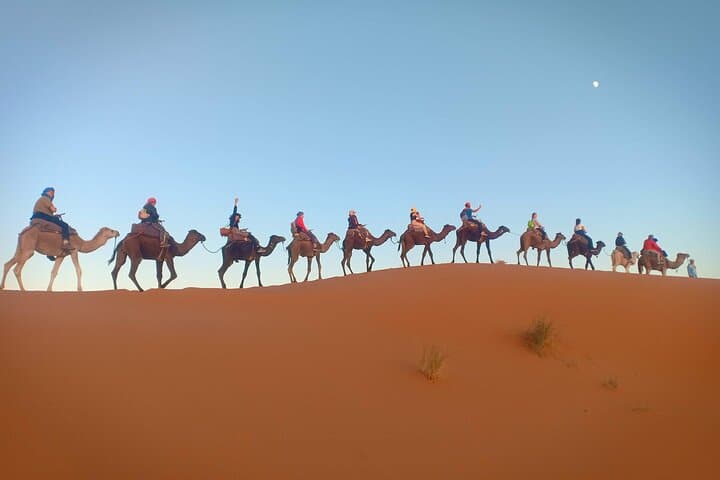
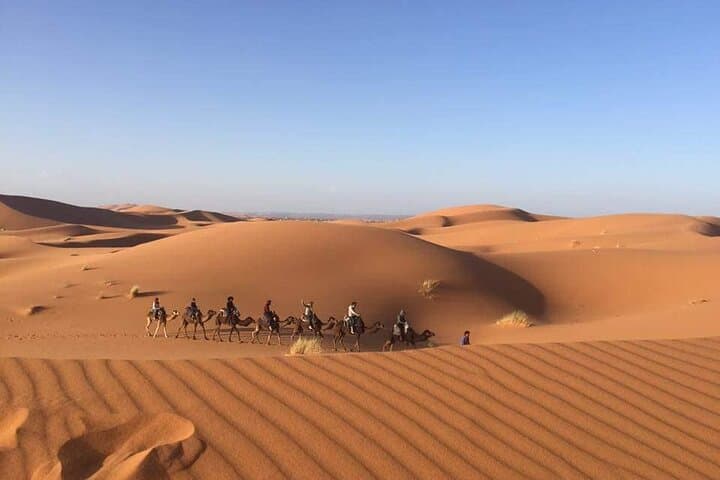
A thin column of camels cuts a gold line across Erg Chebbi as the sun collapses into the desert horizon. You arrive from the High Atlas after a day of switchbacks and kasbah towns, trade the hum of the road for the silence of sand, and walk up a dune to watch the stars arrive like an audience.
Verified experiences and guided adventures in the surrounding area.
Operated by Desert Family Tours · Merzouga, Drâa-Tafilalet
A thin column of camels cuts a gold line across Erg Chebbi as the sun collapses into the desert horizon. You arrive from the High Atlas after a day of switchbacks and kasbah towns, trade the hum of the road for the silence of sand, and walk up a dune to watch the stars arrive like an audience.
This route threads historical waypoints: Tizi n'Tichka (≈2,260 m), the earthen towers of Aït Benhaddou (UNESCO), and the fortress towns of Ouarzazate and Tinghir. Geologically, the High Atlas is recent uplift—sharp passes and folded rock—while Erg Chebbi is wind-built: dunes that can rise 100–150 m and shift with each season. Culturally the rhythm is Berber—mud-brick kasbahs, mint tea rituals, and markets selling dates and spices along the route.
Expect long drives (day 1 and day 2 typically 6–8 hours with stops; day 3 ~6–7 hours after sunrise), paved roads through mountain passes, short canyon walks at Todra, and a 1–2 hour camel trek across sand (roughly 3–6 km). Camp nights are in private or shared Berber tents with basic facilities; showers and flush toilets are usually available in village hotels, not in the remote dunes.
Practical: pack layers (desert nights are cold), sun protection, and a small overnight bag for the camel ride. Carry cash for guide tips and local purchases; keep medication handy for long drives. Rise early for sunrise on the dunes—it’s the moment that makes the miles worth it.
moderate.
3 days.
Moderate fitness: able to manage 1–2 hour camel rides, short dune hikes, and sit through extended vehicle transfers.
No—camels are guided by handlers and rides are gentle; you should be able to mount and dismount with assistance, but inform guides if mobility is limited.
Options typically include private tents or shared tents—this tour offers a private tent option; facilities vary by camp (basic showers and toilets often available at base camps).
Expect full travel days: roughly 6–8 hours on day 1, 4–6 hours plus the camel trek on day 2, and about 6–7 hours on day 3 with stops en route to Fes.
Children commonly join but check age limits; the operator notes it’s not recommended for travelers with serious back or heart conditions due to camel riding and long drives.
The route follows centuries-old caravan lines; Aït Benhaddou served as a caravan stop and defensive kasbah guarding trans-Saharan trade into the Atlas foothills.
Dune ecosystems are fragile—stick to marked camel paths where possible, minimize single-use plastics, and support local camps that practice water and waste management.
Desert Family Tours operates guided outdoor trips and adventures with an emphasis on safety, stewardship, and memorable experiences.
A thin column of camels cuts a gold line across Erg Chebbi as the sun collapses into the desert horizon. You arrive from the High Atlas after a day of switchbacks and kasbah towns, trade the hum of the road for the silence of sand, and walk up a dune to watch the stars arrive like an audience.
A thin column of camels cuts a gold line across Erg Chebbi as the sun collapses into the desert horizon. You arrive from the High Atlas after a day of switchbacks and kasbah towns, trade the hum of the road for the silence of sand, and walk up a dune to watch the stars arrive like an audience.
This route threads historical waypoints: Tizi n'Tichka (≈2,260 m), the earthen towers of Aït Benhaddou (UNESCO), and the fortress towns of Ouarzazate and Tinghir. Geologically, the High Atlas is recent uplift—sharp passes and folded rock—while Erg Chebbi is wind-built: dunes that can rise 100–150 m and shift with each season. Culturally the rhythm is Berber—mud-brick kasbahs, mint tea rituals, and markets selling dates and spices along the route.
Expect long drives (day 1 and day 2 typically 6–8 hours with stops; day 3 ~6–7 hours after sunrise), paved roads through mountain passes, short canyon walks at Todra, and a 1–2 hour camel trek across sand (roughly 3–6 km). Camp nights are in private or shared Berber tents with basic facilities; showers and flush toilets are usually available in village hotels, not in the remote dunes.
Practical: pack layers (desert nights are cold), sun protection, and a small overnight bag for the camel ride. Carry cash for guide tips and local purchases; keep medication handy for long drives. Rise early for sunrise on the dunes—it’s the moment that makes the miles worth it.