THE ADVENTURE COLLECTIVE® · Independent discovery and booking for outdoor travel

A compact overland route from Marrakech to Fes that mixes High Atlas passes, UNESCO‑listed kasbahs and a night under the dunes of Erg Chebbi. Perfect for travelers who want a concentrated taste of Morocco’s mountain and desert landscapes without backtracking.
A compact overland route from Marrakech to Fes that mixes High Atlas passes, UNESCO‑listed kasbahs and a night under the dunes of Erg Chebbi. Perfect for travelers who want a concentrated taste of Morocco’s mountain and desert landscapes without backtracking.
You crest Tizi n’Tichka as the road narrows and the High Atlas exhales — a sweep of wind-polished rock and stony ridgelines that opens toward ochre villages clinging to terraces. The first day is mostly motion: a steady drive through Berber villages and kasbah-studded valleys, a stop at the roadside fortress Ait Ben Haddou, then down into the sculpted canyons of the Dades.
Verified experiences and guided adventures in the surrounding area.
Operated by Toubkal Guide · Marrakech, Marrakech-Safi
You crest Tizi n’Tichka as the road narrows and the High Atlas exhales — a sweep of wind-polished rock and stony ridgelines that opens toward ochre villages clinging to terraces. The first day is mostly motion: a steady drive through Berber villages and kasbah-studded valleys, a stop at the roadside fortress Ait Ben Haddou, then down into the sculpted canyons of the Dades.
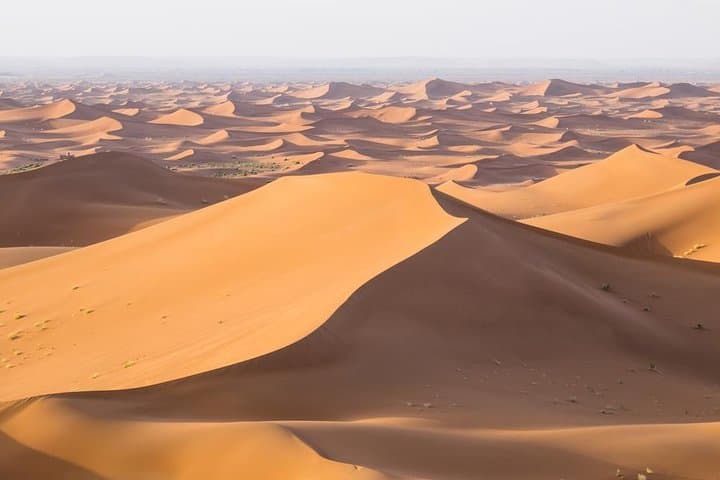
Geology here reads like a slow-motion novel: ancient tectonics piled the Atlas, then rivers and wind carved the gorge walls and the long, rippled dunes of Erg Chebbi. Culturally the route follows old trans-Saharan arteries; kasbahs were both houses and waystations for traders. At Merzouga the desert changes tone — sand becomes a living surface that migrates with the wind, and camels, bred to cross it, become your transport for sunset and sunrise out on the dunes.
Expect three days of long driving (multiple 4–7 hour stretches) punctuated by short hikes, viewpoint stops, and a single-night stay in a Berber tent after a camel ride. The itinerary suits most fitness levels; roads are paved for long sections but can be winding. Bring sun protection, a warm layer for desert nights (temps drop fast), cash for small purchases and tips, and a camera with spare batteries.
Timing matters: arrive in Marrakech with a free morning to adjust, and plan to rest after the final seven‑hour drive to Fes. Respect local culture and follow your guide’s direction around dunes and camp — the desert is fragile but unforgettable when approached with care.
easy.
3 days (approx. 72 hours).
Suitable for travelers in average shape; expect long vehicle transfers, short walks and a camel ride over sand.
Expect several long transfers: a full day over the High Atlas to Dades, a shorter day to Merzouga with a late afternoon camel ride, and a long 6–8 hour drive to Fes on day three.
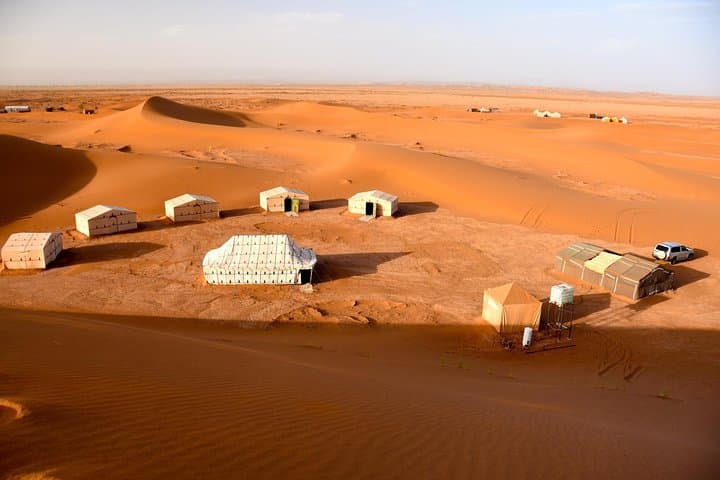
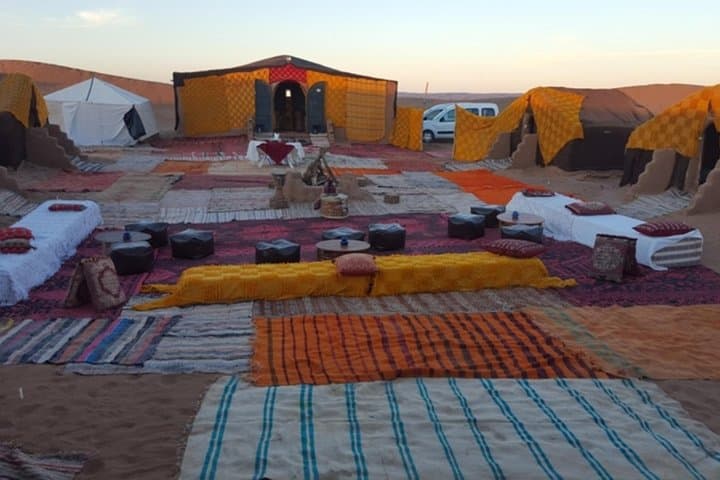
Overnight is in a Berber-style desert camp in tents with basic bedding; facilities vary but dinner and breakfast are provided and tents are typically shared unless a private option is booked.
The camel trek to and from the camp is short (usually 30–60 minutes) and suitable for most travelers; mounts are gentle, but inform the operator of mobility concerns beforehand.
Guides and camps usually accommodate common dietary needs if informed in advance — note restrictions when booking to ensure arrangements.
The route traces historic trade corridors; kasbahs like Ait Ben Haddou began as fortified homes and caravan stops along trans‑Saharan routes.
The Sahara’s dunes and oasis systems are sensitive; stick to marked tracks, minimize waste, and use local guides and camps that practice water conservation.
Toubkal Guide operates guided outdoor trips and adventures with an emphasis on safety, stewardship, and memorable experiences.
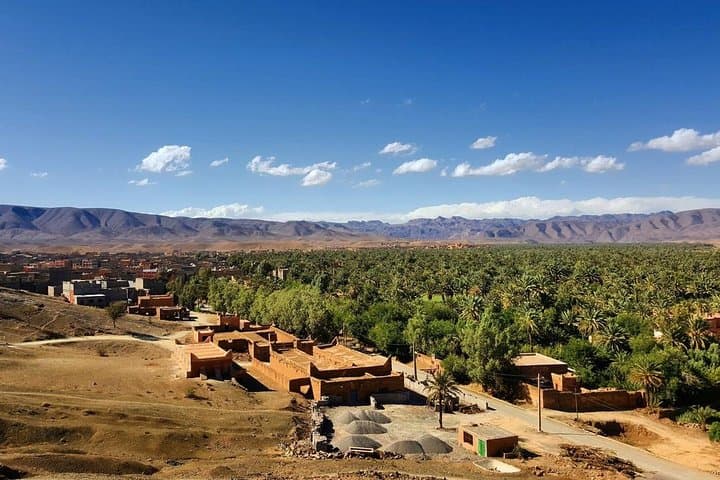
You crest Tizi n’Tichka as the road narrows and the High Atlas exhales — a sweep of wind-polished rock and stony ridgelines that opens toward ochre villages clinging to terraces. The first day is mostly motion: a steady drive through Berber villages and kasbah-studded valleys, a stop at the roadside fortress Ait Ben Haddou, then down into the sculpted canyons of the Dades.
You crest Tizi n’Tichka as the road narrows and the High Atlas exhales — a sweep of wind-polished rock and stony ridgelines that opens toward ochre villages clinging to terraces. The first day is mostly motion: a steady drive through Berber villages and kasbah-studded valleys, a stop at the roadside fortress Ait Ben Haddou, then down into the sculpted canyons of the Dades.
Geology here reads like a slow-motion novel: ancient tectonics piled the Atlas, then rivers and wind carved the gorge walls and the long, rippled dunes of Erg Chebbi. Culturally the route follows old trans-Saharan arteries; kasbahs were both houses and waystations for traders. At Merzouga the desert changes tone — sand becomes a living surface that migrates with the wind, and camels, bred to cross it, become your transport for sunset and sunrise out on the dunes.
Expect three days of long driving (multiple 4–7 hour stretches) punctuated by short hikes, viewpoint stops, and a single-night stay in a Berber tent after a camel ride. The itinerary suits most fitness levels; roads are paved for long sections but can be winding. Bring sun protection, a warm layer for desert nights (temps drop fast), cash for small purchases and tips, and a camera with spare batteries.
Timing matters: arrive in Marrakech with a free morning to adjust, and plan to rest after the final seven‑hour drive to Fes. Respect local culture and follow your guide’s direction around dunes and camp — the desert is fragile but unforgettable when approached with care.